How to Write a Pitch Using the Score Sheets Judges Fill In
Only 4 of the 8 real judging sheets we read give points for proof, yet it makes every other row easier to believe. See how to write a pitch in the order judges score it.

The score sheets pitch judges really fill in show how to write a pitch that people can say yes to. Name a problem, say who has it, show your fix and the proof that it works, then ask for one specific thing. The same order works for an investor, a store buyer, a studio or your own boss. Start from a free one pager template.
One‑Pager examples
Real One-Pagers made with MakeOnepagers. Open any one to edit it as your own.
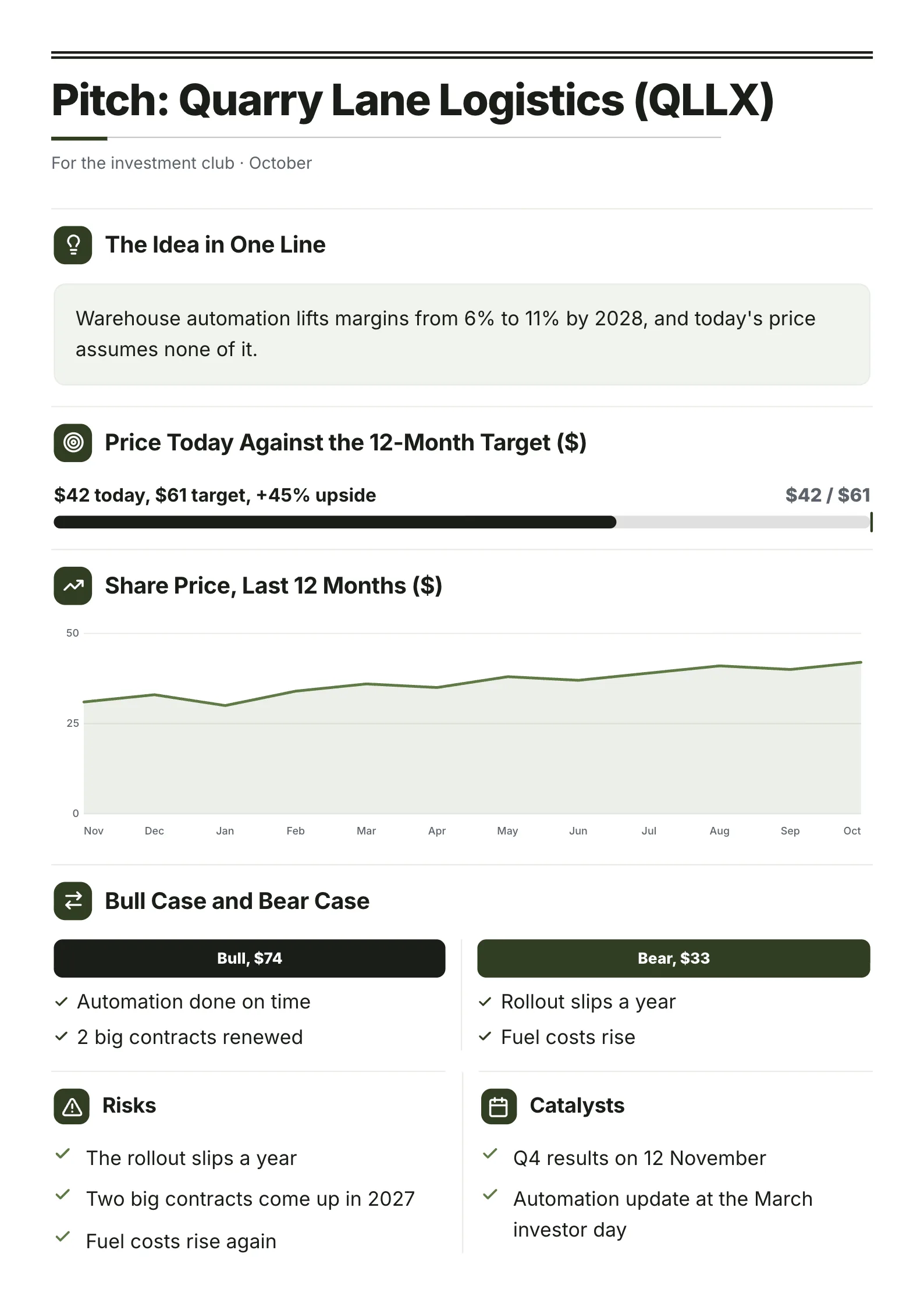 Stock PitchEdit for free(opens in a new tab)
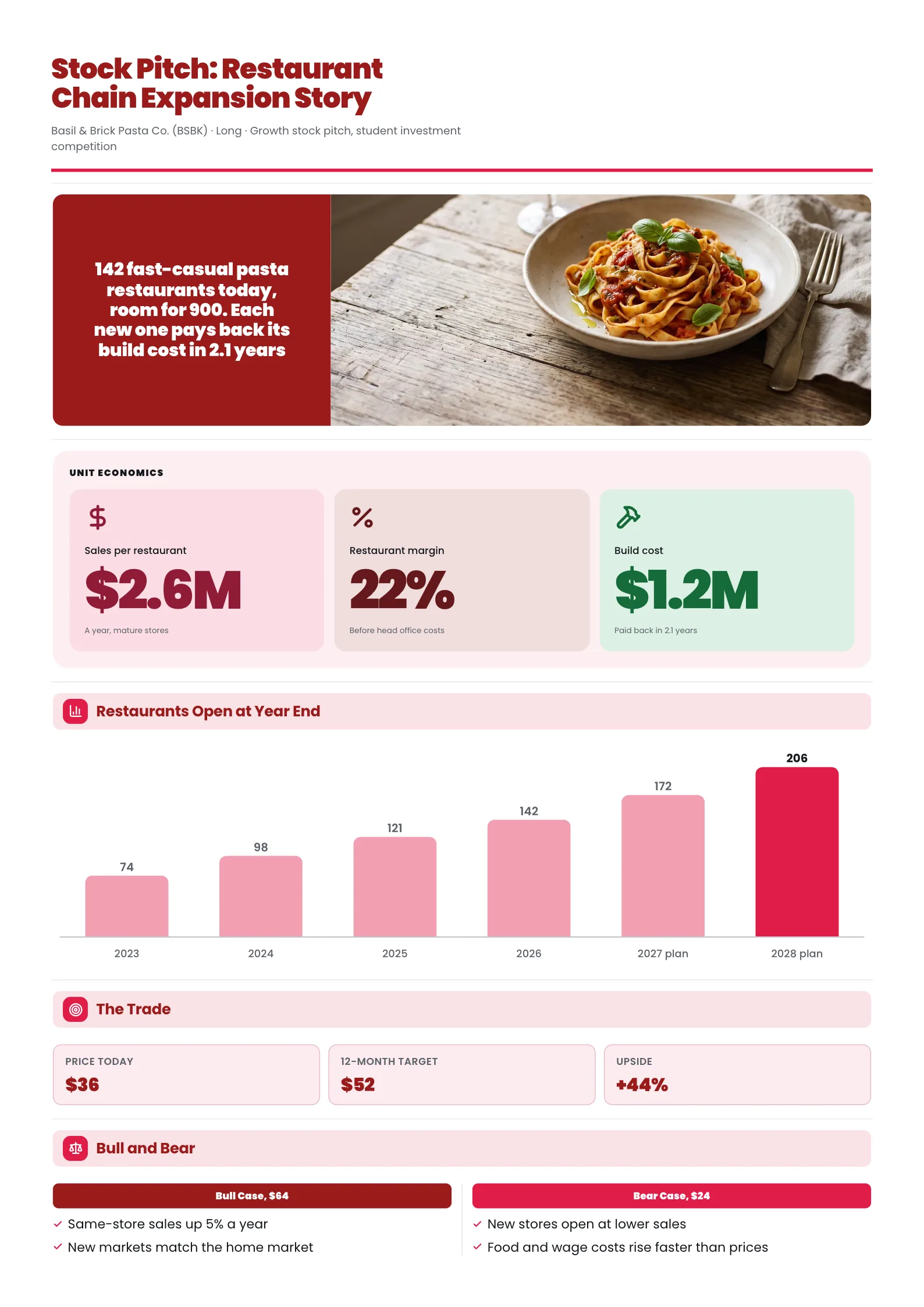 Stock Pitch: Restaurant Chain Expansion StoryEdit for free(opens in a new tab)
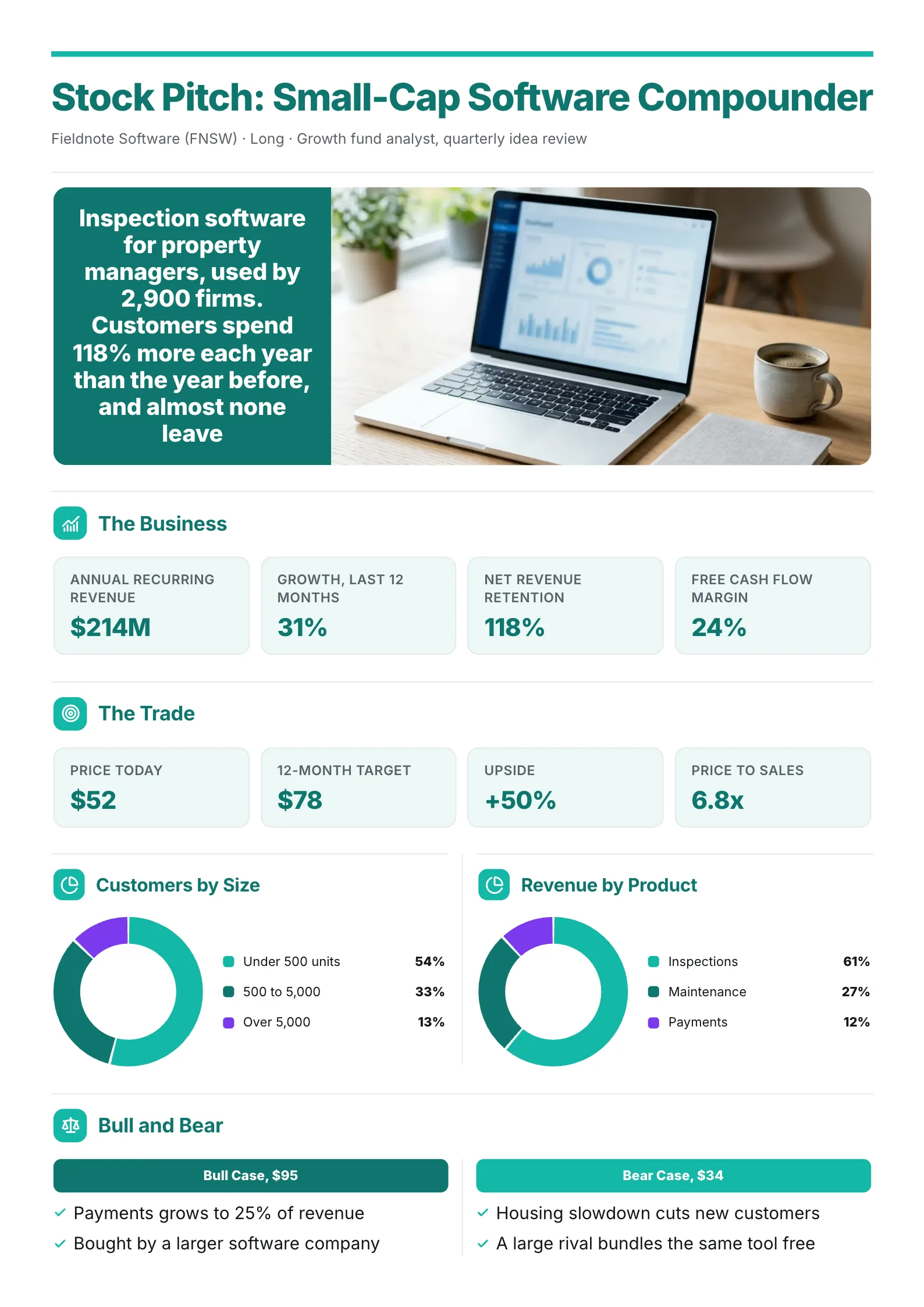 Stock Pitch: Small-Cap Software CompounderEdit for free(opens in a new tab)
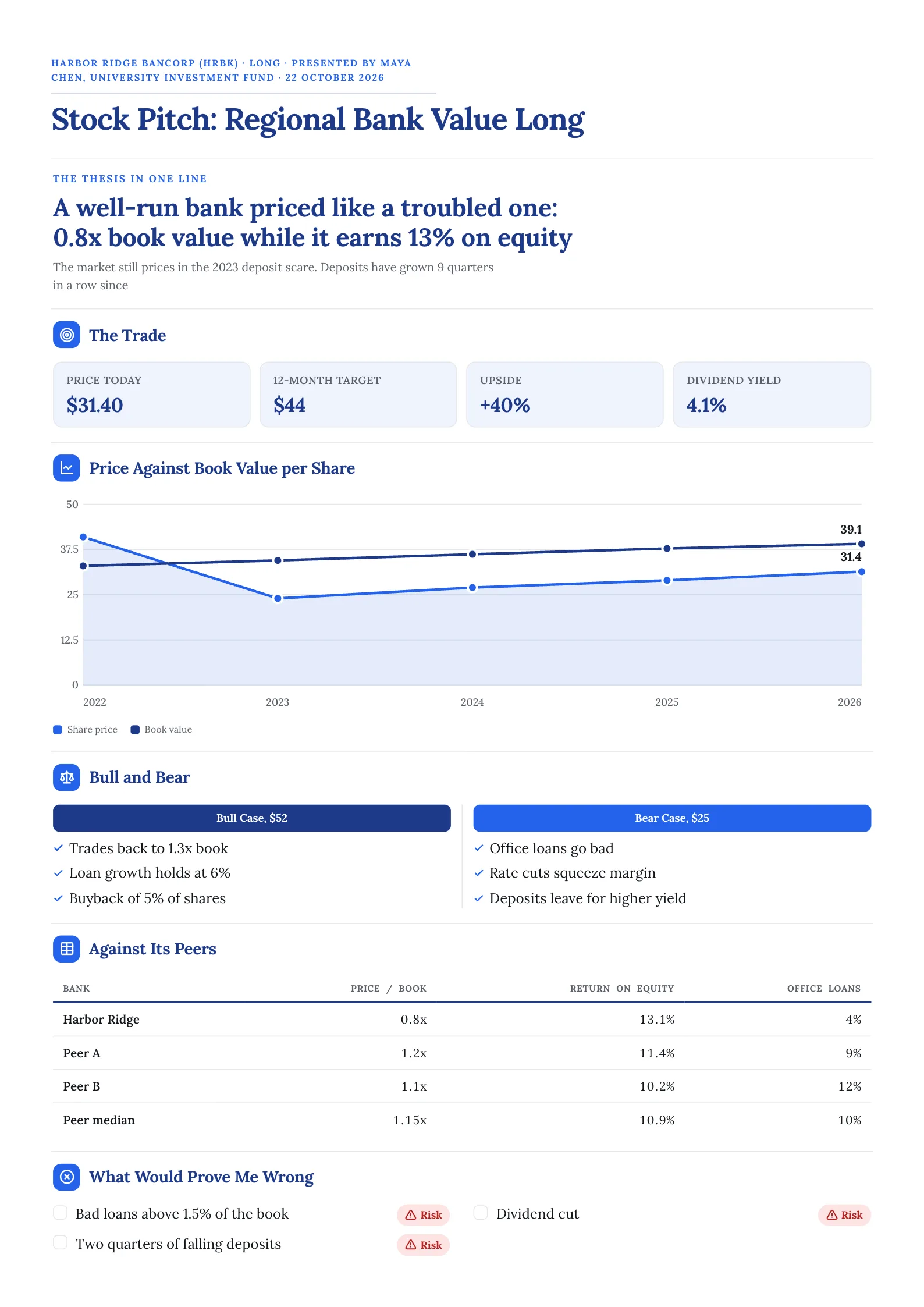 Stock Pitch: Regional Bank Value LongEdit for free(opens in a new tab)
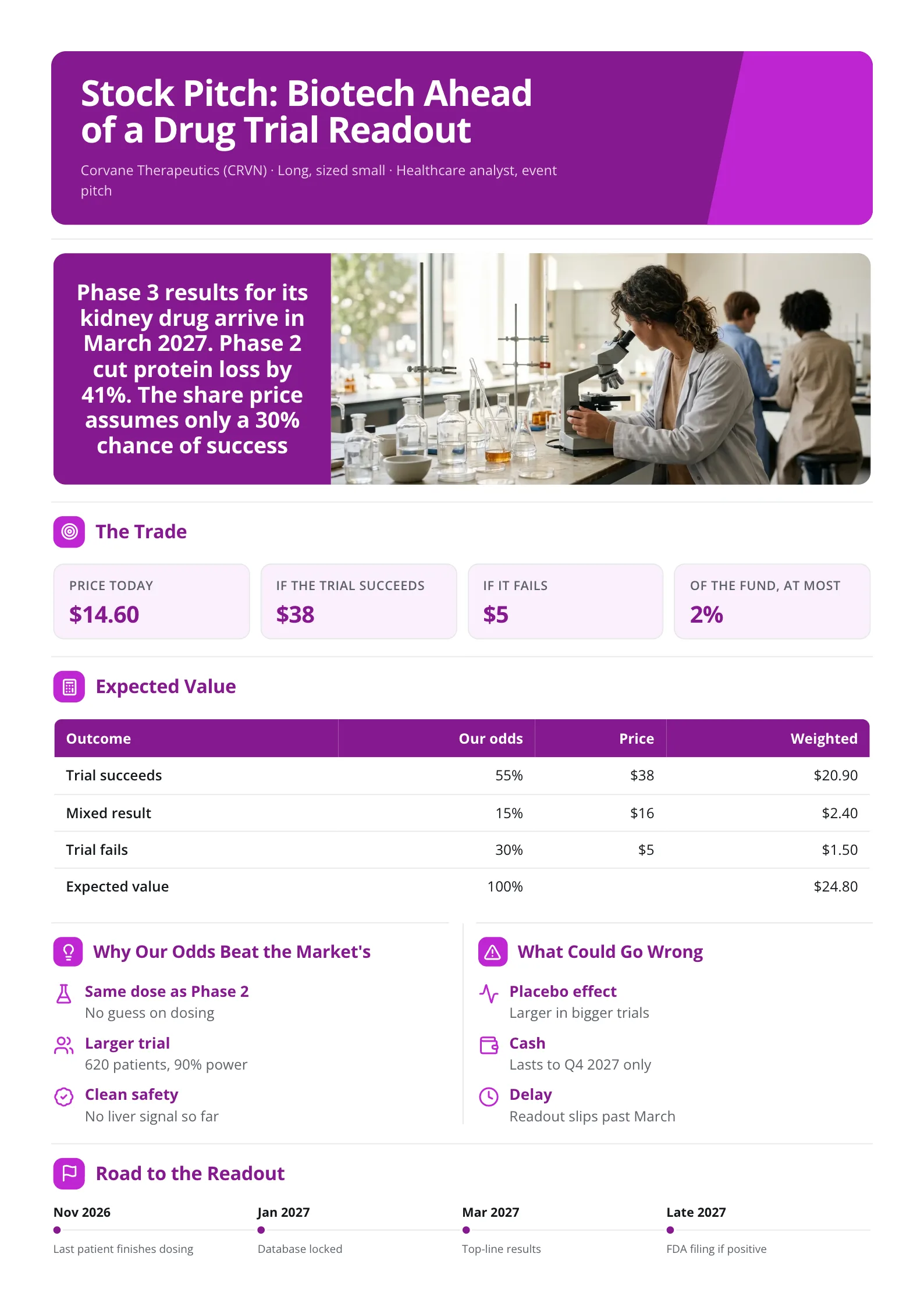 Stock Pitch: Biotech Ahead of a Drug Trial ReadoutEdit for free(opens in a new tab)
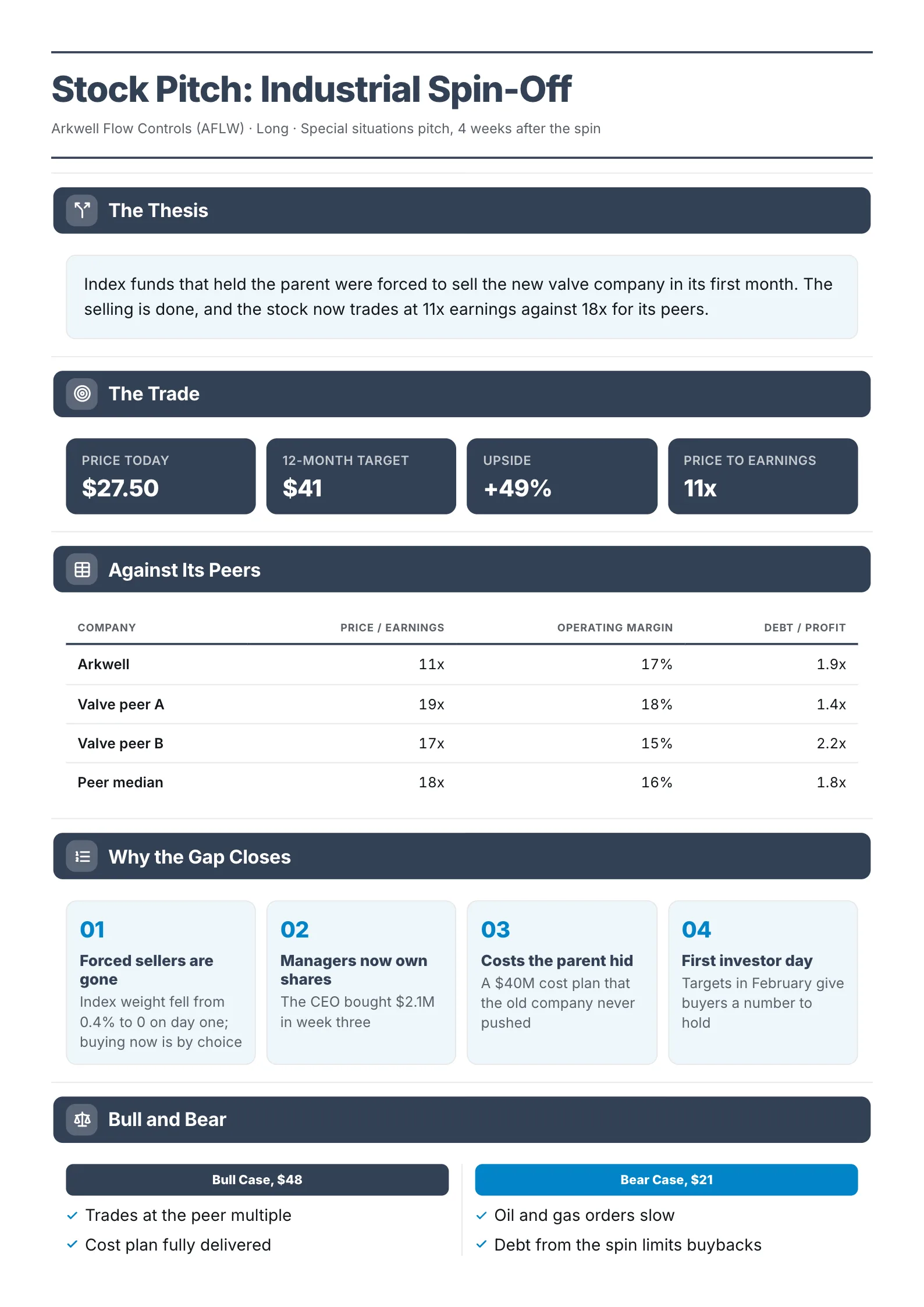 Stock Pitch: Industrial Spin-OffEdit for free(opens in a new tab)
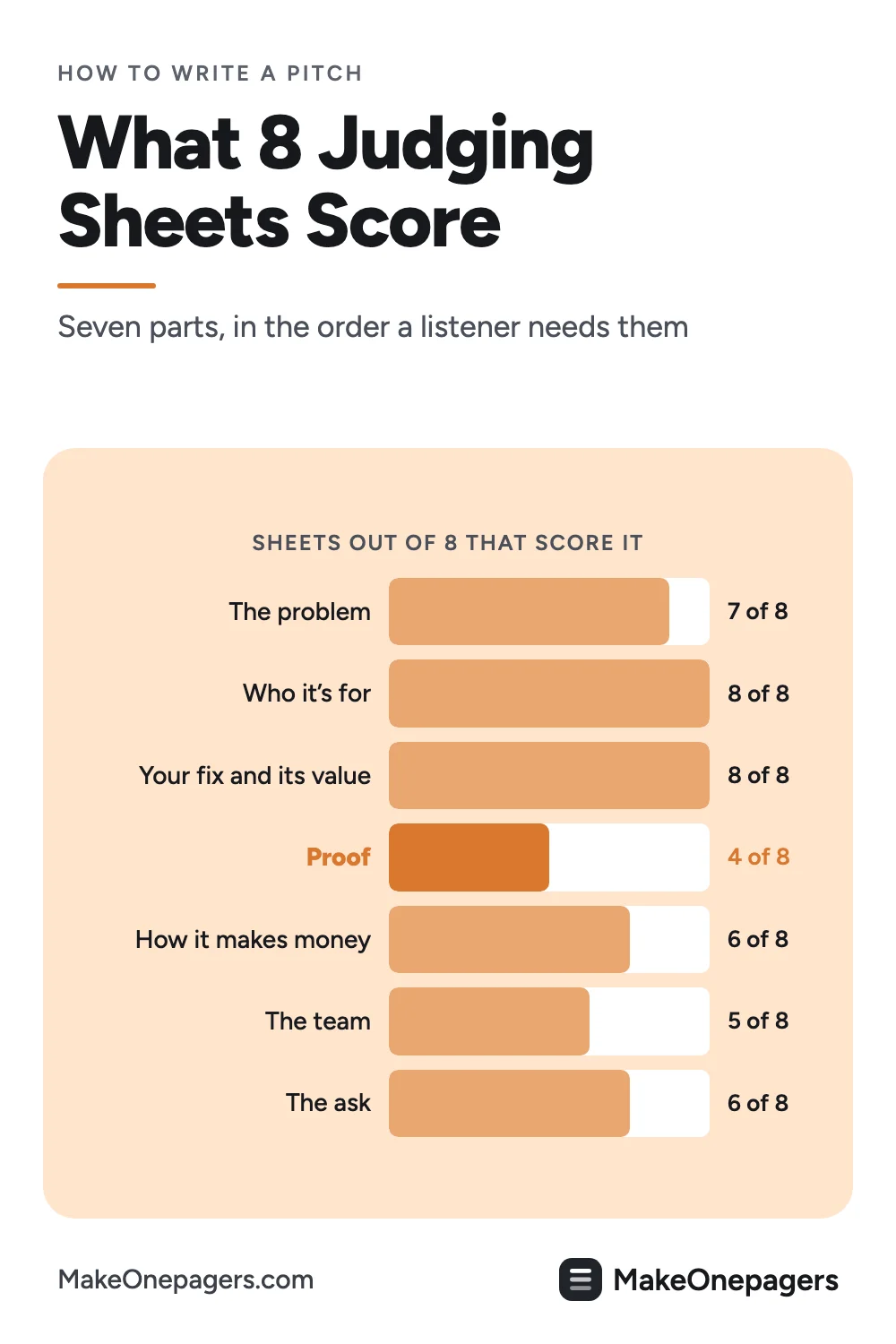
We read 8 of those sheets, published by seven universities and a national lab. Your solution and your buyer earn points on every sheet, and the ask, the thing you want from the room, earns points on six. Proof, like a prototype, a test or real sales, earns points on just half of them, but a real number makes every other row easier for a judge to believe.
One note before you start. This guide is for pitching an idea, a product or a company. If you're pitching a story to an editor, the section on editors near the end shows the shorter version.
What 8 pitch judging sheets score
| What the sheet scores | Sheets that do |
|---|---|
| Your solution and its value | 8 of 8 |
| Who it's for | 8 of 8 |
| How you present it | 8 of 8 |
| The problem | 7 of 8 |
| The competition | 7 of 8 |
| How it makes money | 6 of 8 |
| The ask or next step | 6 of 8 |
| A market size you estimated | 5 of 8 |
| The team | 5 of 8 |
| Proof, like a prototype or sales | 4 of 8 |
| A time limit, on the sheet itself | 3 of 8 |
Source: our read of 8 public pitch judging sheets, October 30, 2026. Each one is linked at the end.
The steps below cover these rows in the order you'd say them, from the problem to the ask, so a judge can score each part as you reach it.
Write your pitch in the order a listener needs it
1. Start with the problem, from the customer's side
Seven of the 8 sheets score the problem, and most want to hear it from the person who has it. The University of Cincinnati sheet gives its top score when the problem is serious and isn't being solved. It gives its lowest when, in its words, "There is no problem here."
Write two sentences. The first says what goes wrong and for whom. The second says what it costs them in time, money or missed sales. A made-up line like "Small clinics lose 6 hours a week rebooking no-shows by phone" is a problem a judge can score. "Healthcare is broken" isn't.
2. Name who has the problem, and count them
All 8 sheets score who the pitch is for, and 5 want a number for how many there are. NC State asks you to estimate how many potential customers exist. Marshall's rubric wants the market quantified, and Oral Roberts University wants you to quantify the target market and its pain points.
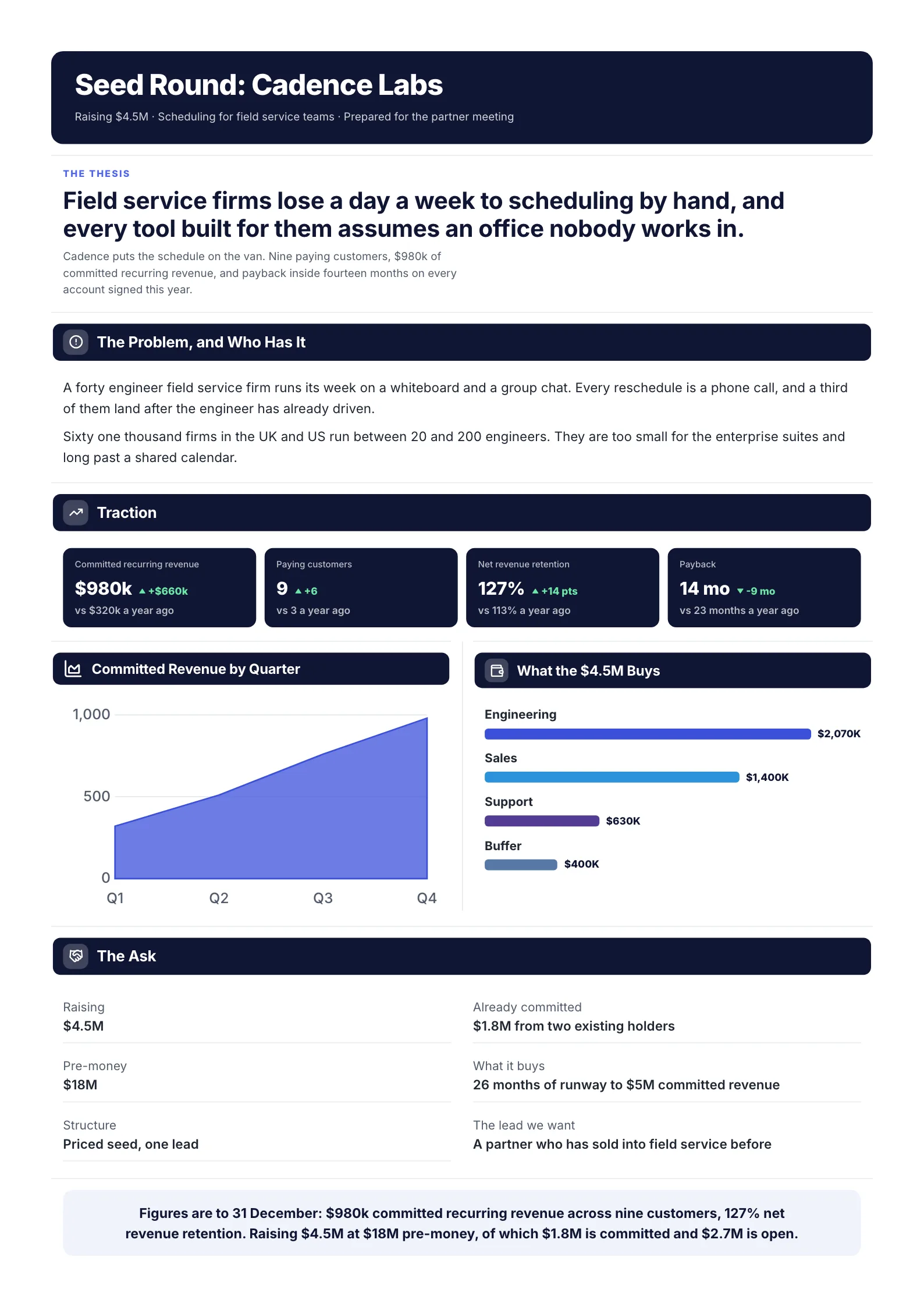
You don't need a giant top-down figure. Count the buyers you can name. A line like "2,900 property managers in our state run more than 50 units" works better for you than "a $40 billion market," because a judge can picture each one.
 Edit this template
Sample names and figures. The problem section names who has it and counts them, sixty one thousand firms, before any chart.
3. Explain your fix and why it beats what they use now
Every sheet scores the solution, and 7 of 8 ask what it beats. Michigan Tech's score sheet asks how customers' needs are filled by the competition today, then how yours is better. The Berkeley Lab criteria put it simply, as "Who are your competitors and why are you better?"
Name the real alternative, even if it's a spreadsheet or a phone call. Then give one reason you win that a buyer would feel, like faster, cheaper or no new hardware. Keep the feature list for the questions afterward.
4. Show proof, the part only 4 sheets ask for
Proof is where your pitch earns trust. Cincinnati's sheet gives its top score for believable market testing, a patent or a working prototype. NC State scores research, a sketch or prototype and a test under real conditions. Marshall checks for demonstrated demand, and Oral Roberts asks for development status and IP.
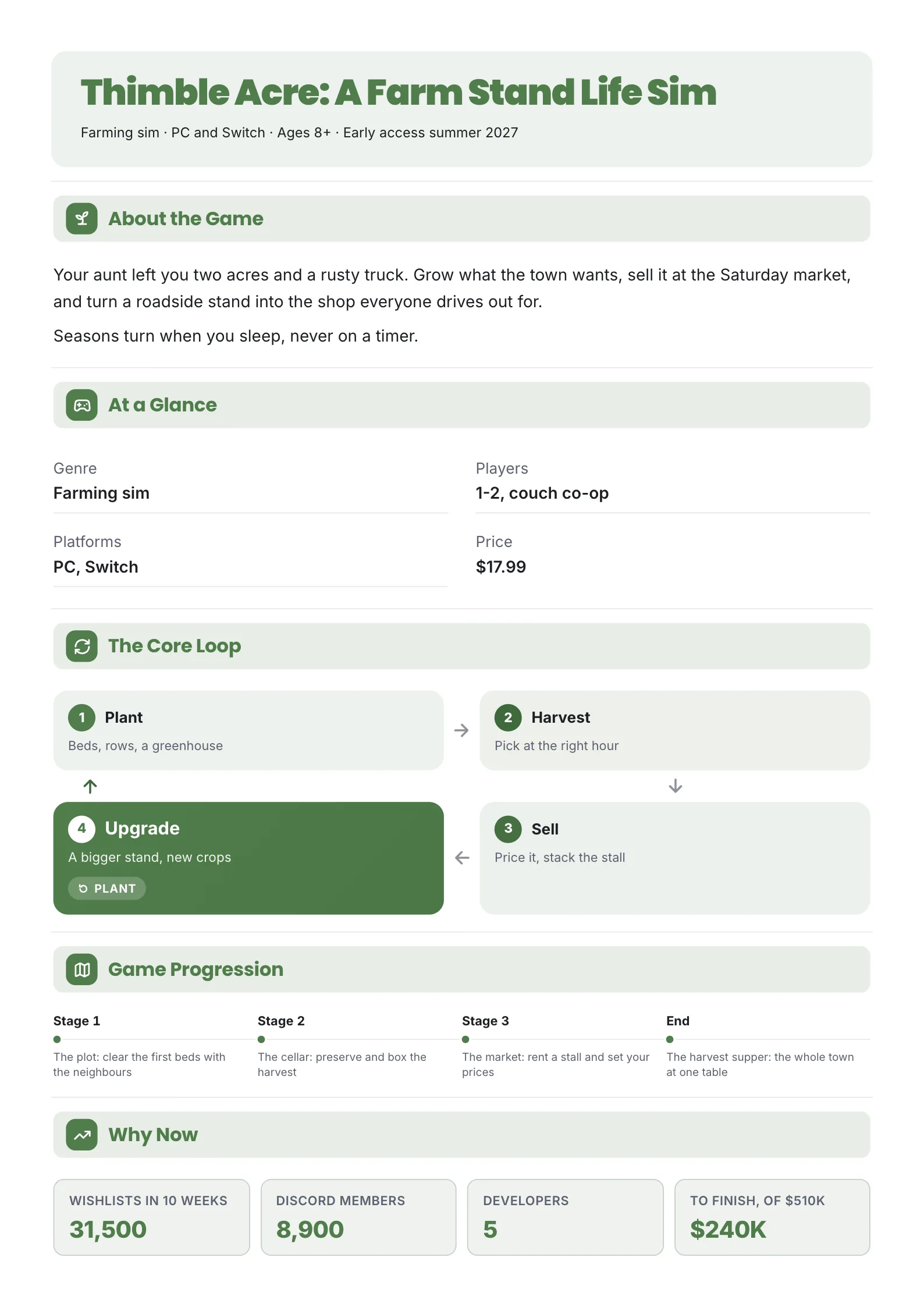
Even where a sheet doesn't list proof, it helps every other row. A judge believes your market size more when 40 people already paid. So pick your strongest number, like paying customers, a waitlist, a pilot result or repeat orders, and put it in the first minute.
 Edit this template
Sample names and figures. The Why Now row turns the idea into proof, with 48,000 wishlists in three months.
5. Say how it makes money
Six sheets score the money side. Marshall wants retail costs and pricing. Oral Roberts asks for revenue streams, costs and margins. Michigan Tech asks if the team has demonstrated profitability, and Cincinnati asks how big the profit could be.
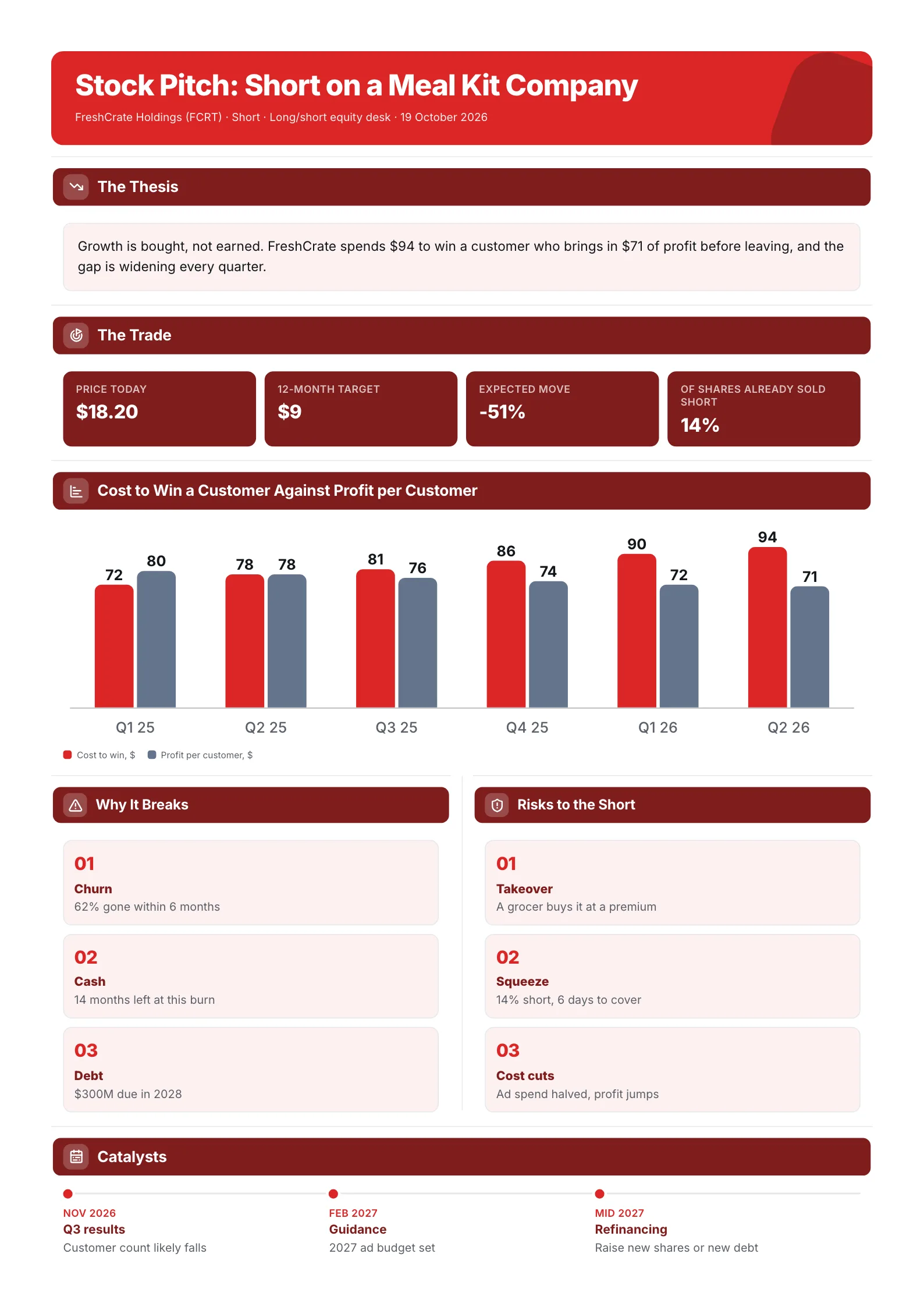
One line is often enough for a short pitch. Say what a customer pays, how often, and what it costs you to deliver. A sample line like "$49 a month per clinic, about $9 to serve" tells a judge more than any chart.
 Edit this template
Sample names and figures. This pitch argues against a company because it spends $94 to win a customer worth $71 in profit. Run your own price and cost through that sum before a judge does.
6. Name who's doing it
Five sheets score the team. Marshall ties it to credibility, asking whether the team's qualifications point to success. Cincinnati's top score reads "These are the only people to do this!"
Give each key person one line, and make it the line that matters for this idea. Ten years running clinic front desks is worth more here than a business degree. If a role is missing, say who you'll hire with the money.
7. End on one ask, with a number
Six of the 8 sheets score what you want. Michigan Tech asks judges, "Do I know what funds they are seeking and how they plan to use those funds?" Oral Roberts wants a clear investment ask and a use of funds. Alabama puts it as "What's next?" and lists it among the parts that must fit inside the 3 minutes.
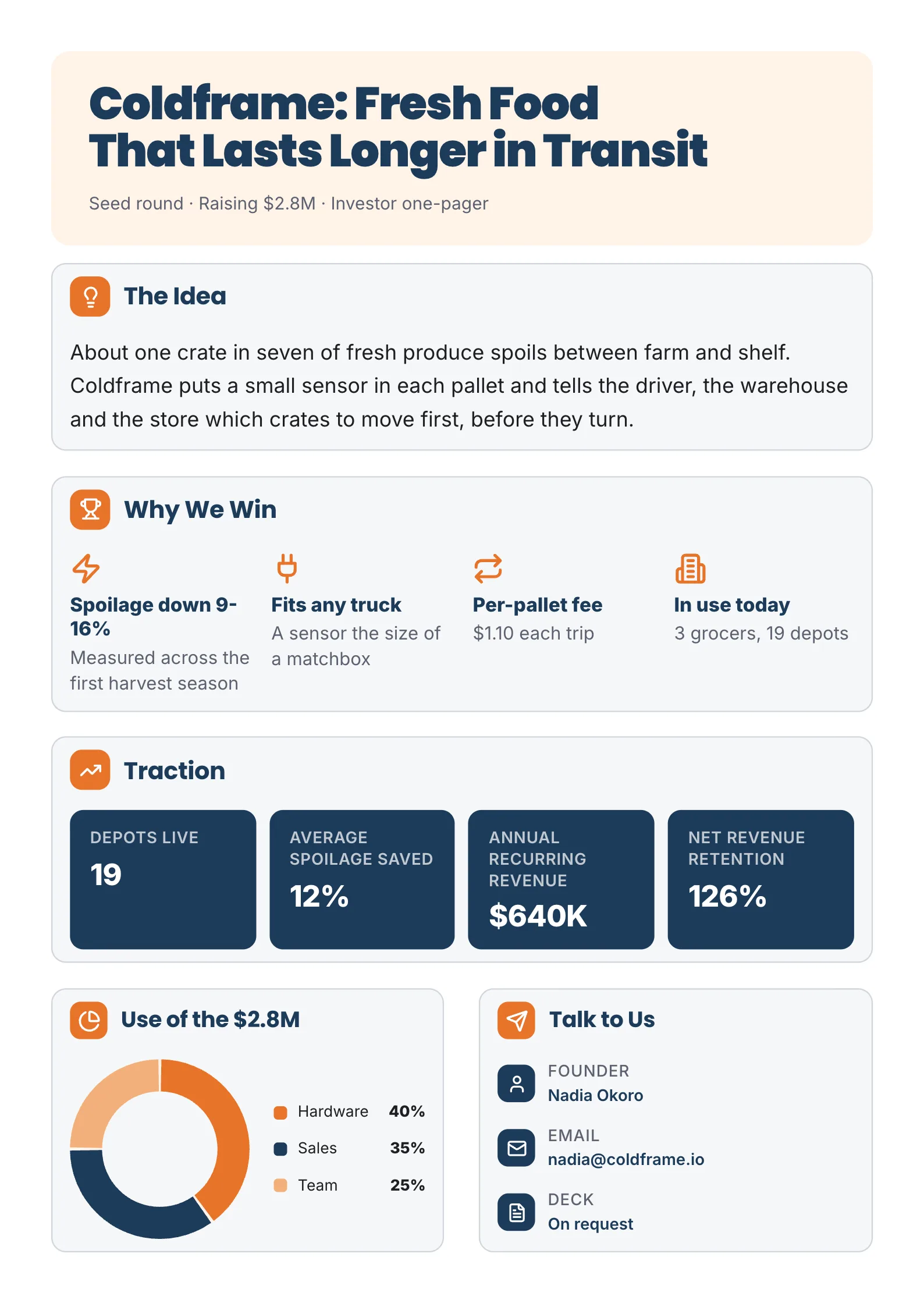
Write your ask as one sentence with a number and a date. For an investor it's the amount and what it buys. For a buyer it's the order, the shelf space and the start date. For your boss it's the budget, the people and when you'd report back. Then stop talking.
 Edit this template
Sample names and figures. The ask sits in the subtitle, raising $5M, and the use of funds splits it 45% sales, 35% product and 20% operations.
How long your pitch should be
Use the time you're given, and plan to finish early. Alabama's competition gives you 3 minutes. Berkeley Lab gives 10 minutes plus 5 for questions, and the University of Vermont's sheet has a yes or no box for respecting the time limit.
The easiest way to fit any slot is to write three versions. The first is one sentence, the second is one paragraph and the third is one page. The sentence opens every version, the paragraph is your elevator pitch, and the page is what you hand over or send after the meeting.
 Edit this template
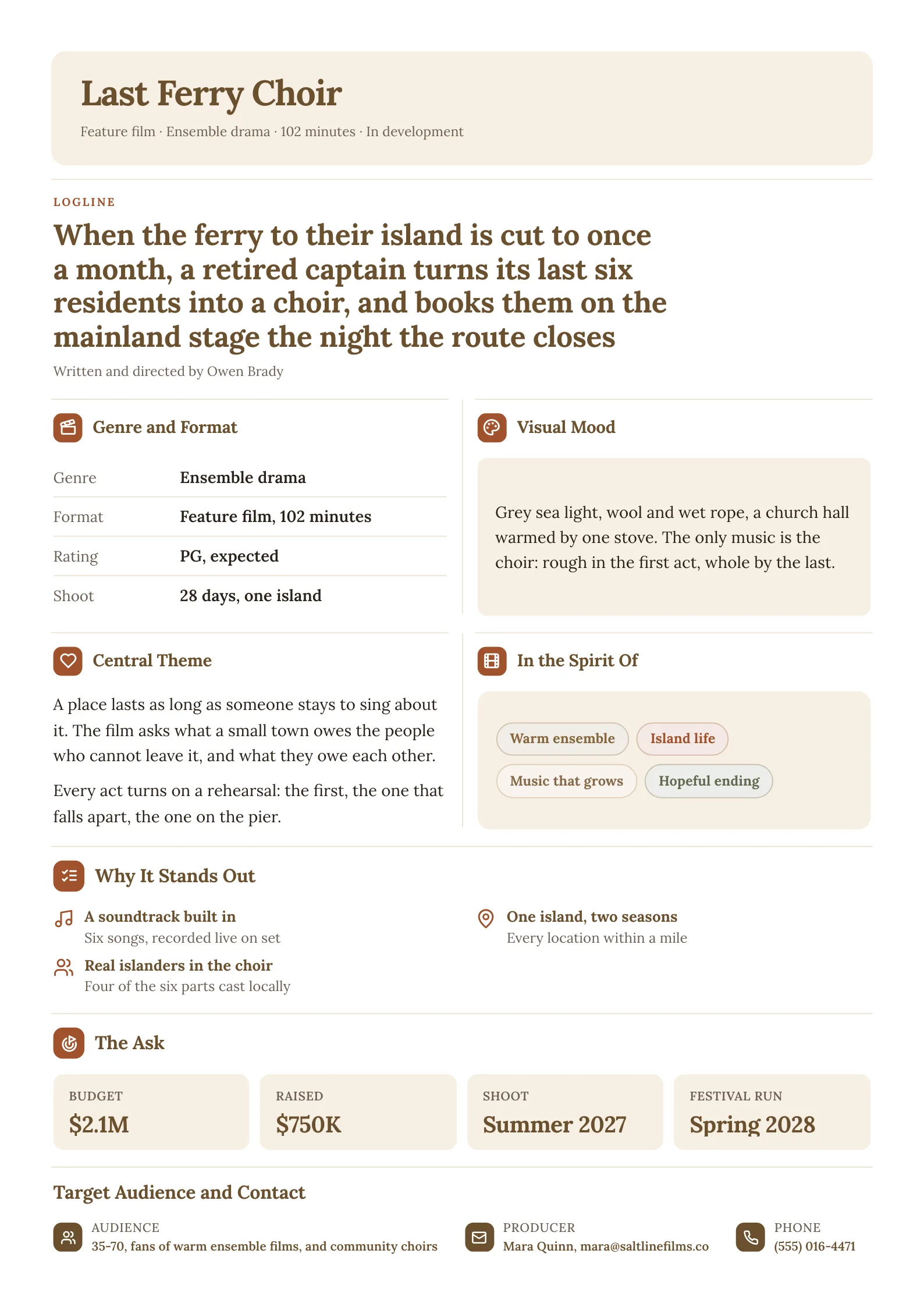
Sample names and figures. The whole film is pitched in one sentence at the top, and the ask box below gives the budget and what's already raised.
Change the proof and the ask for each audience
Every room gets the same seven parts. What changes is the proof each listener trusts and the ask they can say yes to. The judging sheets are written for investors, so here's how the same parts shift when someone else is across the table.
| Who you pitch | Proof they trust | The ask |
|---|---|---|
| An investor | Revenue, growth and repeat customers | An amount, and what it buys |
| A store buyer | Units sold a week in test stores | Shelf space and a start date |
| A studio or publisher | Wishlists, a script or a finished scene | A budget and a schedule |
| Your boss | A small pilot with before and after numbers | People, money and a check-in date |
| An editor | Why their readers need it now | One piece, and when you'll file it |
Read the row for your listener before you write. A store buyer cares about how fast your product leaves the shelf, so lead with units a week and the margin they keep. Your boss cares about risk, so pitch a pilot small enough to approve without a meeting. An investor wants to know what the money turns into, which is why Oral Roberts scores the use of funds beside the ask.
Then test your draft against the row. If your proof is something only you believe, like "customers will love it," swap it for something you've counted. If your ask has no number in it, add one.
 Edit this template
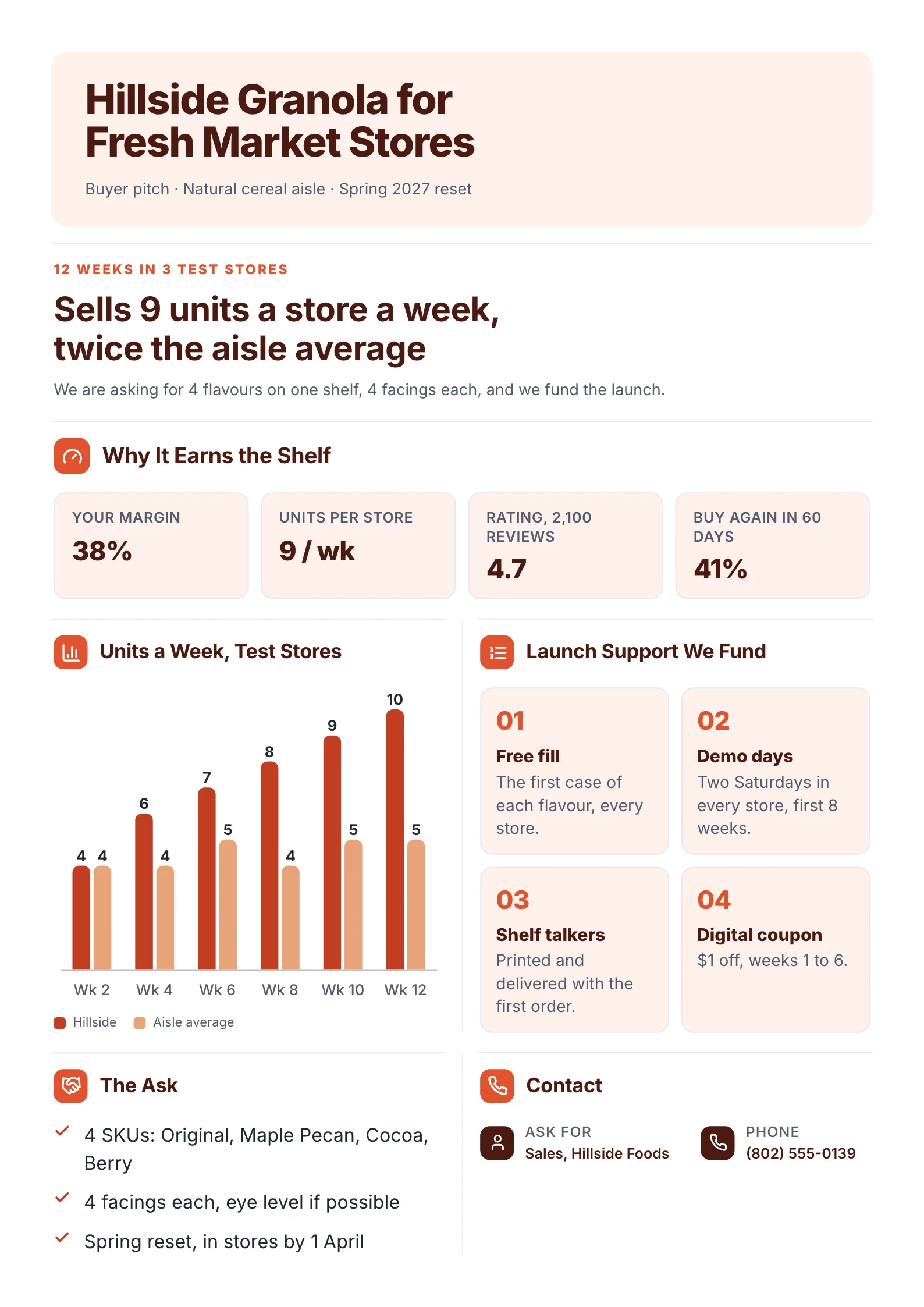
Sample names and figures. A pitch to a store buyer, so the proof is units a week from 3 test stores and the ask is 4 flavors, 4 facings each, in stores by April 1.
Content outweighs delivery on every sheet
Every sheet scores delivery, but none lets it outweigh what you say. Oral Roberts gives presentation 15 of 100 points. Marshall gives clarity and impact 8 of its 28 points. Berkeley Lab weights presentation quality at 0.5, half the weight of the market problem.
So spend most of your time on the words, then rehearse. Alabama's sheet checks if you told a story and used easy language. Read your pitch aloud with a timer twice before you give it.
Get ready for the questions after you finish
Some of the scoring happens after you stop talking. The University of Vermont gives Q&A its own row, for concise, convincing and informed answers. Oral Roberts folds it into presentation, scoring how well you engage with judge questions. Berkeley Lab's format adds 5 minutes of questions to a 10-minute pitch.
Alabama's sheet is the most useful here, because it says what judges expect to come up. It lists four things you may cover in the Q&A instead of the 3-minute pitch. They are pricing or business model, the market and its size, competition, and the team's background. So these are the questions to prepare for, even if your pitch is short.
Write one honest answer to each of these before the day:
- How do you make money? One line on price and cost.
- How big can this get? The count of buyers you named, and what share you'll reach first.
- Who else does this? The real alternative, and the one reason you win.
- Why you? The one line of experience that fits this idea.
- What could go wrong? Your biggest risk, and what you'll do if it happens.
The last one surprises people. NC State gives points when a team identifies the limits of its own solution. Naming your risk first shows you've thought it through, and it takes the sting out of the question.
 Edit this template
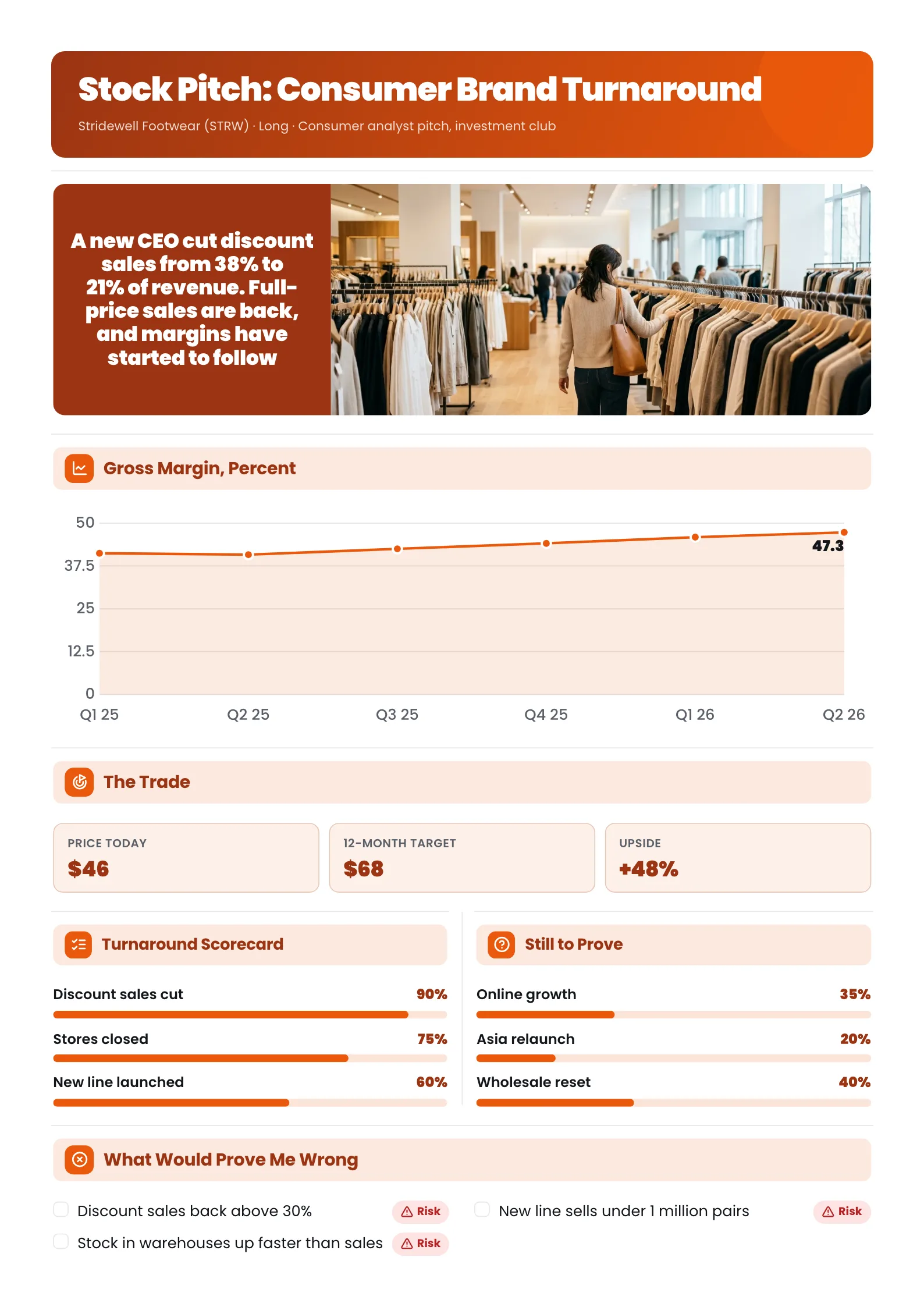
Sample names and figures. The What Would Prove Me Wrong list names three risks before anyone in the room has to ask.
If you're pitching an editor
An editor reads your pitch the way a judge reads a score sheet, looking for a reason to say yes quickly. The parts shrink, but most of them stay. The problem becomes why their readers need this now. Your proof becomes your angle and one fact nobody else has. Your team becomes one line on why you're the one to write it. And the ask becomes the piece, its length and the date you'll file.
Put the idea in your subject line or your first sentence, and keep the whole email to about three short paragraphs. Read the outlet's own pitch guidelines first and follow them, since many editors won't read a pitch that ignores them.
Here's a sample. "Half of your readers rent, and 3 states changed their renter laws this year. I'd like to write 900 words on what each change means for a lease signed in 2027. I covered housing for 6 years at a city paper, and I can file by January 15."
One pitch, before and after
Picture a meal-prep company pitching a gym owner. The Before column shows a typical first draft, and the After column rewrites it to the judging sheets.
| Part | Before | After |
|---|---|---|
| Problem | We're passionate about healthy eating. | Your members ask your trainers what to eat, and the trainers have no answer they can sell. |
| Who and how many | Gyms everywhere need this. | Your 1,200 members, and 3 more gyms in town like yours. |
| Proof | People love our food. | 86 members at a gym across town reorder each week. |
| Ask | We'd love to partner. | A fridge by the front desk for 60 days, from December 1. |
The names and numbers are a sample. The right column gives a judge something to score in every row, and it ends on a request the owner can say yes to today.
A pitch outline you can fill in
Copy these seven lines and write one or two sentences under each. Keep the order, since it walks a listener from the problem to the ask.
- Problem. What goes wrong, for whom, and what it costs them.
- Who and how many. The buyers you can name, with a count.
- Your fix. What you built, and the one reason it beats what they use now.
- Proof. Your strongest number, like sales, a pilot or a waitlist.
- Money. What a customer pays, and what it costs you to deliver.
- Team. One line per person, the line that fits this idea.
- Ask. One request, with how much and by when.
Read it aloud. If any line makes you pause or reach for a filler word, cut it until you can say it in one breath.
The 8 judging sheets, with links
| Judging sheet | Who uses it | Pages |
|---|---|---|
| IQ-E Elevator Pitch score sheet | University of Cincinnati | 1 |
| Business Pitch Scoring Rubric 2026 | University of Vermont | 1 |
| Pitch Judging Rubric | NC State | 1 |
| WVIBMC 2024 Pitch Rubric | Marshall University | 1 |
| The Launch Scorecard | Oral Roberts University | 2 |
| Bob Mark Elevator Pitch score sheet | Michigan Tech | 1 |
| Faculty and Staff judging criteria | University of Alabama | 2 |
| Pitch competition judging criteria | Berkeley Lab, for DOE events | 1 |
We read each one in full on October 30, 2026. The Michigan Tech sheet is from 2012, and a few carry no date. Four more sheets we found wouldn't open.
Three lines to draft before the meeting
Write the problem in two sentences, your proof in one, and your ask with a number. If those three lines are strong, everything else in the pitch comes easily. Paste them into a MakeOnepagers pitch design, then print a copy to hand over when the room asks for more.
Frequently asked questions
How long is an elevator pitch?
Most guides put it at about 60 to 90 seconds. Alabama's competition allows 3 minutes for a whole idea, so an elevator pitch should come in well under that. Write it as one paragraph, read it aloud and time it.
What's the difference between a pitch and a pitch deck?
The pitch is what you say, and the deck is the slides behind it. Many people also send a one-page version before or after the meeting. Our post on a One-Pager vs a pitch deck covers when to send which.
What should I ask for at the end of a pitch?
Ask for one thing you can count, like an amount of money, an order or a trial, and say when it starts. Six of the 8 judging sheets give points for it, and a vague "let's talk" earns none.




