What 5 Personal Budget Examples Do When 50-30-20 Doesn't Fit
Five personal budget examples set against the 50-30-20 rule: a zero-based month, a single mom, a family of five, a gig driver and retirees.

None of these personal budget examples fits the 50-30-20 rule, and that's why they're useful. Money looks different when you have daycare, an uneven income or a fixed pension. So we took the rule from a federal classroom worksheet and held five sample households up against it, to see how far each one lands from it and what it does about the gap. Start from a free one pager template.
One‑Pager examples
Real One-Pagers made with MakeOnepagers. Open any one to edit it as your own.
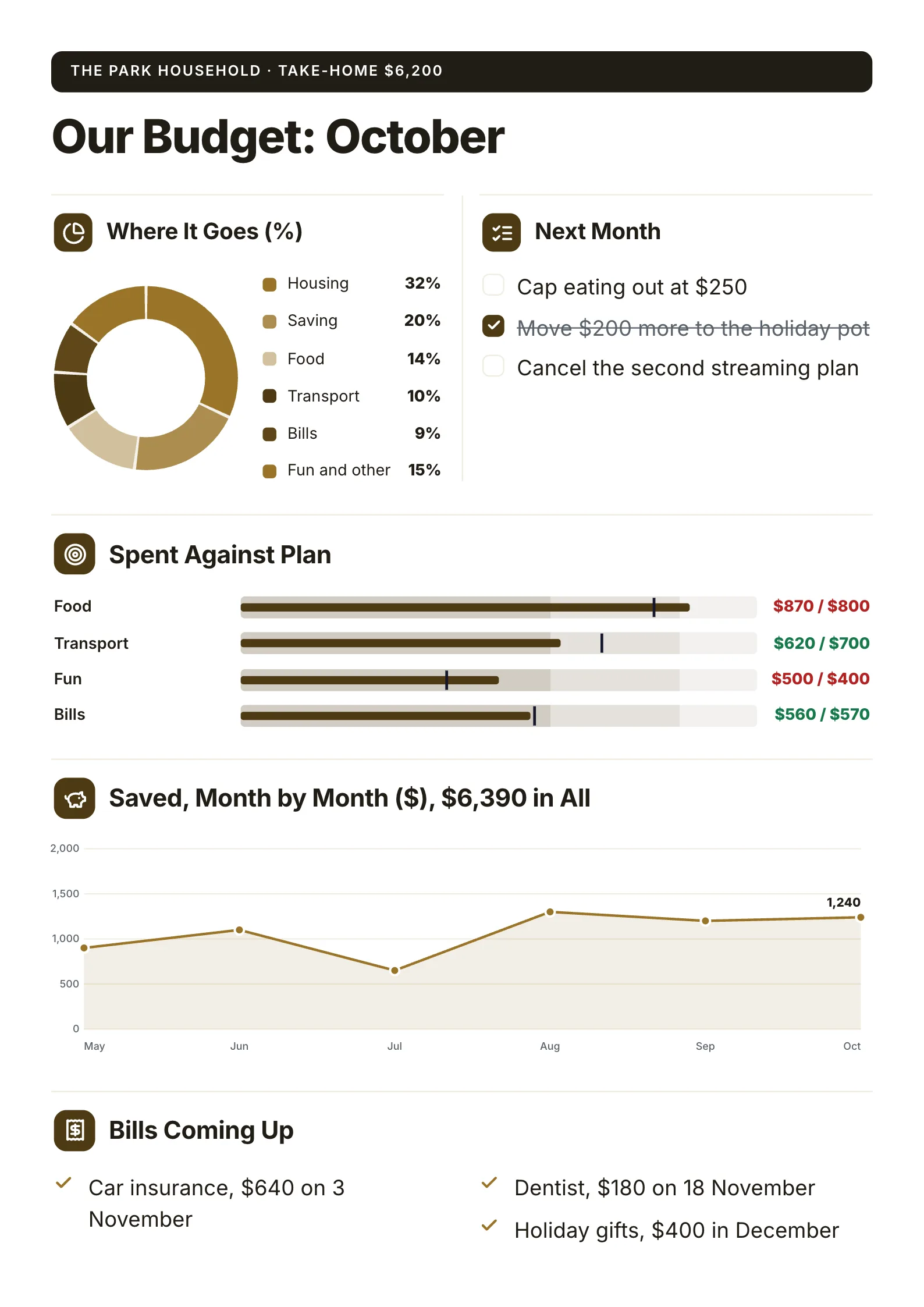 Personal BudgetEdit for free(opens in a new tab)
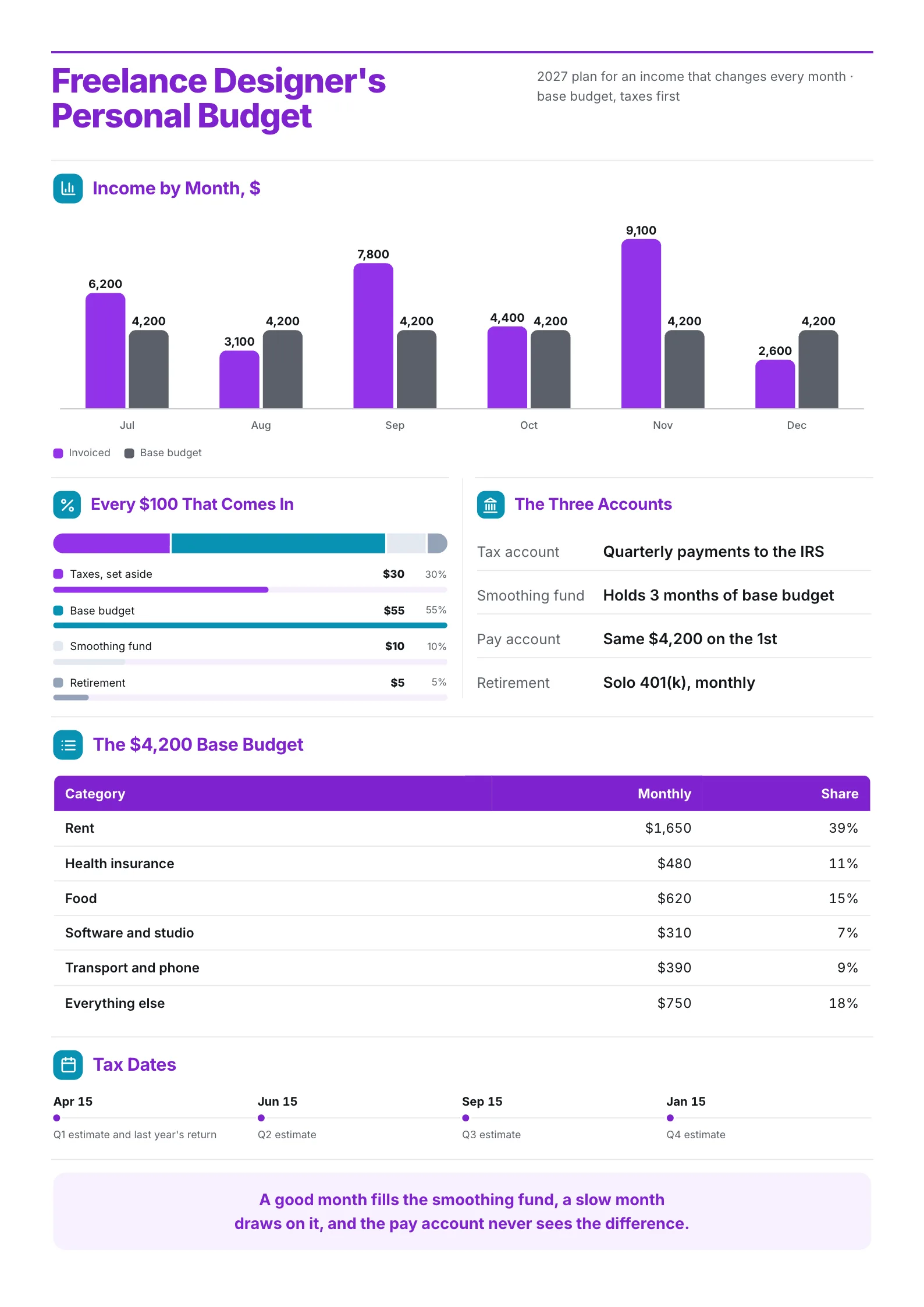 Personal Budget: Freelancer Uneven IncomeEdit for free(opens in a new tab)
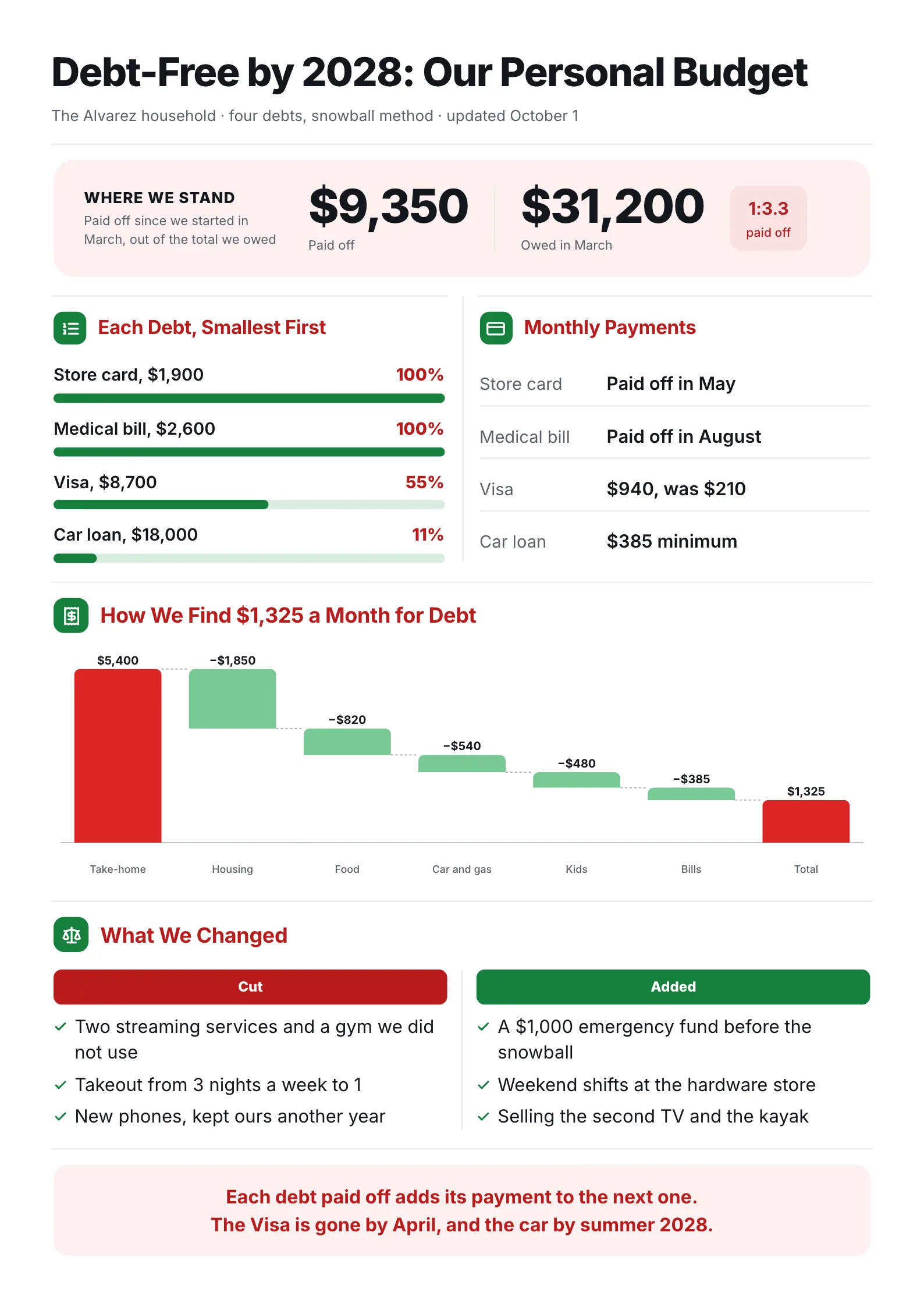 Personal Budget: Debt Payoff SnowballEdit for free(opens in a new tab)
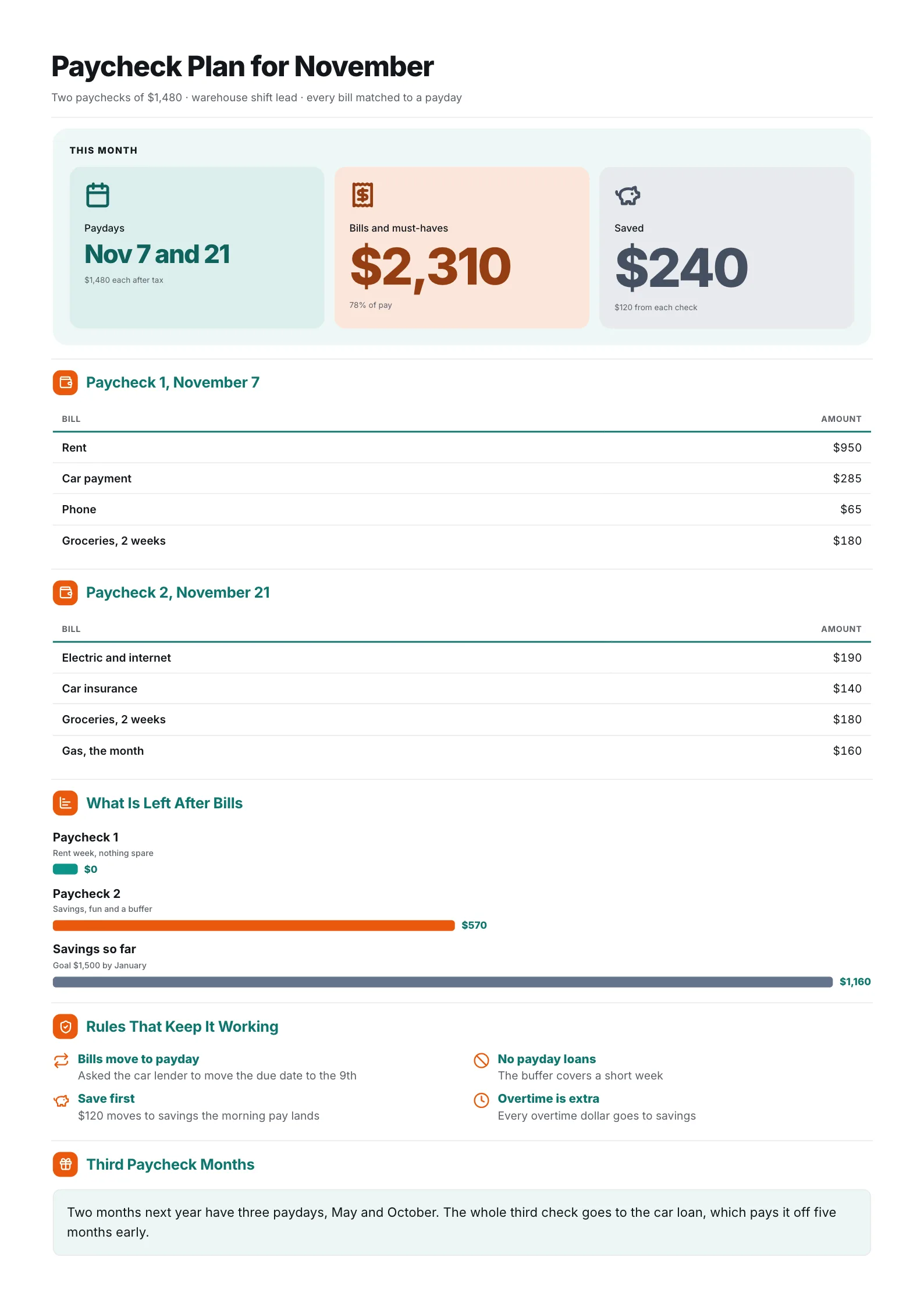 Personal Budget: Biweekly Paycheck PlanEdit for free(opens in a new tab)
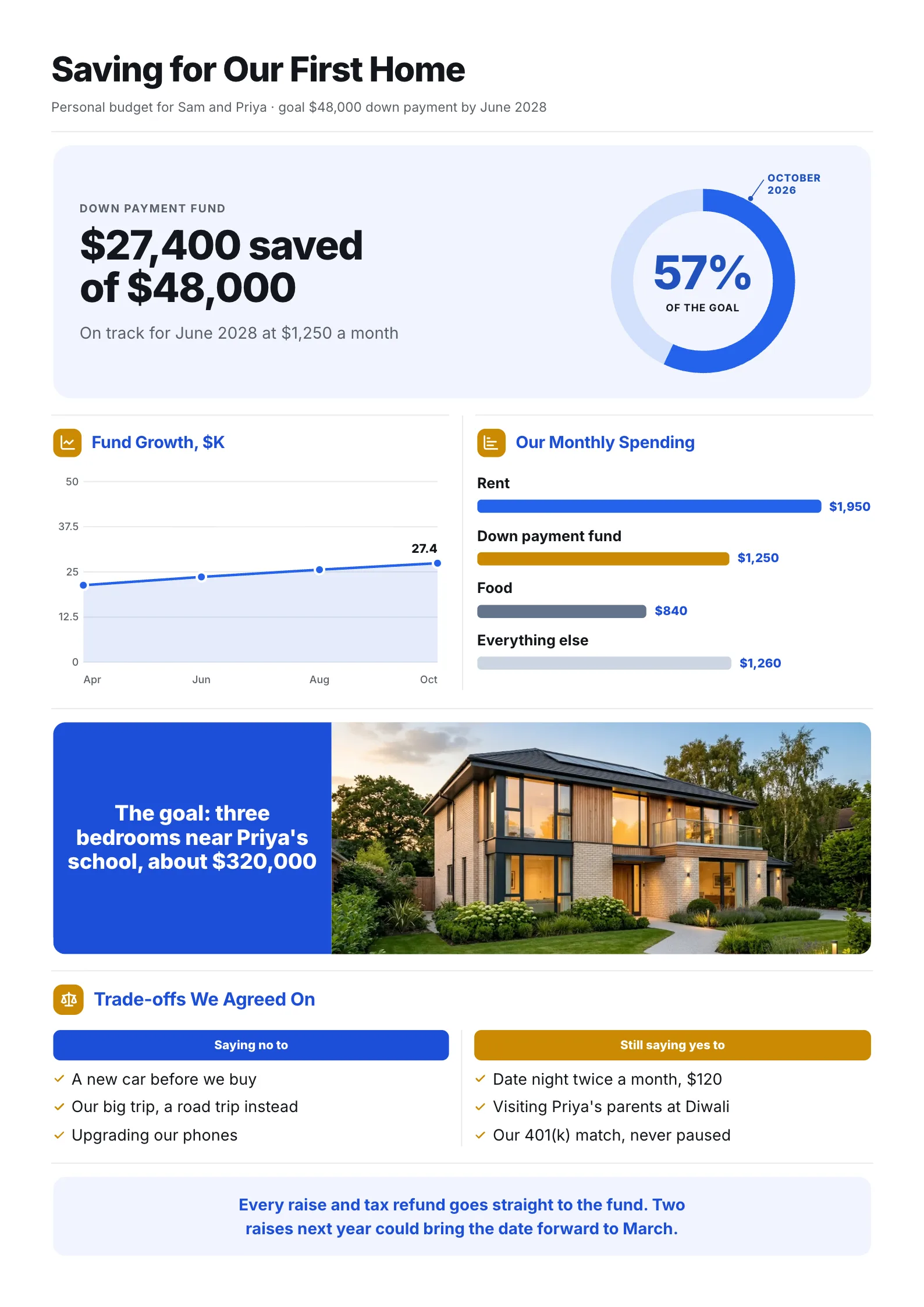 Personal Budget: Saving for a HouseEdit for free(opens in a new tab)
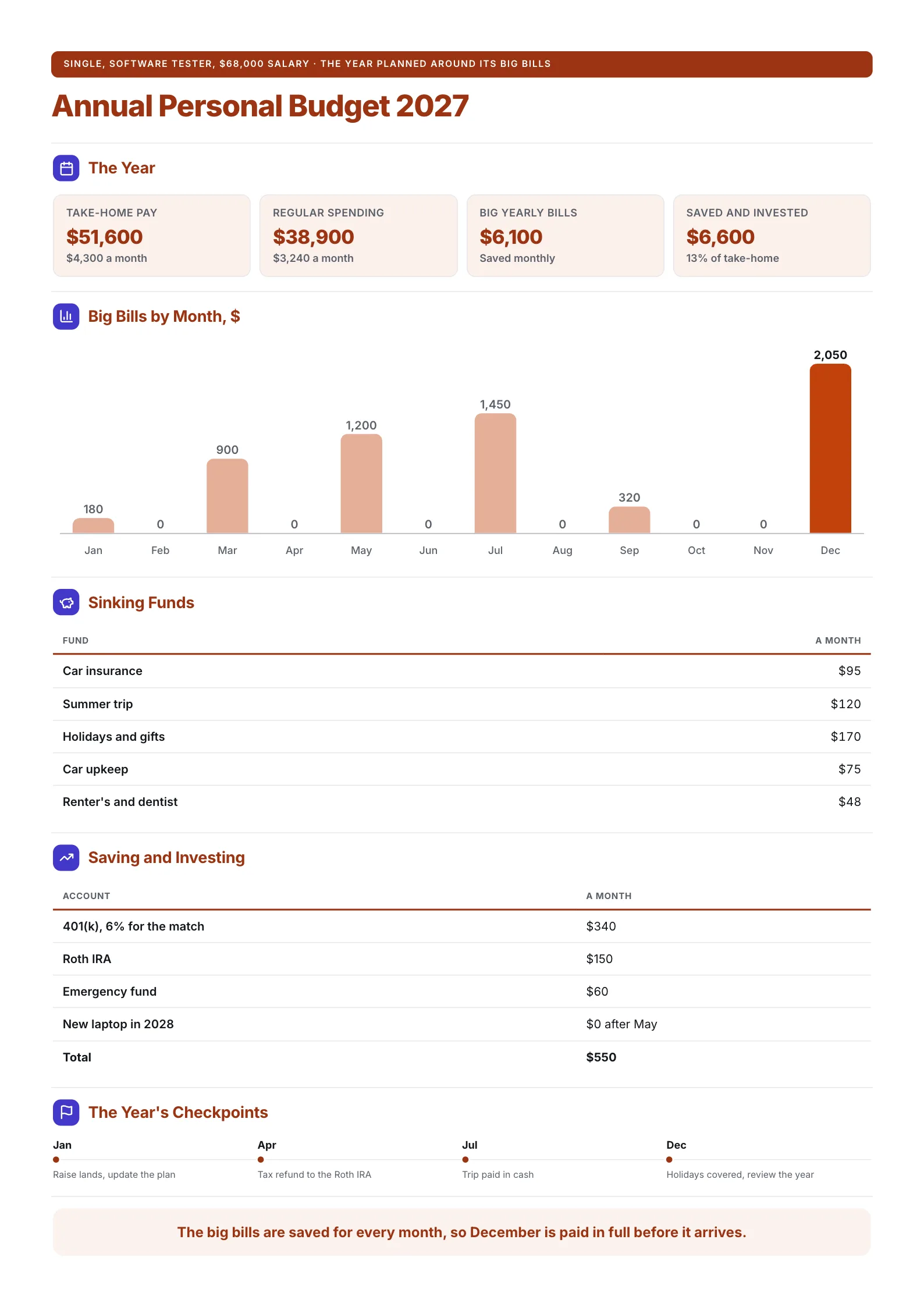 Personal Budget: Annual Plan with Sinking FundsEdit for free(opens in a new tab)
Each budget below comes from MakeOnepagers, on one page, with made-up names and sums that add up. Find the one closest to your life and borrow its rule.
The rule, and where the five land
A student worksheet from the Consumer Financial Protection Bureau puts it this way. Look at your monthly net income and "plan to use 50 percent of it on needs, 30 percent on wants, and 20 percent on savings goals." It then asks you to list each expense, add up each group, divide by your income and write down what you'd change.
We did what the sheets allow. Needs and savings are our own sorting, and we left wants out because only the zero-based page labels them, so this is a comparison and falls short of a full score against all three shares.
| Household | Money in | Needs share | Set aside | What we counted |
|---|---|---|---|---|
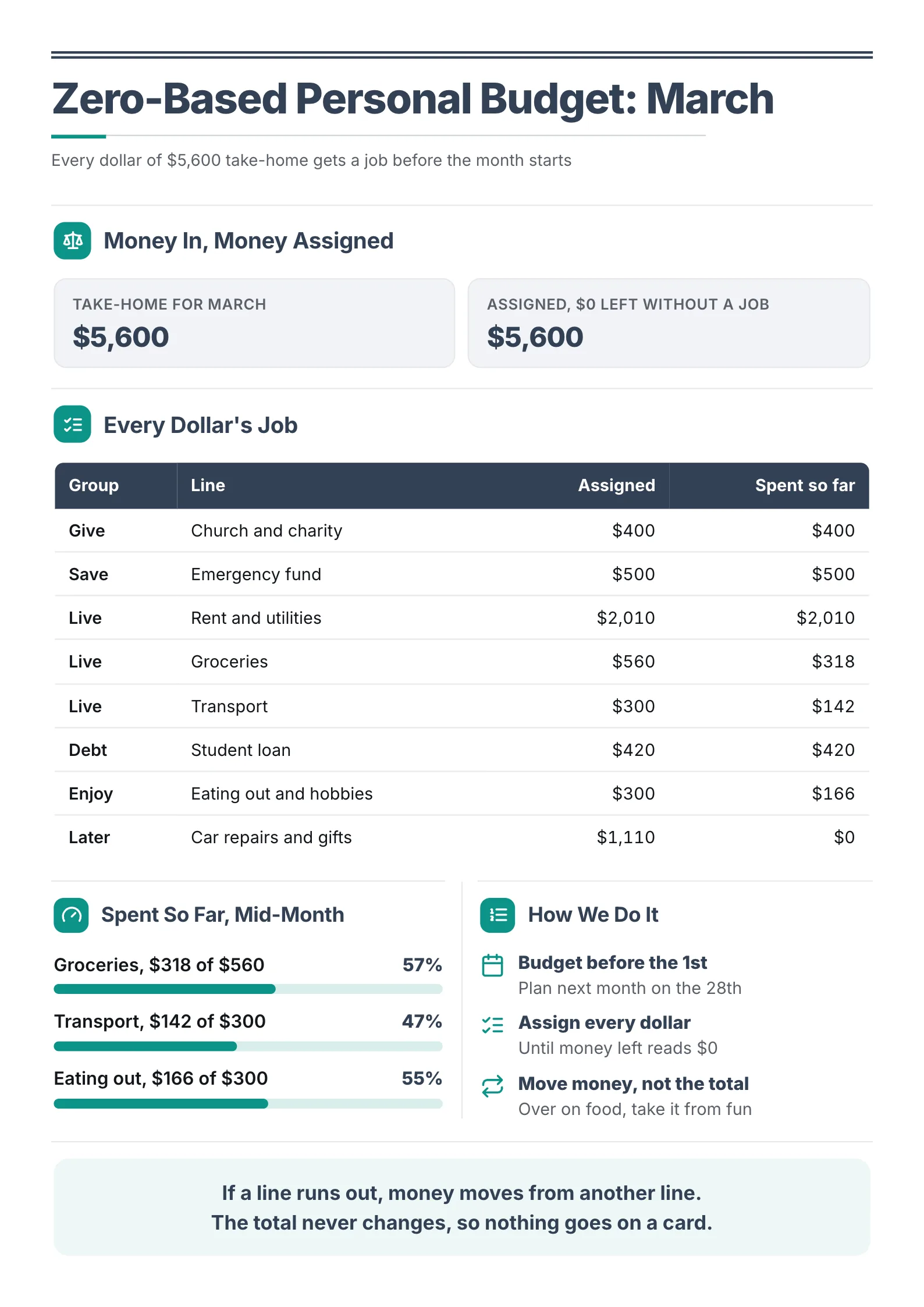
| Zero-based, March | $5,600 | 59% | 29% | Rent, groceries, transport and the student loan as needs; $500 emergency fund plus the $1,110 Later line |
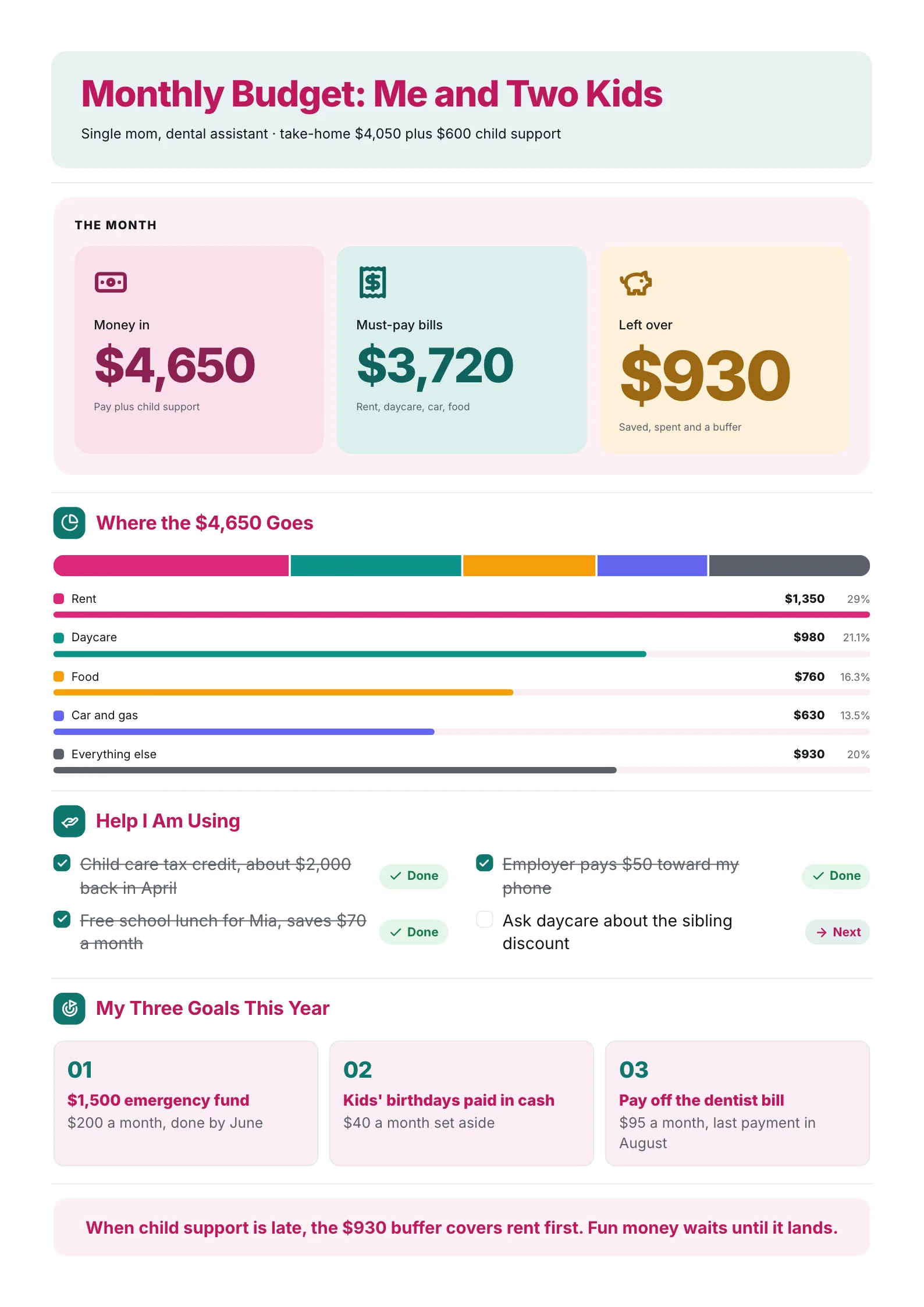
| Single mom and two kids | $4,650 | 80% | 5% | Her "must-pay bills" line of $3,720; the $200 emergency fund goal plus $40 for birthdays, $240 or 5.2% |
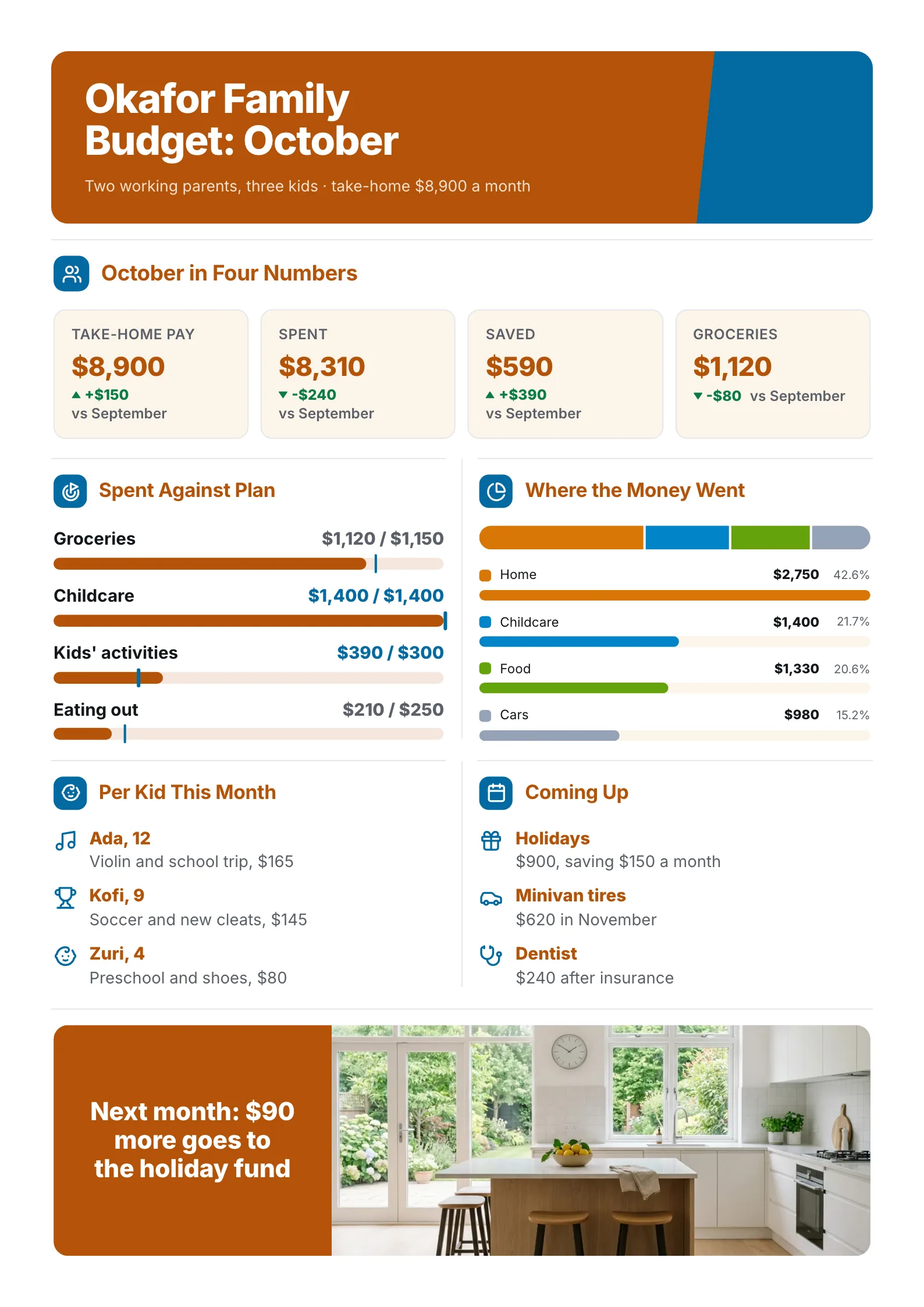
| Okafor family, three kids | $8,900 | At least 59% | 7% | Home, childcare and groceries as needs, leaving out a mixed "cars, kids and other" line; $590 saved |
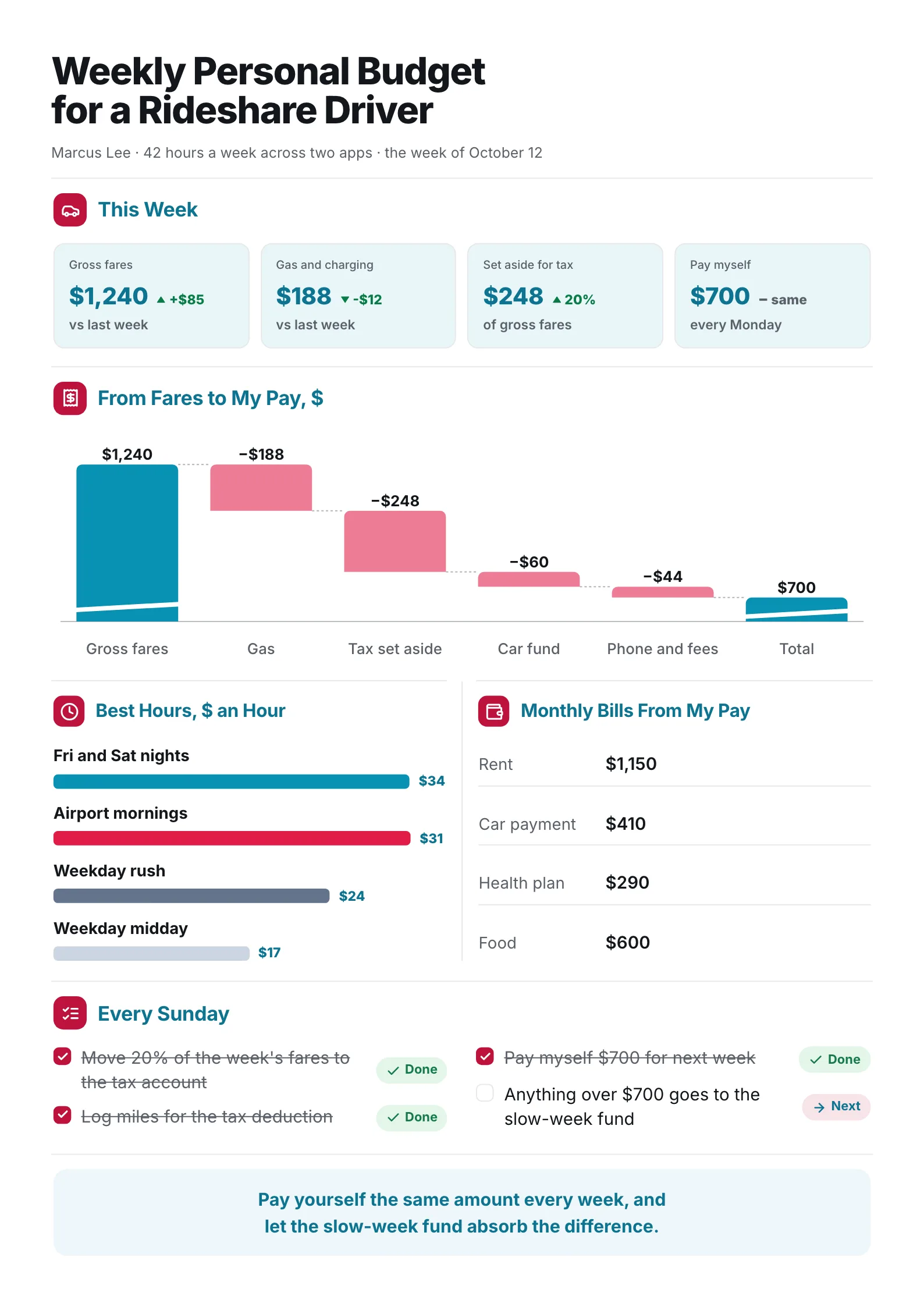
| Rideshare driver | About $3,030 a month in pay | 81% | Varies | $2,450 of bills from $700 a week; slow-week fund on top |
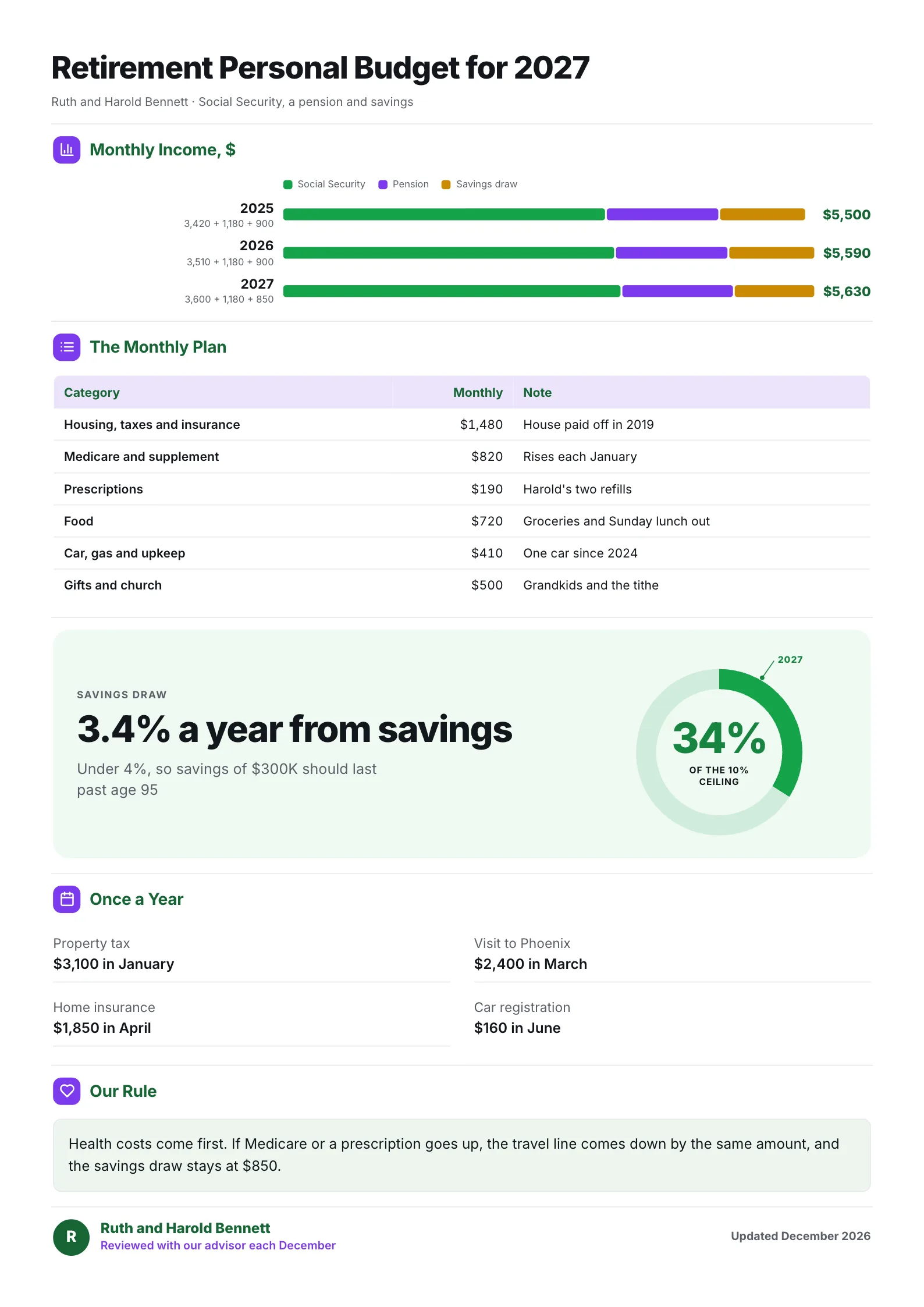
| Retirees | $5,630, including an $850 savings draw | 64% | None; they draw $850 | $3,620 of the $4,120 plan: everything but gifts and church |
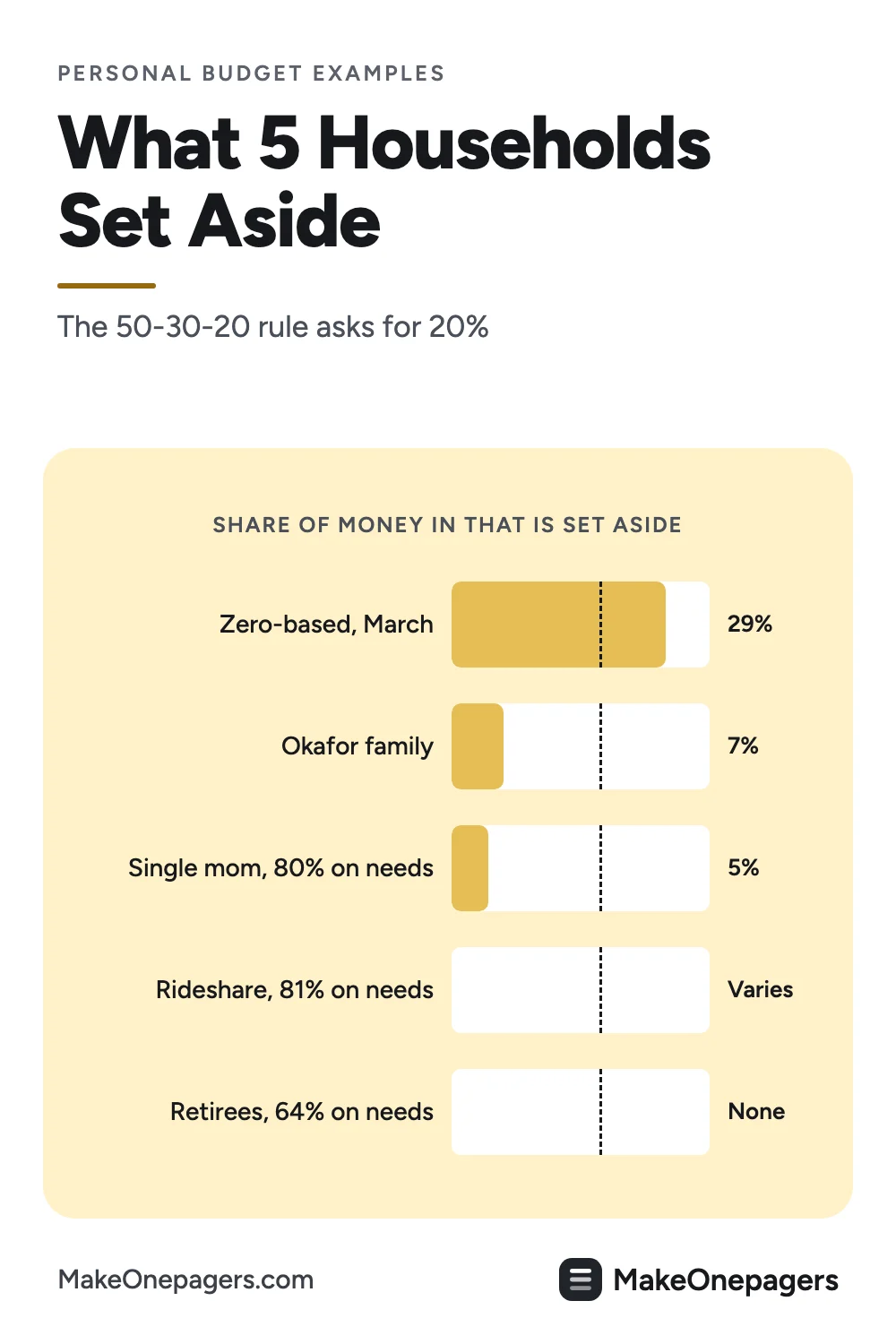
Where we can measure it, all of them run past 50% on needs. On the three pages with a monthly savings figure, counting every line set aside for later, the zero-based month clears 20%, and the single mom's 5% and the Okafors' 7% don't come close. The rule tells you which way to lean, and your page has to say what you'll do with the difference.
Zero-based: when you want every dollar named
This is the closest of the five to the worksheet's method, because every dollar lands in a group.
 Edit this template
The "Spent so far" column turns a plan into something you can check mid-month.
Look at the $1,110 "Later" line for car repairs and gifts. That's how you stop a known bill from ambushing you. How We Do It says it plainly: over on food, take it from fun. Your total stays the same, so nothing lands on a card.
A single parent: name the buffer
Eighty percent on must-pay bills leaves little room, and this page doesn't hide it.
 Edit this template
Help I Am Using lists the tax credit and free school lunch, with a box for the next thing to ask about.
She plans for the thing most likely to go wrong: "When child support is late, the $930 buffer covers rent first." Write your version of that sentence, naming your shakiest income and which bill gets paid first. You'll be glad you decided on a calm day.
A family of five: give each kid a line
Kids of 12, 9 and 4 cost different amounts in different months, so this page names what each one cost.
 Edit this template
Kids' activities ran $390 against a $300 plan, and Per Kid This Month shows where it went, down to "Soccer and new cleats, $145."
At 7% saved, this family falls well short of the 20% line, even on two incomes, because home and childcare take $4,150 of the $8,900. The part to copy is the kid-by-kid list, which shows what each child cost before you plan next month.
A gig driver: pay yourself a salary
When your income changes every week, a percentage of "monthly income" won't tell you much. Marcus works from fares down.
 Edit this template
Best Hours compares what each shift pays, so the budget also helps plan the week.
The takeaway line is one you can copy as is: "Pay yourself the same amount every week, and let the slow-week fund absorb the difference." If your income is uneven, pick the number you can pay yourself in a slow week. Tax comes out before he pays himself, too, so that money never feels like yours.
Retirees: the rule flips
The 50-30-20 rule assumes you're still earning. Ruth and Harold are drawing down, so the question becomes how long the money lasts.
 Edit this template
Once a Year lists property tax, home insurance, a visit to Phoenix and car registration, each with its month.
Their rule says what gives first: "If Medicare or a prescription goes up, the travel line comes down by the same amount, and the savings draw stays at $850." Your parents' budget, or your own, could use a sentence that clear.
Score your budget
You can run the worksheet's check in about 15 minutes:
- Write your monthly take-home pay at the top.
- List your bills and spending from last month, using your bank statement.
- Mark each one as a need, a want or savings. Your debt minimums go under needs.
- Add each group and divide by your take-home pay.
- Write one sentence on what you'll change, and one on what gives first if money runs short.
A percentage shows you where you stand, and your rule tells you what to do when things go wrong.
For a blank page and the parts to include, see our personal budget template post.
The sentence four pages share
Four of these five pages say what gives when money runs short: move it from another line, cover rent first, let the slow-week fund absorb it, take it from travel. You can write yours before you've added up a single bill.
Frequently asked questions
Do you have to follow 50-30-20?
No. It's a starting check. In our five samples, nobody we could measure lands on it, and housing or daycare alone can take your needs well past 50%.
Does debt count as a need or as savings?
Count the minimum payment as a need, since you have to pay it. The worksheet leaves the sorting to you, and asks you to explain why you put each expense where you did. Extra payments can go toward your savings goals.
How often should you redo your budget?
Check it monthly, as a Spent column lets you do, and redo it when your income or a big bill changes.
What percentage of income should go to savings?
The worksheet's starting figure is 20%. The three samples we could measure run from 5% to 29%, so treat it as a direction and set a share you can keep up.




