Vendor Comparison Template: Free One-Page Decision Sheet
Free one-page vendor comparison template: the 6 parts a supplier decision needs, with two payment providers compared on cost and terms.

A vendor comparison template puts your supplier choice on one sheet. You list every vendor you looked at and set the finalists side by side. Then you name your pick, give the reason, say what would change your mind, and finish with the steps that happen once your committee says yes. Buyers and IT leads use one to get a choice approved fast. Your long scoring spreadsheet shows the work. A short vendor comparison is what gets people to agree. Below you'll find the six parts to include, a free template you can copy and a worked example. Start from a free one pager template.
One‑Pager examples
Real One-Pagers made with MakeOnepagers. Open any one to edit it as your own.
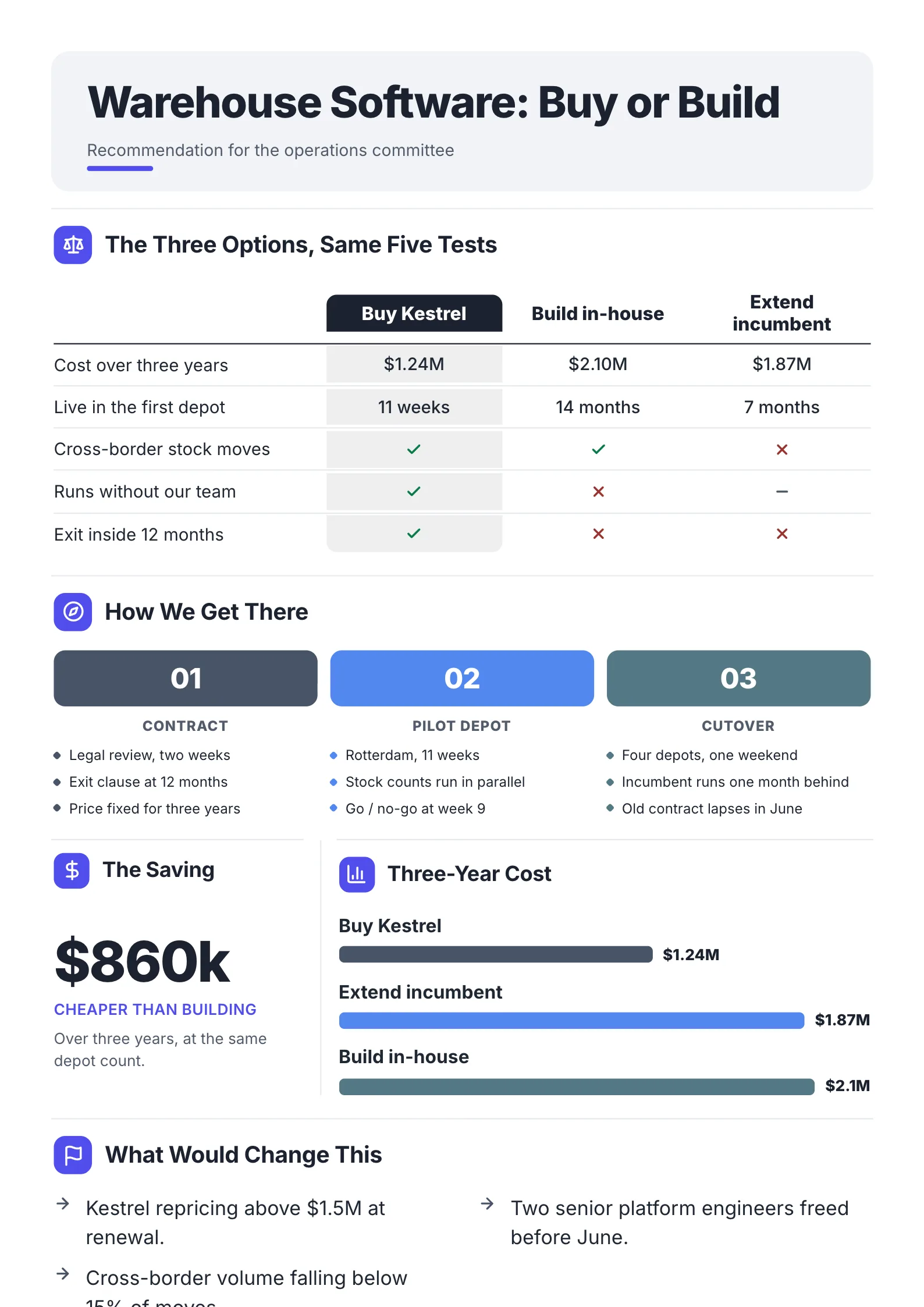 Buy vs Build DecisionEdit for free(opens in a new tab)
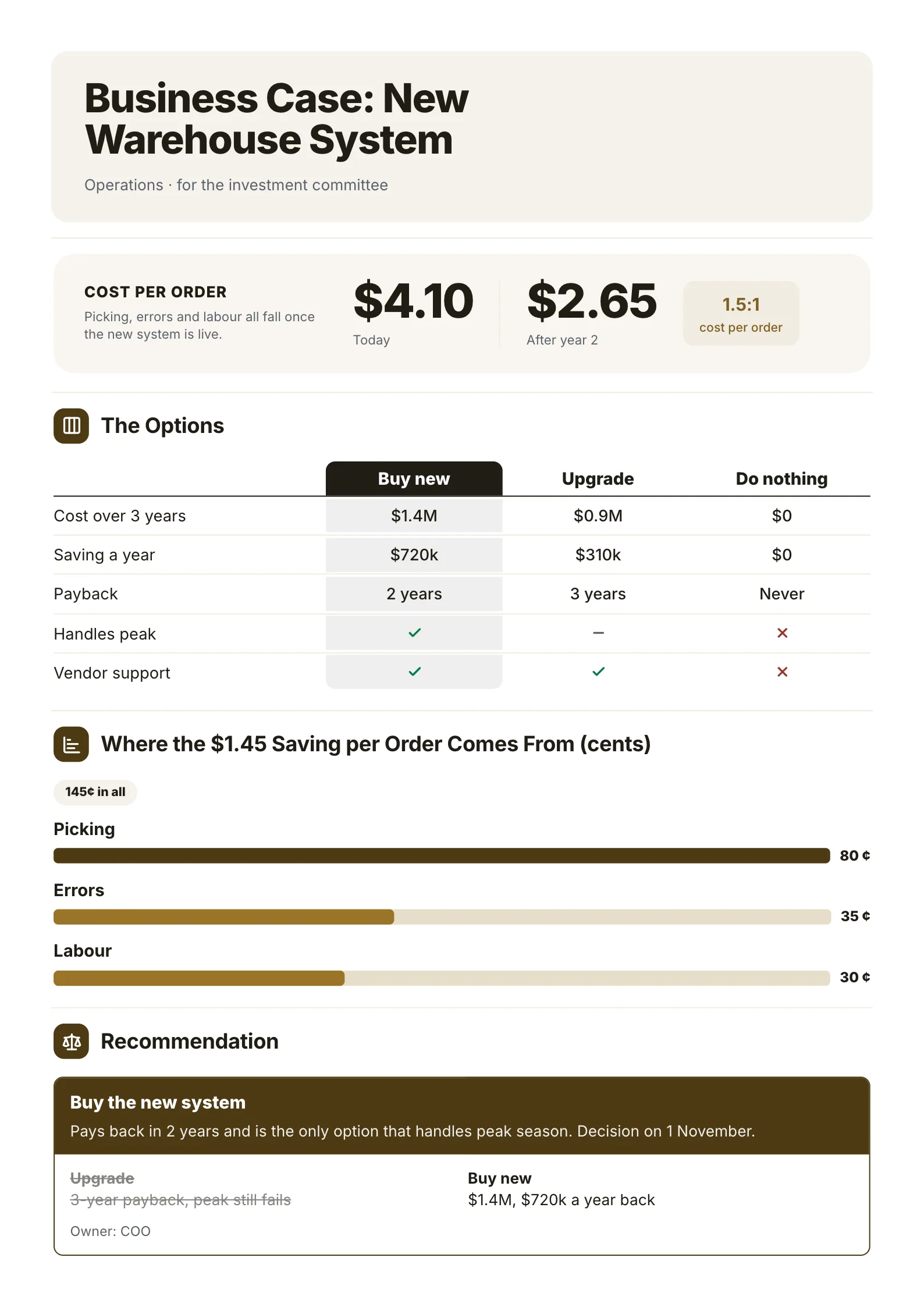 Business CaseEdit for free(opens in a new tab)
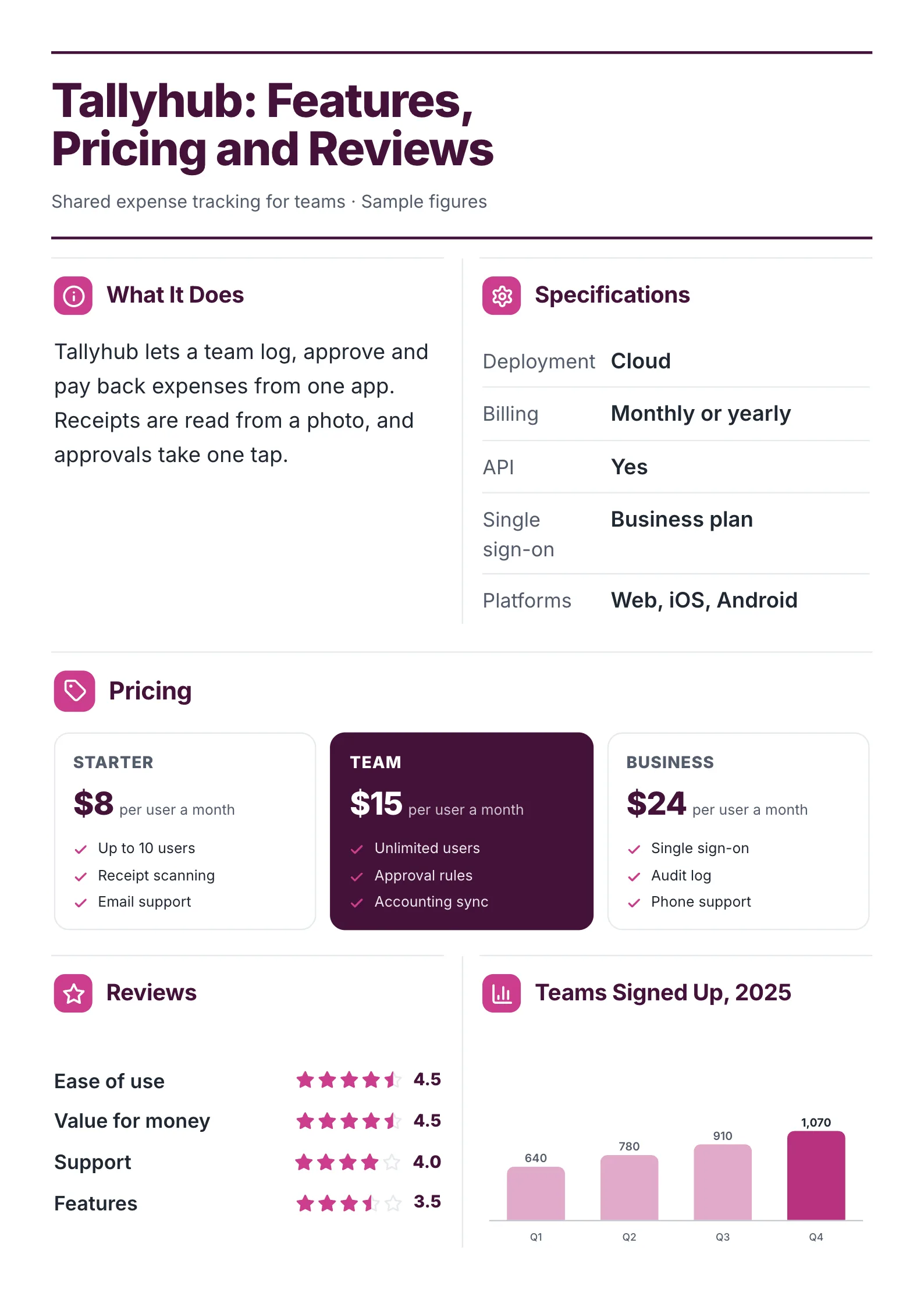 Software Features, Pricing and ReviewsEdit for free(opens in a new tab)
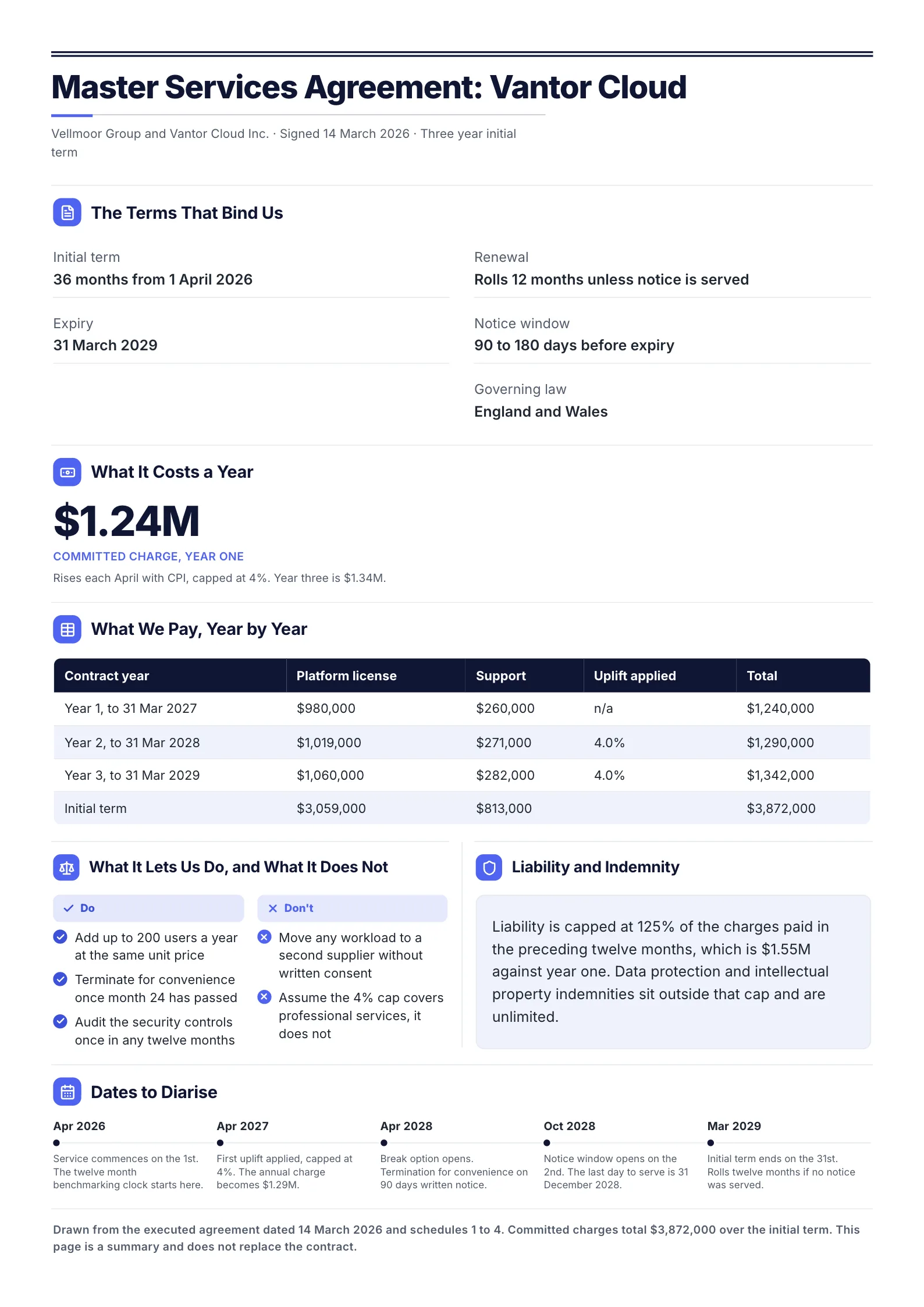 Contract SummaryEdit for free(opens in a new tab)
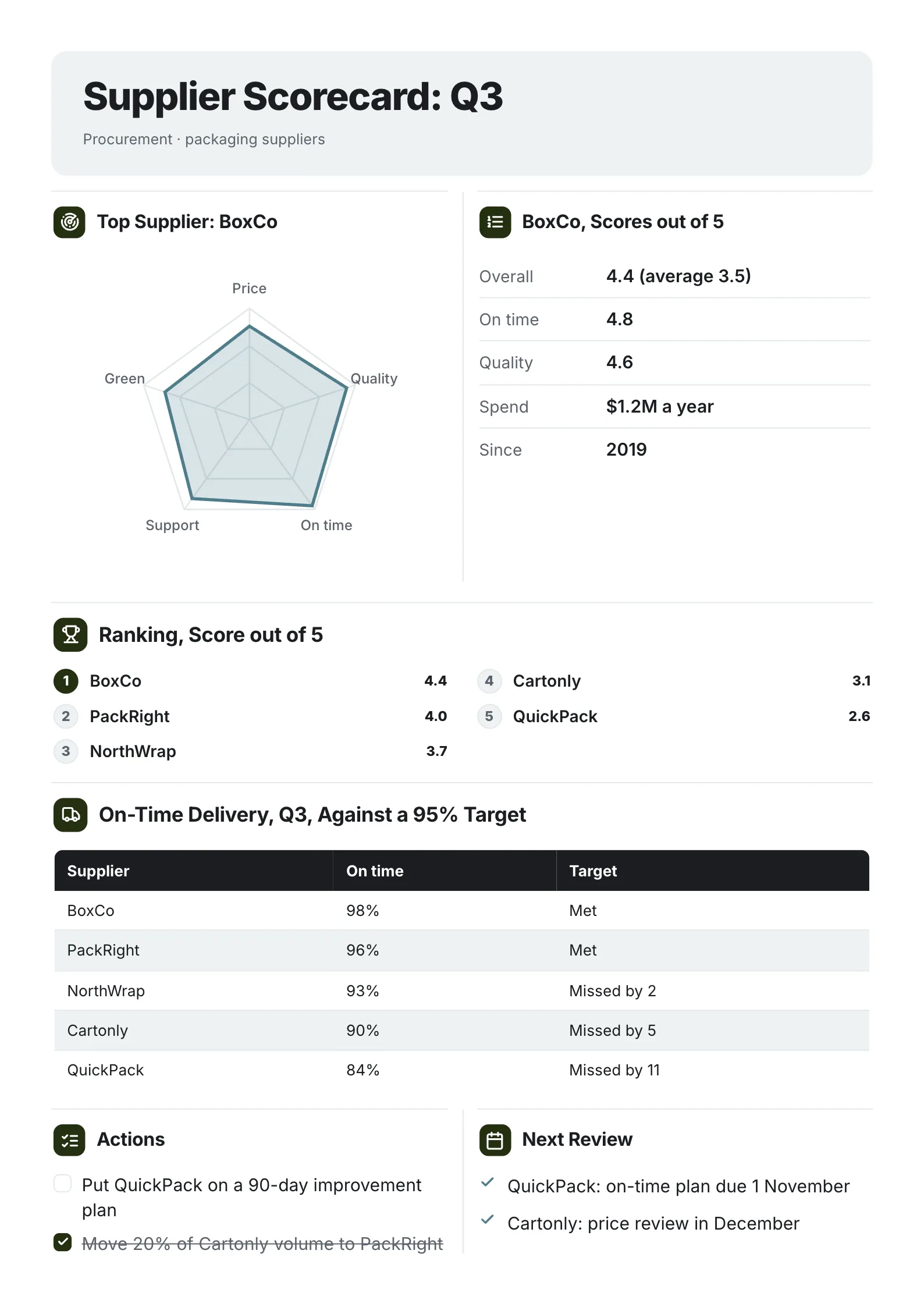 Supplier ScorecardEdit for free(opens in a new tab)
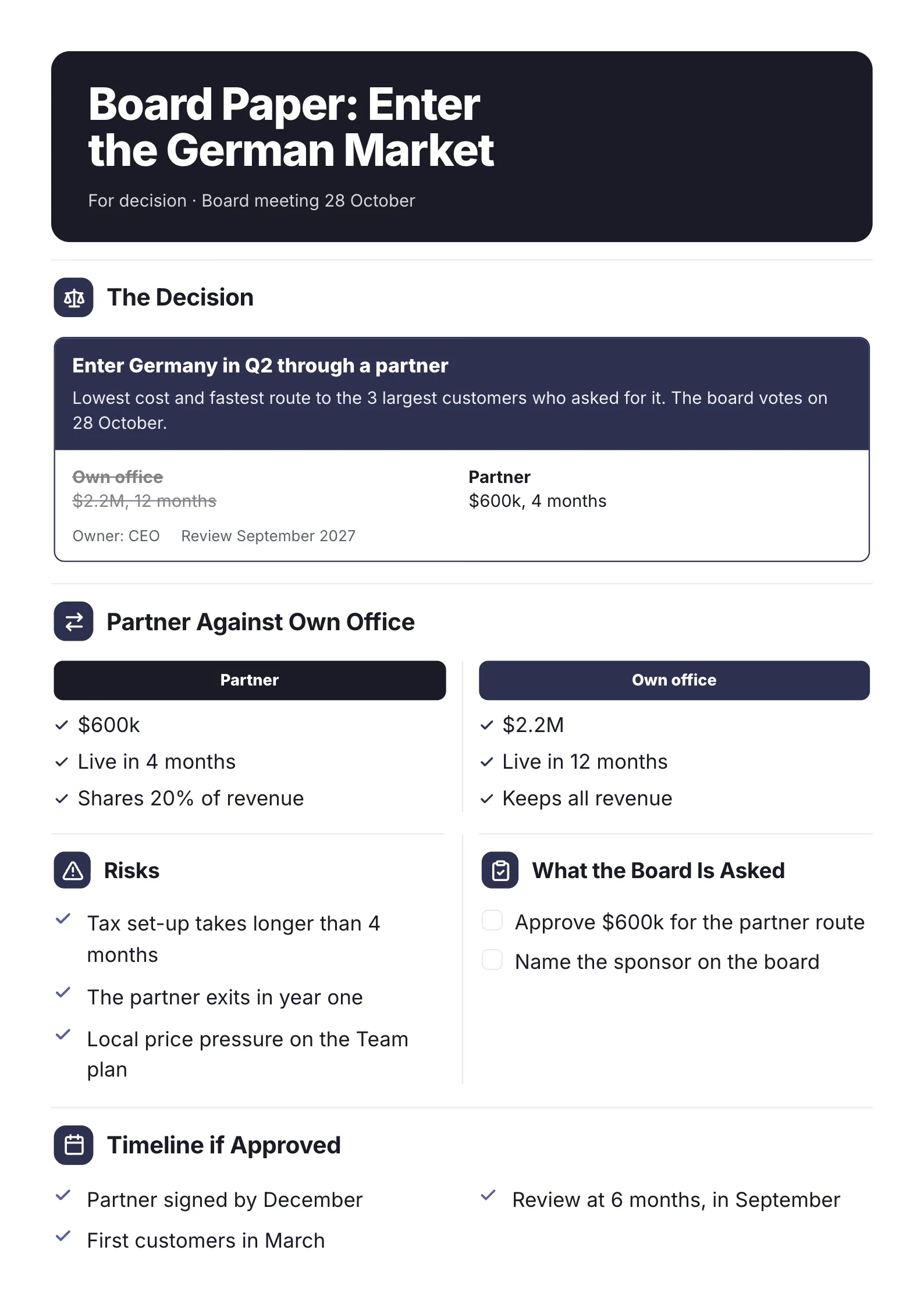 Board Decision PaperEdit for free(opens in a new tab)
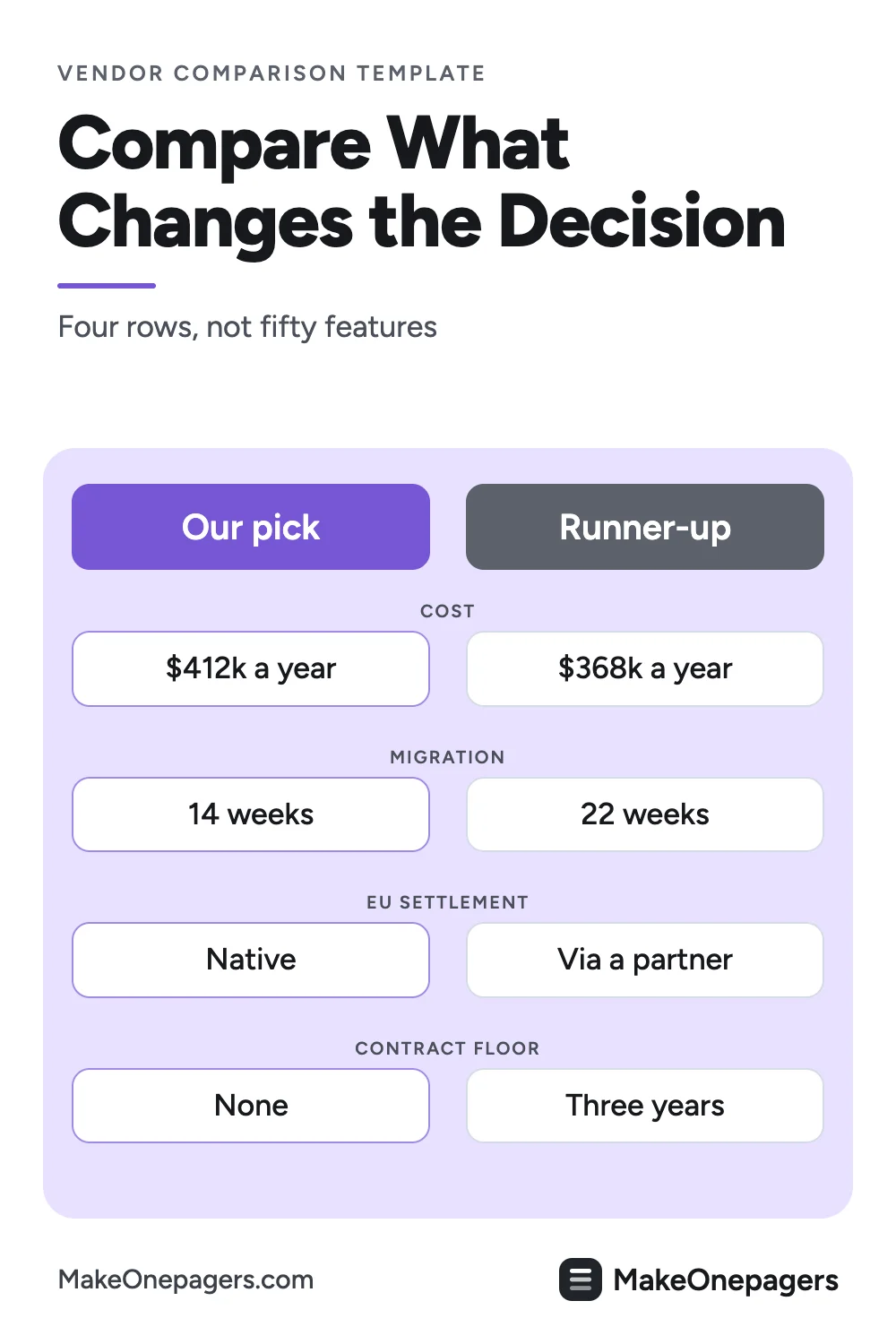
The example was made with MakeOnepagers. It opens as a template you can edit for free, down to each word and chart.
What is a vendor comparison?
A vendor comparison (or vendor selection summary) looks at suppliers for the same need and recommends one. The need might be software, payments or office services. It sits on top of your detailed scoring sheet, and in most companies it's the only part the people who sign off on the budget will actually read.
The best ones are short and specific. They compare a handful of things that change the answer. You can skip the fifty features nobody weighed.
The 6 parts of a vendor comparison
- The decision and who it is for.
- The field: every vendor considered, grouped by fit and risk, including those ruled out and why.
- The finalists side by side: cost, time to switch and the contract terms that matter.
- The recommendation, in two or three sentences with the trade-off.
- What would change this: the conditions that would flip the answer.
- If approved: the steps and dates.
A free vendor comparison template
Copy this into a document, or open the example below and edit it.
| Part | What to write, with an example |
|---|---|
| Title | Decision and audience. Payments Vendor Decision, for the technology committee |
| The field | Vendors by fit and risk. Ruled out: Orbit (no EU entity) |
| Finalists | 4 rows. Cost at our volume: $412k a year against $368k |
| Recommendation | 2 or 3 sentences with the trade-off |
| What would change this | 3 conditions. Our EU volume falling below 15% of total |
| If approved | 4 dated steps. Oct: parallel run on 5% of volume |
Vendor comparison example
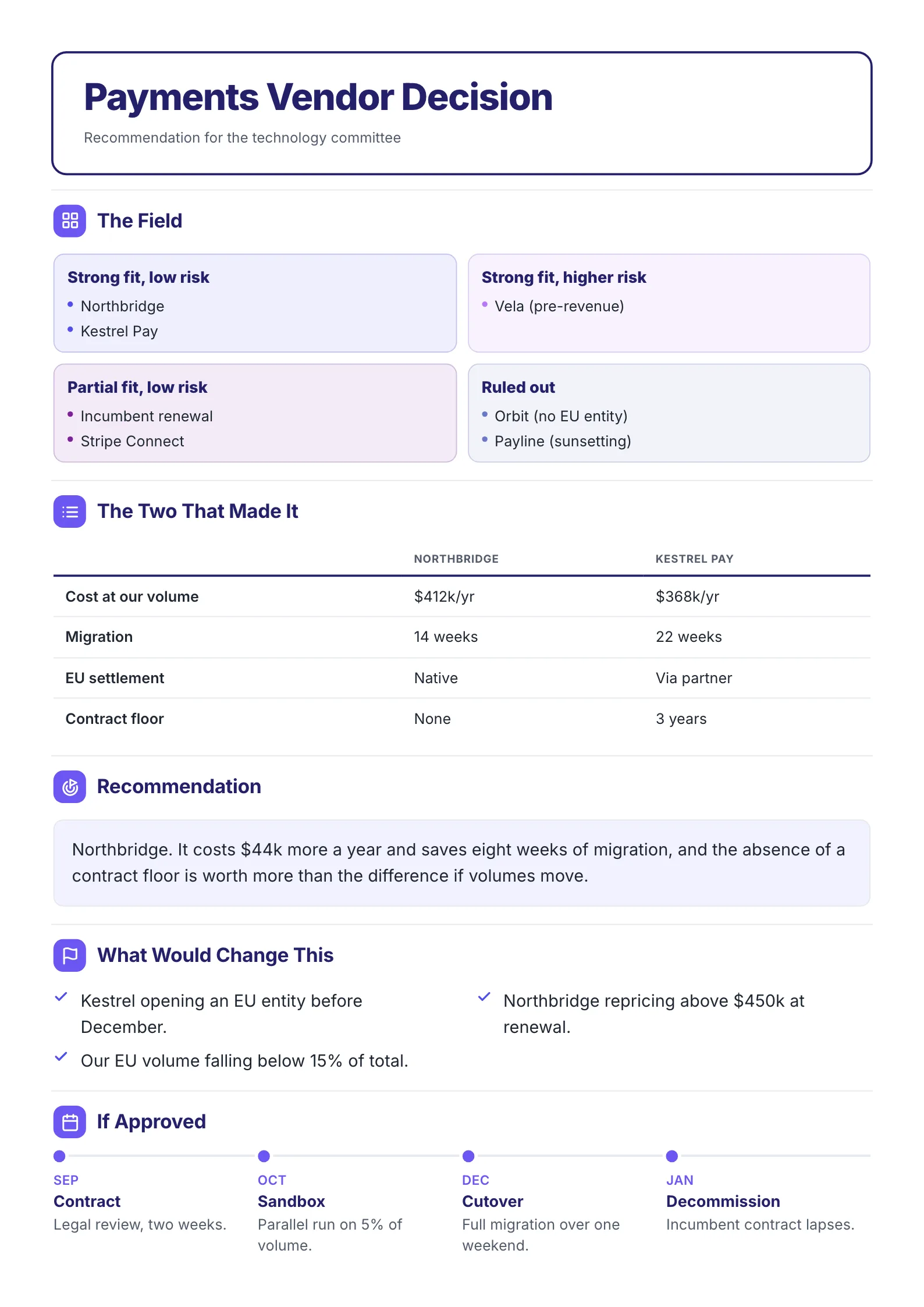 Edit this template
Your supplier choice on one sheet shows who you considered and who won. It also shows what would change the answer.
What to copy:
- The whole field, including the ruled out: Orbit (no EU entity) and Payline (sunsetting). The committee sees the search was wide, and nobody asks "did you look at...?"
- Four rows that decide it: cost at our volume $412k against $368k, migration 14 weeks against 22, native EU settlement against via a partner, no contract floor against three years.
- A recommendation that admits the cost: it costs $44k more a year, saves eight weeks of migration, and the absence of a contract floor is worth more than the difference if volumes move.
- What would change it: the rival opening an EU entity before December, or the winner repricing above $450k at renewal. The committee knows exactly what to watch.
You can edit this vendor comparison template for free.
What to compare between vendors
| Area | Questions to answer |
|---|---|
| Cost | Total cost at your volume, not the list price |
| Switching | How long and how risky is the move? |
| Fit | Does it do the few things you cannot work without? |
| Contract | Minimum term, exit terms, price rises |
| Risk | Is the vendor stable? Where is it based? |
How to write a vendor comparison in 6 steps
- Write the decision in one line and who makes it.
- List every vendor considered and rule out the ones that fail a must-have, with the reason.
- Compare the finalists on four or five things that change the decision.
- Recommend one and state the trade-off plainly.
- Write three conditions that would change your answer.
- Add the dated plan for what happens if it is approved.
Do you already have a scoring spreadsheet or a long RFP response? Drop it into the free AI One-Pager generator and you'll get it back as a designed vendor comparison.
Vendor comparison mistakes
- Comparing list prices. Price at your volume is what you will pay.
- Fifty features. Most of them do not change the decision. Show the ones that do.
- Hiding the trade-off. If the winner costs more, say so and say why.
- No plan after the yes. Committees approve faster when they can see the next steps.
Make your vendor comparison
Open the free vendor comparison template and put in your vendors. Or drop your scoring file into the free AI One-Pager generator and get a finished decision sheet back.
Frequently asked questions
What should a vendor comparison include?
Start with the choice and every vendor you considered. Then compare your finalists on what matters and give your pick. Add what would change it and your plan if it's approved.
How many vendors should you compare?
Look at five or six, then compare two or three finalists in detail.
What is the difference between a vendor comparison and a vendor scorecard?
A vendor comparison helps you choose a supplier. A vendor scorecard rates a supplier you already use, usually every quarter.
Who approves a vendor selection?
Usually a budget holder or a committee signs off, and on a big contract your buying team and your finance lead will both want to weigh in before anyone signs.




