Sermon Notes Template: Free One-Page Notes, With Example
A free one-page sermon notes template that ends with what to do this week, with the big idea, the passage and an example on the book of Habakkuk.


A sermon notes template puts one message on a single sheet. You write the big idea and the passage with its background. Then you add the main movements of the text, the lines worth remembering and what to do with it this week. Pastors hand out a one-page outline at the service or share it online. Church members use one to follow along, then come back to it during the week. A full manuscript is too long to take home. A page of scribbles is hard to read on Wednesday. A one-page sermon notes template sits in between. Below you'll find the six parts that keep your notes useful all week, a free template you can copy and a worked example. Start from a free one pager template.
One‑Pager examples
Real One-Pagers made with MakeOnepagers. Open any one to edit it as your own.
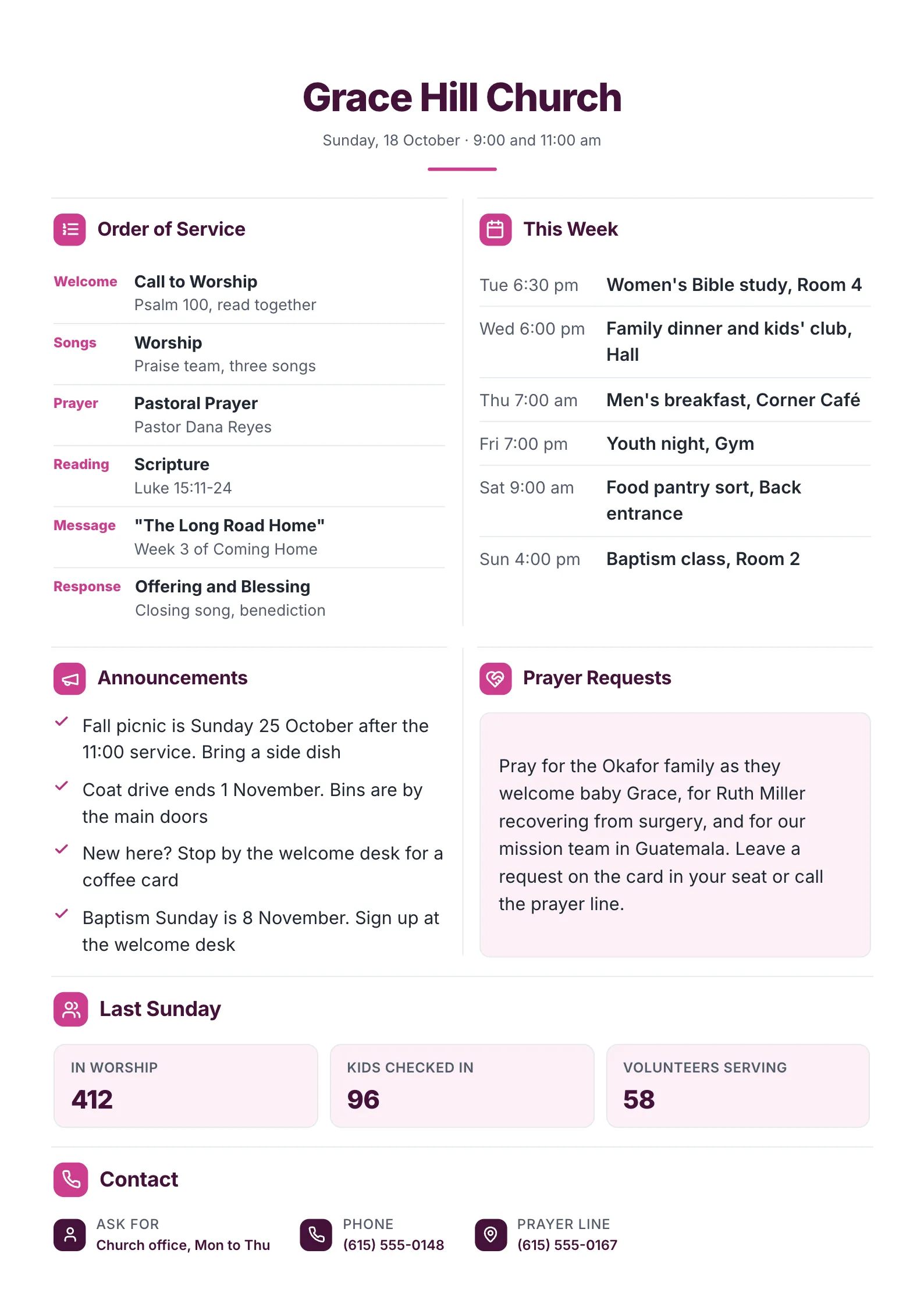 Church BulletinEdit for free(opens in a new tab)
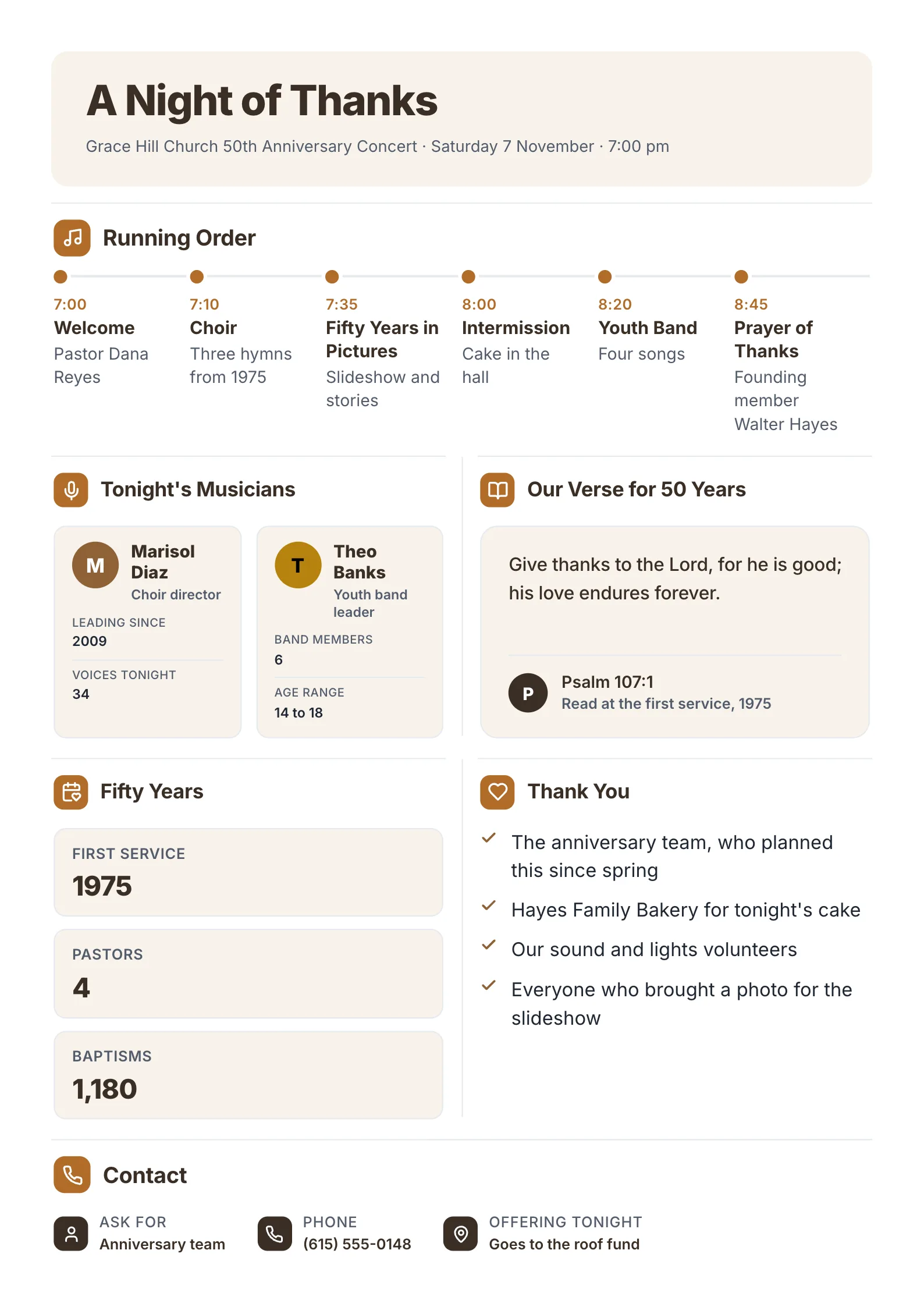 Church Event ProgramEdit for free(opens in a new tab)
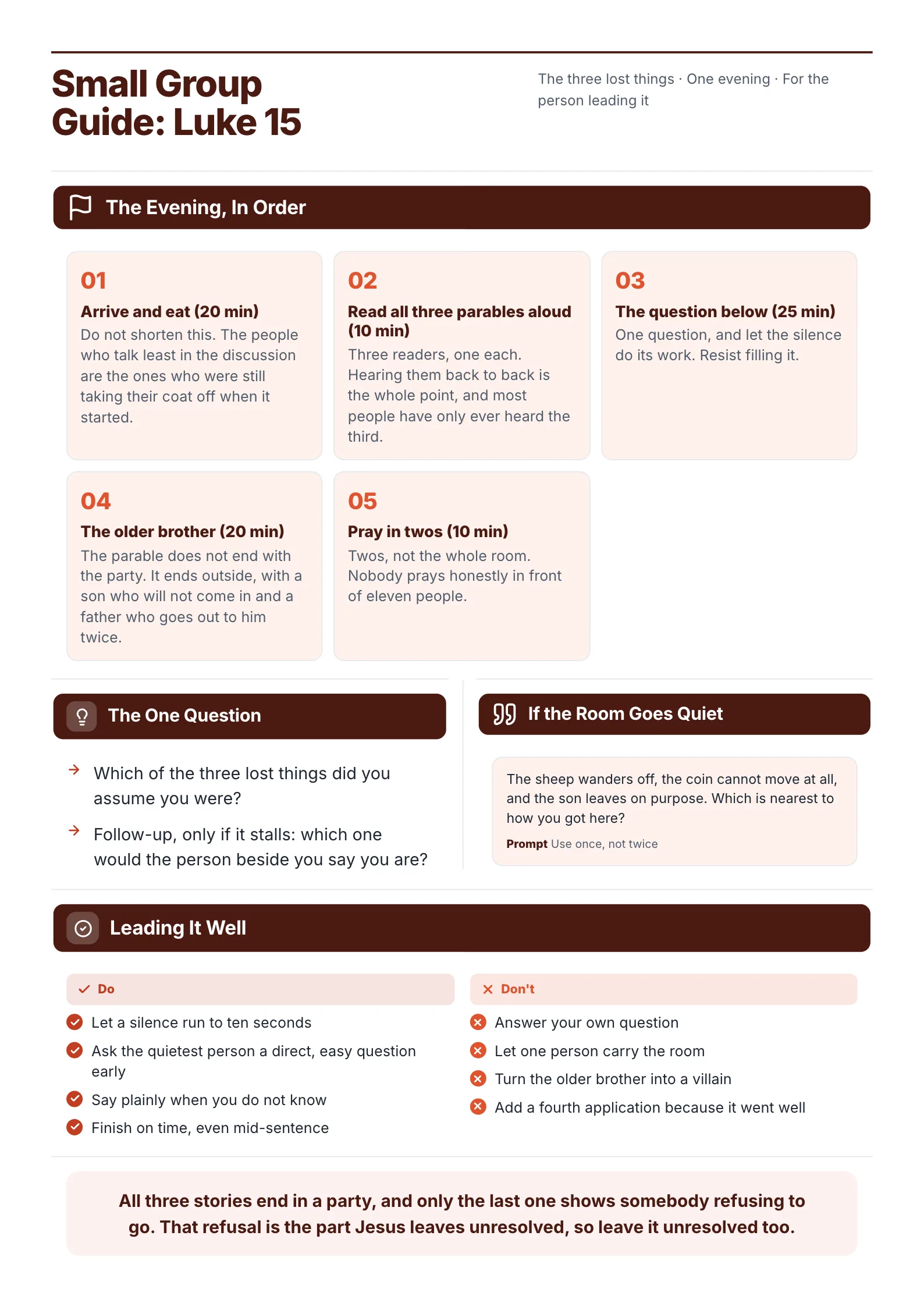 Small Group GuideEdit for free(opens in a new tab)
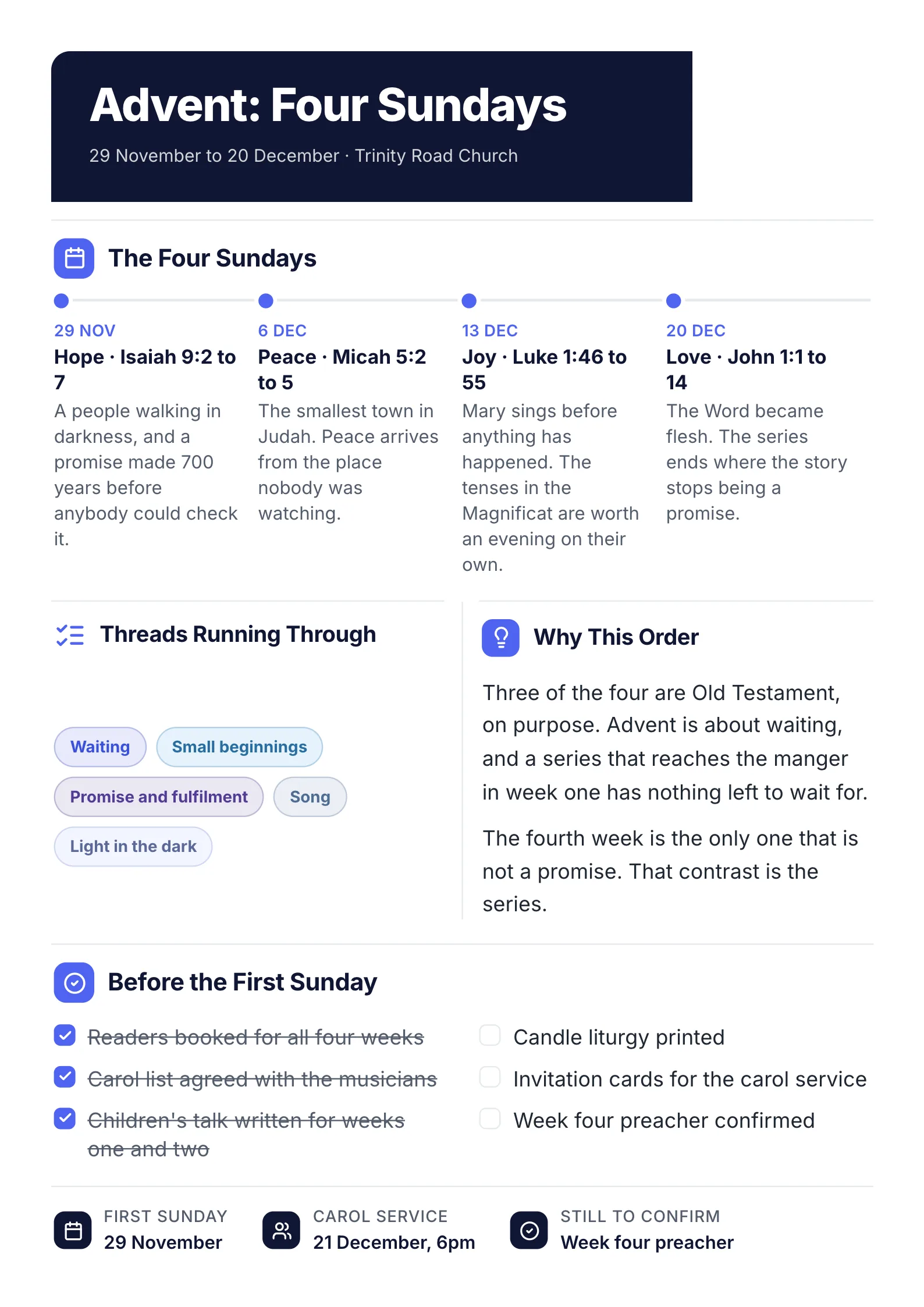 Sermon Series PlanEdit for free(opens in a new tab)
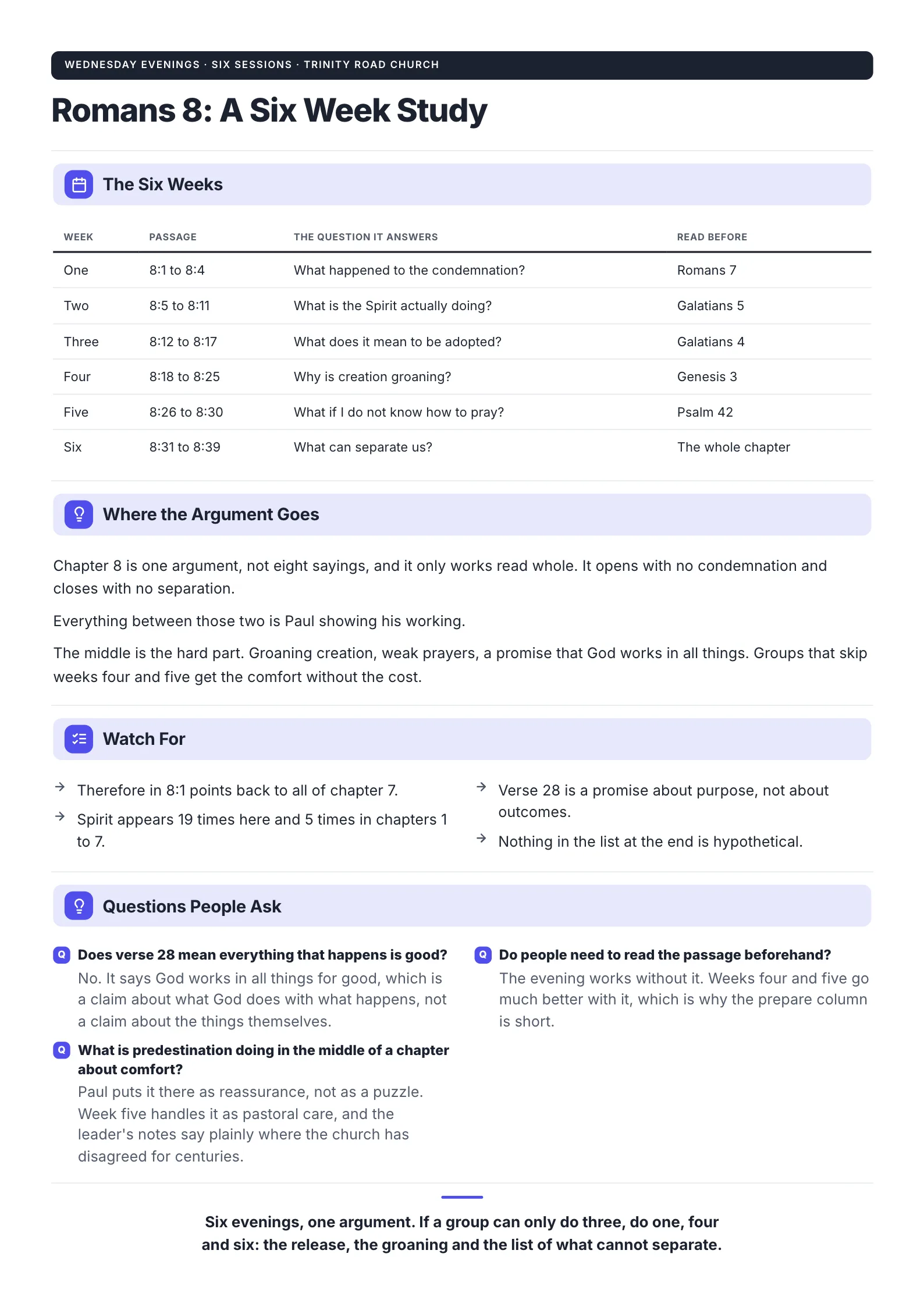 Bible Study PlanEdit for free(opens in a new tab)
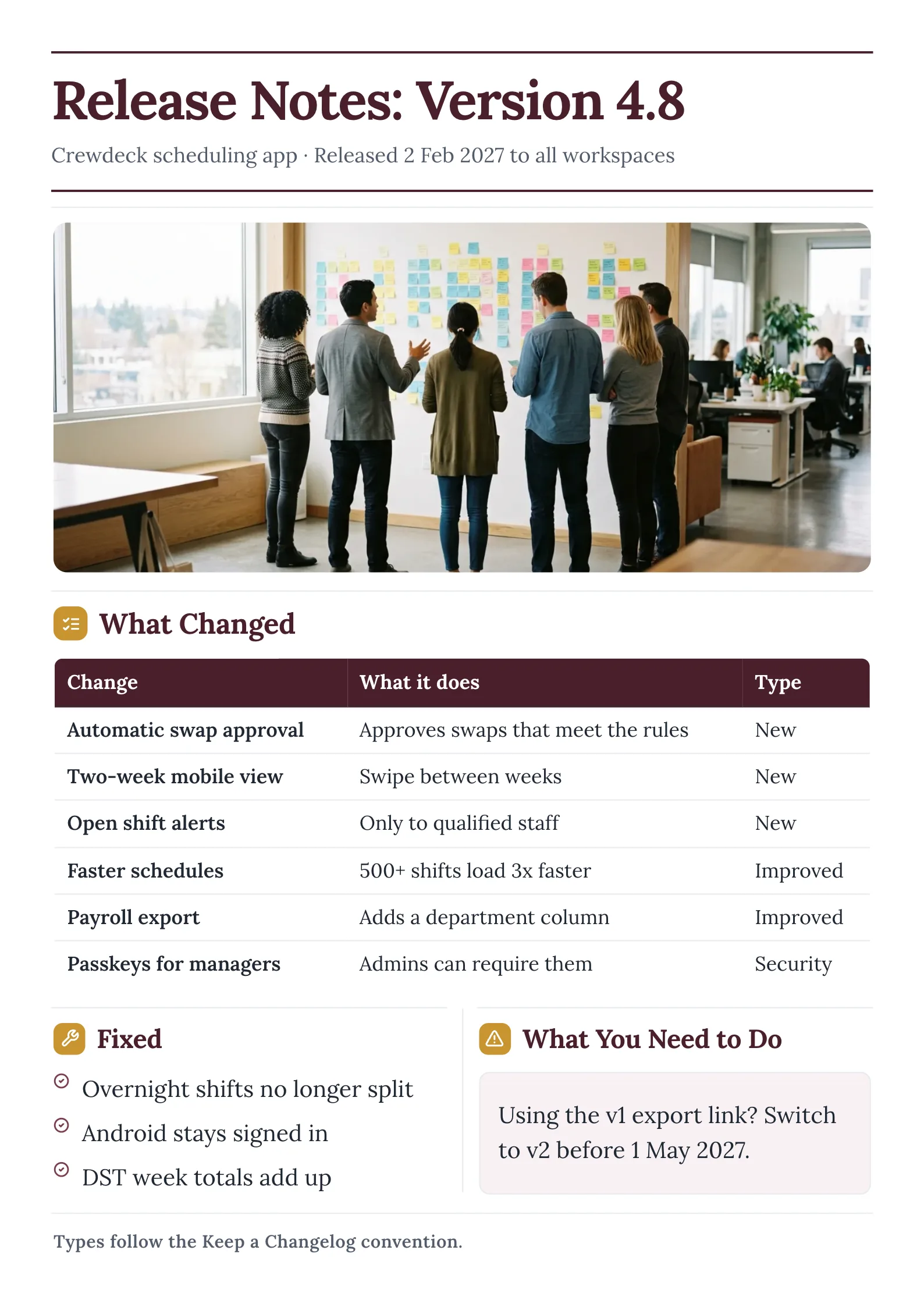 SaaS Release NotesEdit for free(opens in a new tab)
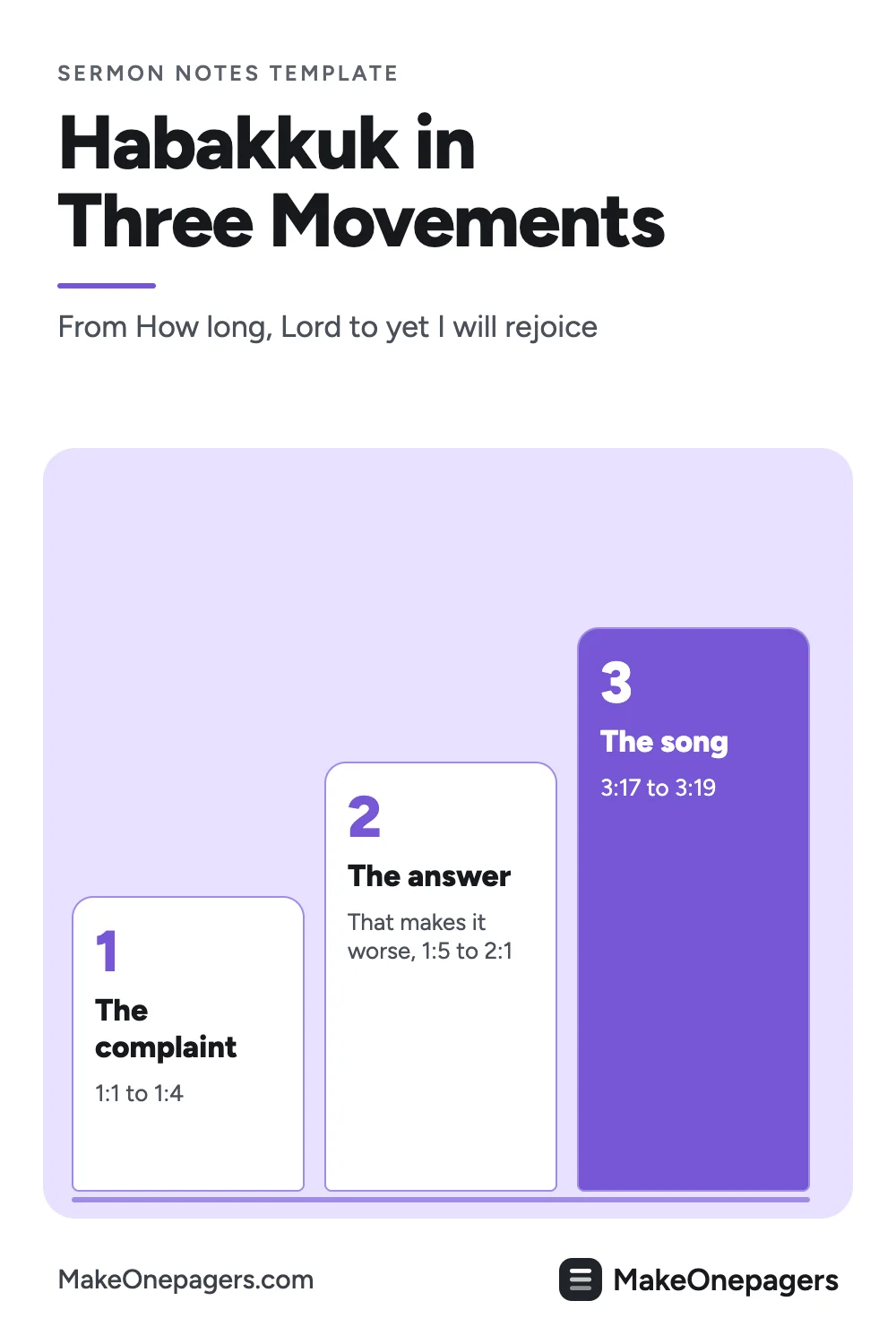
We made the example with MakeOnepagers. The church is a sample, and you can open it as a template and edit it for free.
Notes you'll open again on Wednesday
Sermon notes are a short written outline of a sermon. Your pastor may prepare them as a handout, or you may fill them in yourself during the service.
End your notes with something to do this week. Three or four small actions, each with the verse behind it, give you a reason to pull the page out again midweek.
Six parts, from the passage to this week
- Title, passage, church and date.
- The big idea: the main point in two or three sentences.
- The passage: book, chapters, background, key verse.
- The movements: the sermon's main sections, each with its verses.
- Lines to sit with: two verses worth remembering.
- This week: three or four things to do.
Fill in these six rows
Copy this into your own document, or open the example below and edit it.
| Part | What to write, with an example |
|---|---|
| Title | Title, church, date, service. Habakkuk: The Weight of Waiting, February 8, morning service |
| The big idea | 2 or 3 sentences |
| The passage | Book, chapters, setting, key verse. Habakkuk 1 to 3, key verse 2:4 |
| Movements | 3, each with its verses. The complaint (1:1 to 1:4) |
| Lines to sit with | 2 verses with references. Habakkuk 3:17 to 18 |
| This week | 3 or 4 actions. Read the whole book in one sitting |
Habakkuk in three movements
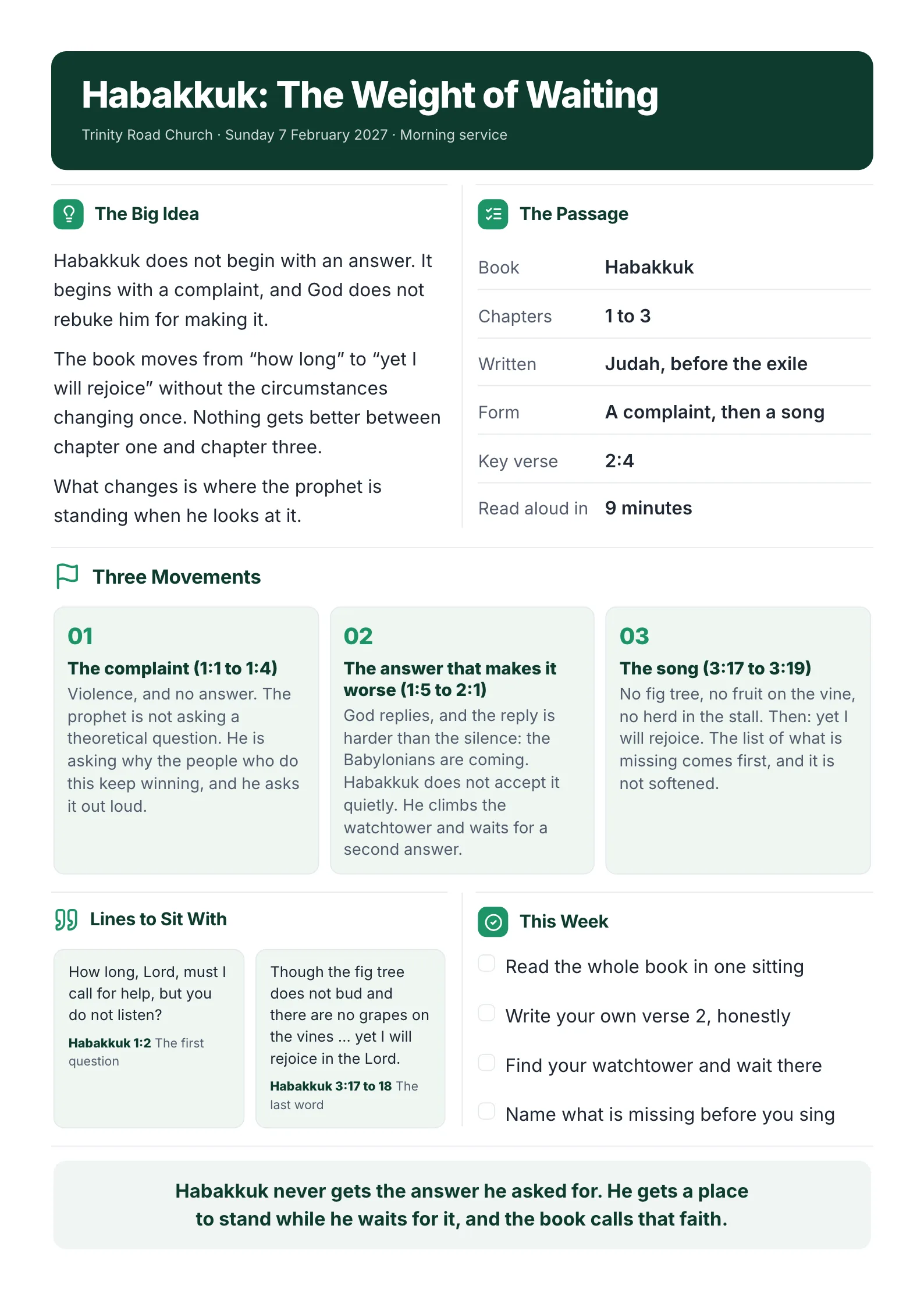 Edit this template
A whole sermon on one sheet, built for you to follow at the service and reread midweek.
What to copy:
- The big idea in plain words: Habakkuk begins with a complaint, and God does not rebuke him for making it. Nothing gets better between chapter one and chapter three. What changes is where the prophet is standing.
- Three movements, each with its verses: the complaint (1:1 to 1:4), the answer that makes it worse (1:5 to 2:1), the song (3:17 to 3:19). Listeners can find each section again.
- Two lines to sit with: the first question, "How long, Lord," and the last word, "yet I will rejoice." The sermon is held between them.
- This week as four actions: read the whole book in one sitting, write your own verse 2 honestly, find your watchtower and wait there, name what is missing before you sing.
You can edit this sermon notes template for free.
Preacher's outline or listener's notes
| Preacher's outline | Listener's notes | |
|---|---|---|
| Written | Before the service | During the service |
| Contains | Big idea, movements, application | The points that stood out, questions, actions |
| Used for | A handout or online summary | Reflection and small group discussion |
The same one-page shape works for both. If you preach, you fill it in fully. If you listen, you fill in the blanks.
Writing them, start to finish
- Write the big idea in two or three sentences.
- Note the passage: book, chapters, setting and key verse.
- Split the sermon into three movements, each with its verses and one line of explanation.
- Pick two verses worth remembering.
- Write three or four actions for the week.
- Share it at the service or online the same day.
Do you have a sermon manuscript or a long outline? Drop it into the free AI One-Pager generator and you'll get it back as designed sermon notes.
Four habits that keep notes in the drawer
- Copying every word. Notes are for the main point and the actions, not a transcript.
- No references. Without verses, nobody can find the passage again.
- No application. A sermon is meant to be lived, not only remembered.
- Too long. Keep it to one page, so the big idea and the week's actions sit side by side.
Write the week's actions before the outline
Start with the three or four things you want people to do before the next service, then work back to the movements and verses that lead there. Open the free sermon notes template and put in your message, or drop your manuscript into the free AI One-Pager generator and get finished sermon notes back.
Frequently asked questions
What should sermon notes include?
Start with the title and passage, the big idea and the main movements with their verses. Then add the verses you want to remember and your actions for the week.
How do you take good sermon notes?
Write the passage first. Then put the main point in your own words, add the verses that stood out and name one thing you will do this week.
Can sermon notes be used for small groups?
Yes. A one-page outline with questions and actions gives your small group a ready start for discussion during the week.
Should churches share sermon notes online?
Yes, on the same day as the sermon if you can. That way people who missed it, or want to revisit it, can follow the message.




