BlogGuide
Protocol Synopsis Template: Every ICH M11 Field, and What 7 Real Synopses Look Like
A protocol synopsis template built on the final ICH M11 fields, plus 7 real trial synopses measured: 2 to 9 pages, and none mention estimands.

By MakeOnepagers Team
Updated · 9 min read
A protocol synopsis template lays out the short summary at the front of a clinical trial protocol: the trial's objectives, the population, the intervention and control, how participants are assigned and blinded, how many will take part, how long they stay in, and who monitors the data. It is the part of the protocol a reviewer or a site team reads first, so it has to explain the trial without the other hundred pages.
One‑Pager examples
Real One-Pagers made with MakeOnepagers. Open any one to edit it as your own.
 Clinical Protocol SynopsisEdit for free(opens in a new tab)
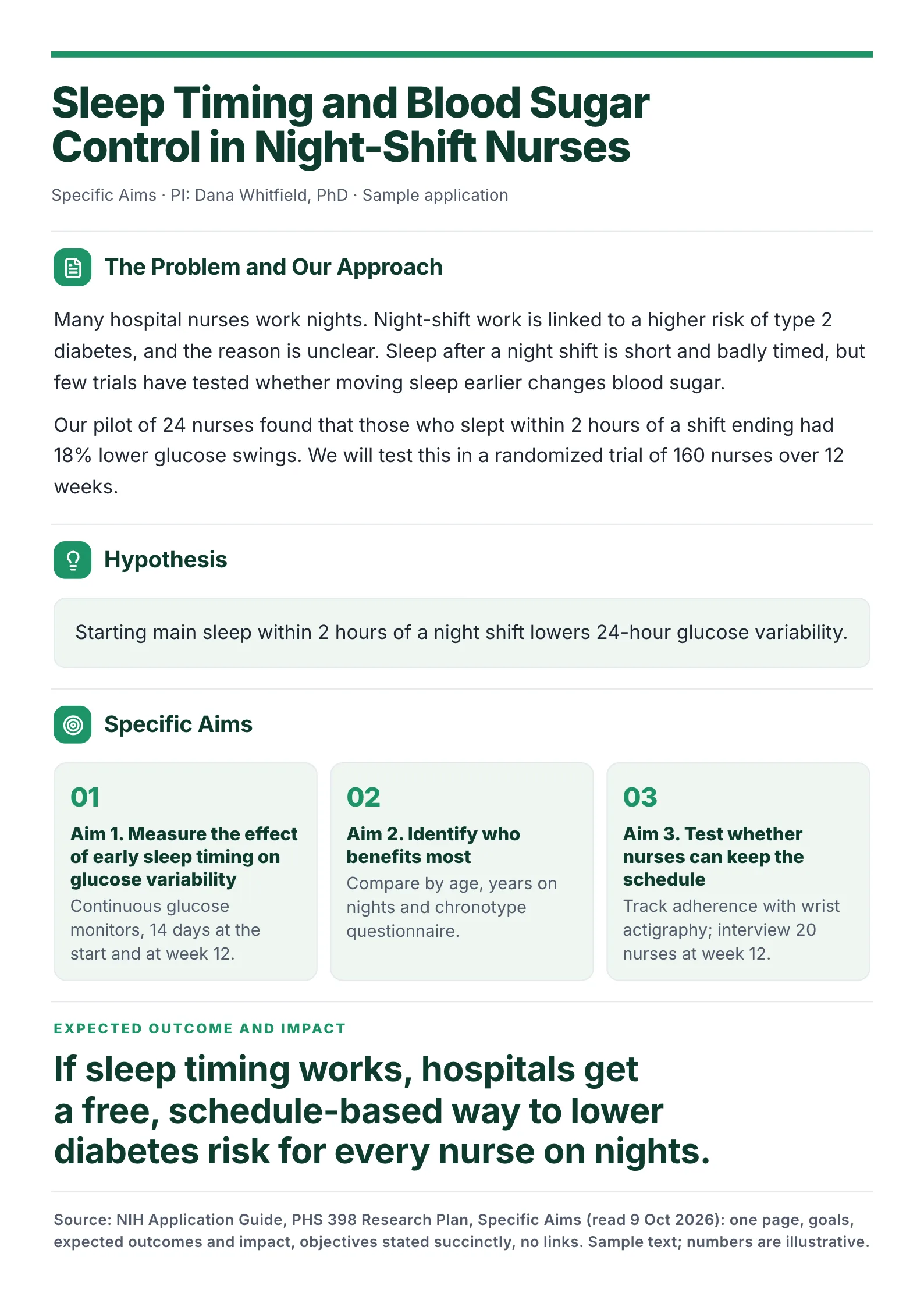 NIH Specific AimsEdit for free(opens in a new tab)
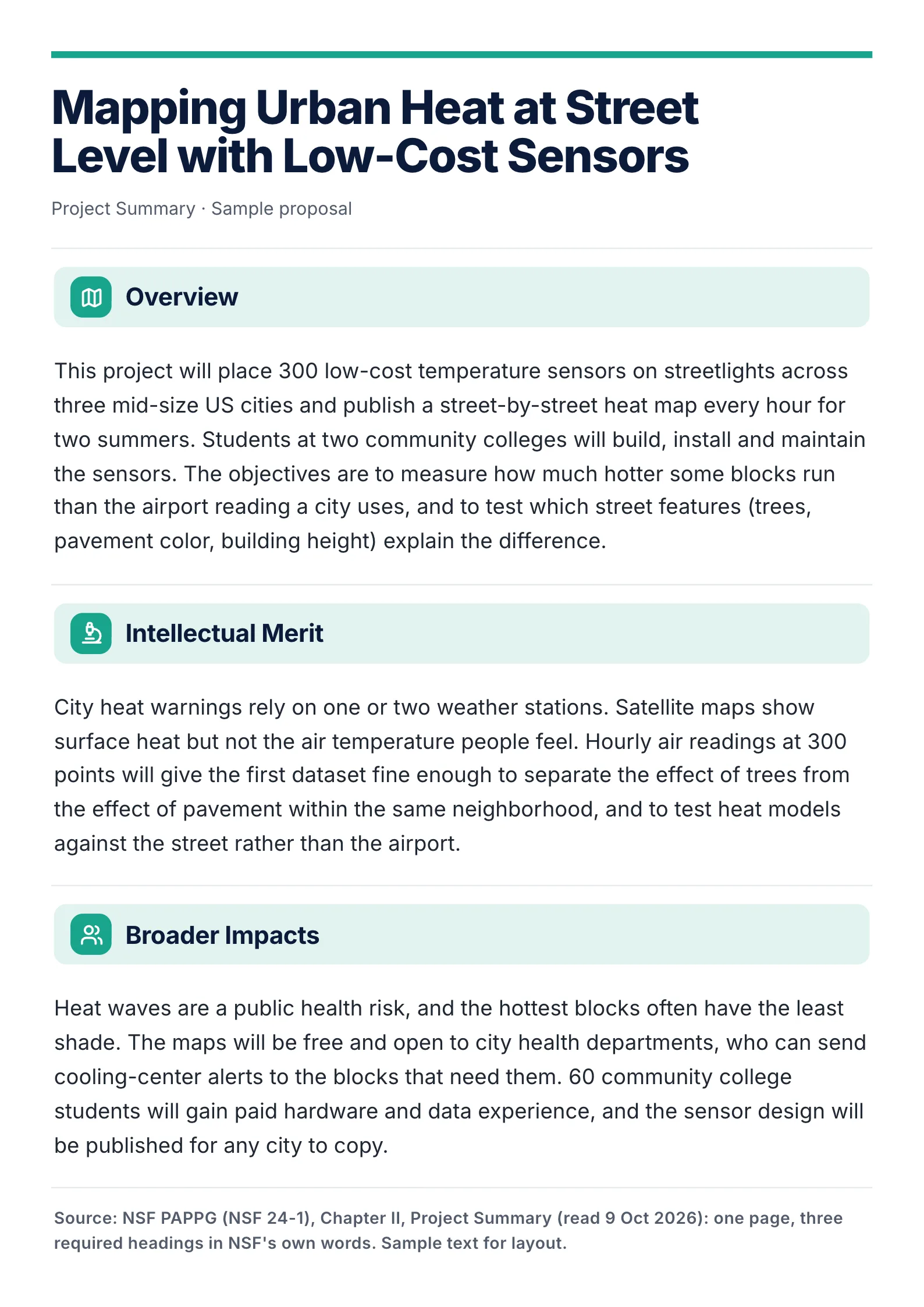 NSF Project SummaryEdit for free(opens in a new tab)
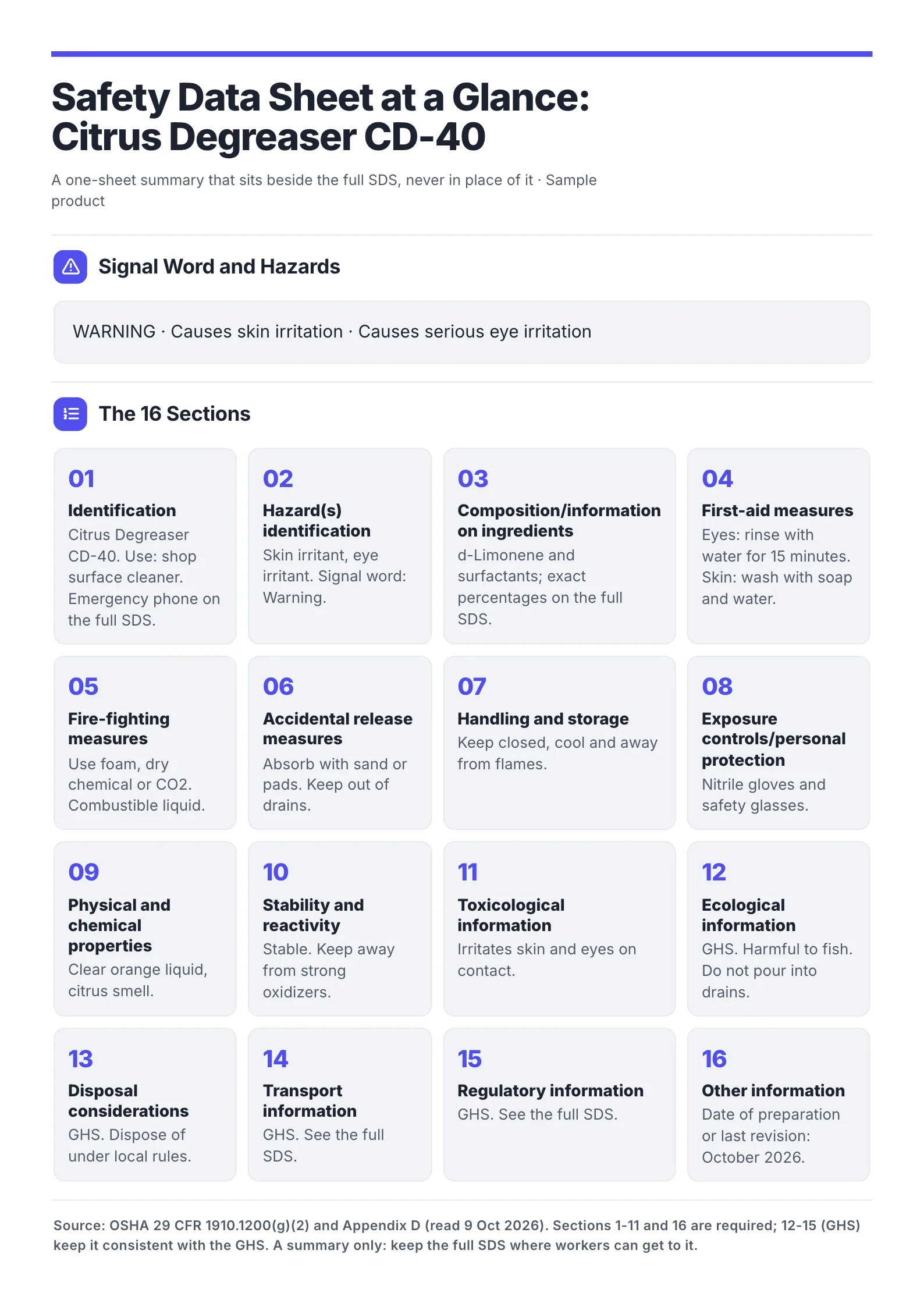 Safety Data Sheet SummaryEdit for free(opens in a new tab)
 Community Health Program BriefEdit for free(opens in a new tab)
 Research Funding ReviewEdit for free(opens in a new tab)
Since 19 November 2025 there is an international standard for it. The ICH M11 template, known as CeSHarP (Clinical electronic Structured Harmonised Protocol), fixes the synopsis fields and their order. Below are those fields read from the final template, what 7 real published synopses look like in length and content, and a one-page synopsis template you can fill in.
What is a protocol synopsis?
A protocol synopsis is section 1.1 of a clinical trial protocol in the M11 layout. M11 describes it as a short summary of the key points of the trial, and allows cross references to the main body to keep it brief. It sits inside section 1, the Protocol Summary, with the trial schema (1.2) and the schedule of activities (1.3) after it.
Some funders ask for a synopsis on its own, before the full protocol exists: California's stem cell agency, CIRM, published a synopsis form for its clinical applicants. Teams also use it as the page everyone works from while the full protocol is being written.
The ICH M11 synopsis fields, in order
These come from the final ICH M11 template, adopted by ICH's regulatory members on 19 November 2025, read on 12 October 2026.
1.1.1 Primary and Secondary Objectives and Estimands. Summarized in natural, nontechnical language. If the objectives would run past half a page, include the most important ones and refer to section 3.
1.1.2 Overall Design. A table of fields, most chosen from a set list:
| Field | What goes in it |
|---|---|
| Intervention | The product code or nonproprietary name |
| Intervention model | For example parallel, crossover, single group |
| Control type | For example placebo, active comparator, standard of care |
| Control description | The comparator's name, or "Not applicable" |
| Intervention assignment method | Randomization and its type, or another method |
| Stratification | Whether randomization is stratified |
| Drug/device combination product | Whether the product is one |
| Population type | For example patients or healthy volunteers |
| Population diagnosis or condition | A standard medical term, or "other" with a description |
| Population age | Minimum and maximum, with units |
| Site distribution and geographic scope | Single or multi-site, and where |
| Master protocol | Whether the trial is part of one |
| Adaptive trial design | Whether the design is adaptive |
| Number of arms | Total arms across all periods |
| Trial blind schema and blinded roles | Who does not know the assignment, or open-label |
| Number of participants | Target or maximum, randomly assigned or enrolled |
| Duration of trial intervention | Per participant |
| Duration of trial participation | Per participant, including washout and follow-up |
| Committees | Independent committees, then any others |
That is about 20 fields, plus the objectives. The trial schema, a diagram of arms and periods, follows in section 1.2.
What 7 real protocol synopses look like
We downloaded 7 full trial protocols posted on ClinicalTrials.gov and measured the synopsis or protocol summary section in each, from its first page to the trial schema or schedule of activities.
| Trial | Sponsor type | Phase | Protocol dated | Synopsis pages | Words |
|---|---|---|---|---|---|
| NCT04331067, triple-negative breast cancer | University | 1b/2 | Jul 2022 | 2 | 690 |
| NCT04880434, mantle cell lymphoma | Company | 2 | Nov 2022 | 6 | 2,600 |
| NCT04818671, myasthenia gravis, long-term safety | Company | 3 | Feb 2023 | 5 | 1,380 |
| NCT05478499, scalp psoriasis | Company | 3b/4 | May 2023 | 7 | 2,080 |
| NCT05470400, HIV vaccine | NIH-funded network | 1 | Sep 2023 | 5 | 1,490 |
| NCT05421598, asthma, dose ranging | Company | 2 | Dec 2023 | 9 | 2,860 |
| NCT05508867, Hodgkin lymphoma | Company | 2 | Mar 2025 | 6 | 1,400 |
What the count shows:
- A synopsis is not short. 2 to 9 pages, with a median of 6. The shortest, from a university, ran 2 pages.
- Word counts run about 700 to 2,900, median about 1,490. Several are mostly tables, which is why a 5-page synopsis can hold under 1,500 words.
- None mention estimands. Every one of the 7 was written before M11 was final, and the word does not appear in any of the synopses. Under M11 it belongs in the first field.
A protocol synopsis template you can copy
This follows the M11 order. Fill each line with one short answer; move long text to the protocol body and cross-reference it, as M11 allows.
Title
- The full trial title, the protocol number and the phase.
1. Primary and secondary objectives and estimands (half a page at most)
- Primary objective, as a plain question: does X do Y compared with Z?
- Primary estimand, in plain words: the population, the measure, the comparison and what happens if a participant stops treatment.
- Secondary objectives, one line each.
2. Overall design
- Intervention
- Intervention model
- Control type and control description
- Intervention assignment method, and stratification
- Drug/device combination product: yes or no
- Population type, diagnosis or condition, and age range
- Sites: single or multi-site, and where
- Master protocol: yes or no
- Adaptive design: yes or no
- Number of arms
- Blinding: who is blinded, or open-label
- Number of participants: target or maximum
- Duration of intervention and of participation, per participant
- Committees: independent first, then others
3. Trial schema
- Screening, assignment, each treatment period and follow-up, with the length of each.
A one-page protocol synopsis, part by part
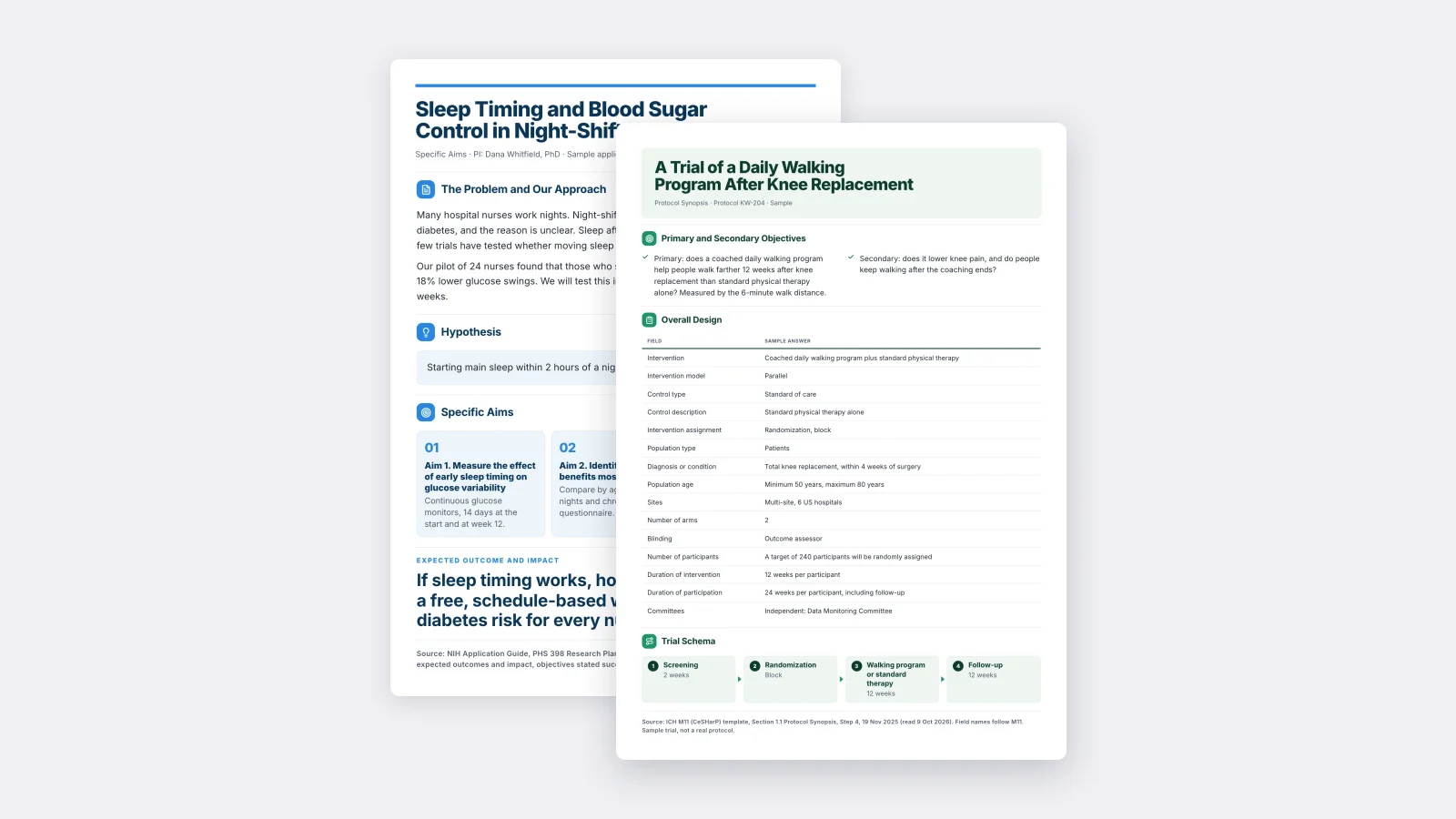
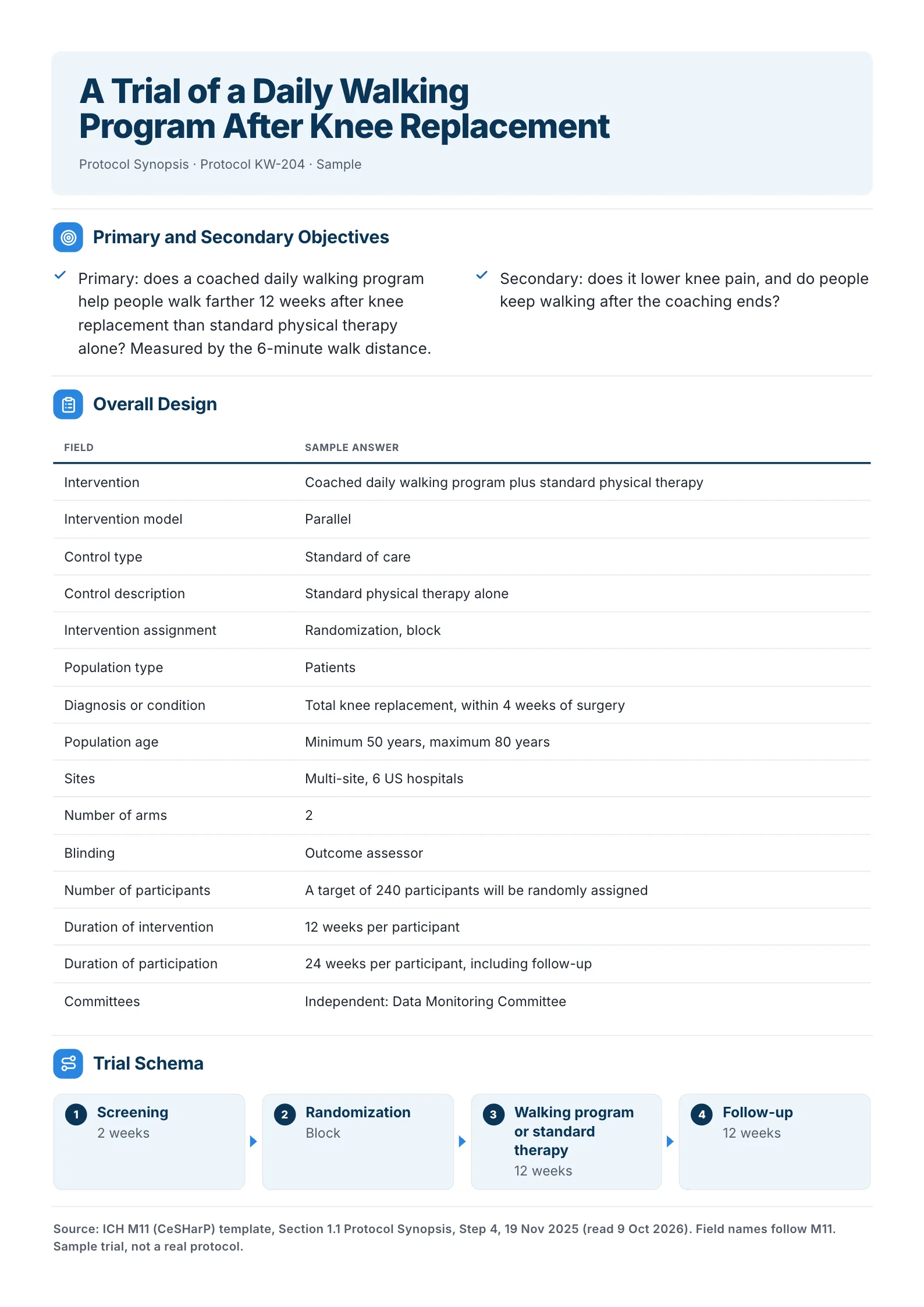
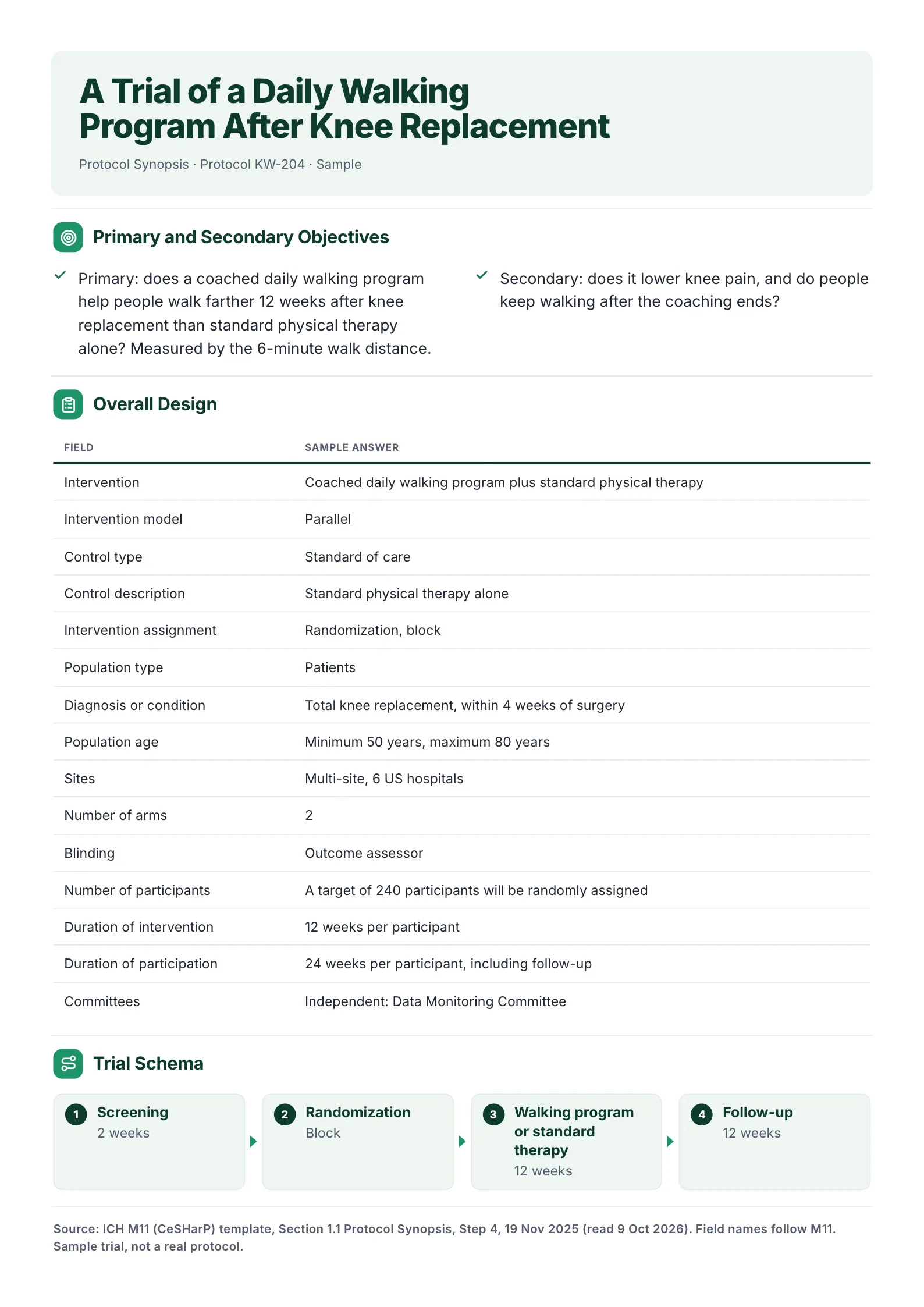
A full synopsis runs several pages, as the 7 above show. A one-page version is what you hand to a site team, a steering committee or a funder who needs the trial in a minute, with the full synopsis behind it. This sample was made with MakeOnepagers; the trial and protocol number are invented.
 Edit this template
The M11 order on one sheet: objectives, the design table and the schema.
What each part does:
- Objectives as questions. Primary: does a coached daily walking program help people walk farther 12 weeks after knee replacement than standard physical therapy alone, measured by the 6-minute walk distance? Secondary: does it lower knee pain, and do people keep walking after the coaching ends?
- The design table, in M11's own field names. Intervention, model (parallel), control (standard of care), assignment (block randomization), population (patients 50 to 80 within 4 weeks of surgery), 6 US hospitals, 2 arms, blinded outcome assessor, a target of 240 participants, 12 weeks of intervention and 24 of participation, an independent Data Monitoring Committee.
- The schema in four steps: screening for 2 weeks, randomization, 12 weeks of the walking program or standard therapy, and 12 weeks of follow-up.
What to add for an M11 synopsis: the estimand. For this sample, it could read: the difference in average 6-minute walk distance at week 12 between the two groups, for everyone randomized, whether or not they kept up the program. Add the four yes-or-no fields too (stratification, combination product, master protocol, adaptive design) when your reviewer expects the full M11 list.
Open it and replace the sample trial: protocol synopsis template.
How to write the objectives in plain language
M11 asks for the objectives and estimands in "natural, nontechnical (layperson) language". Three habits help.
- Write the primary objective as a question with a comparison in it. "To evaluate efficacy" is not a question. "Does the program help people walk farther than therapy alone?" is.
- Name the measure and the time point. The 6-minute walk distance at week 12, not "functional outcomes".
- Say what happens when people stop. That is the part of an estimand most summaries leave out, and it changes the answer.
| Technical | Plain |
|---|---|
| To evaluate the efficacy of the intervention versus control on functional capacity | Does the program help people walk farther at 12 weeks than standard therapy alone? |
| To assess safety and tolerability | How often do side effects happen, and how many people stop because of them? |
| To characterize the pharmacokinetic profile | How much of the drug is in the blood, and for how long? |
Synopsis, protocol summary or executive summary?
| Name | Where you see it | What it holds |
|---|---|---|
| Protocol synopsis | M11 section 1.1, and several of the company protocols above | Objectives and the design fields |
| Protocol summary | M11 section 1, the parent heading | The synopsis, the schema and the schedule of activities |
| Executive summary | Some research network protocols, such as the HIV vaccine trial above | Usually the same content under another name |
| One-page synopsis | Site start-up, steering committees, funders | The design table and schema, cut to one sheet |
Protocol synopsis mistakes
- Objectives with no comparison. A reader cannot tell what the trial will prove.
- No numbers in the design. "Several sites" and "approximately enough participants" tell a reviewer nothing. Give the count.
- Duration as one figure. M11 separates time on intervention from time in the trial. A participant in the sample trial is treated for 12 weeks but stays for 24.
- Blinding as one word. "Double-blind" hides who is blinded. M11 asks for the roles.
- A synopsis that does not match the protocol. Every amendment that changes the design has to change the synopsis too.
Protocol synopsis checklist
- Title, protocol number and phase
- Primary objective as a question, with its measure and time point
- The primary estimand in plain words
- Secondary objectives, one line each
- Intervention, model, control and assignment method
- Population type, condition and age range
- Sites and where they are
- Number of arms and who is blinded
- Number of participants, target or maximum
- Duration of intervention and of participation
- Committees
- A schema from screening to follow-up
Make your one-page protocol synopsis
Open the free protocol synopsis template, replace the walking trial with your own design in M11's field names, add your estimand, and download it as a PDF for your site team or steering committee. Writing the grant behind the trial? Our guide to the Specific Aims page template covers the NIH side.
Frequently asked questions
What should a protocol synopsis include?
Under the ICH M11 template: the primary and secondary objectives and estimands in plain language, then an overall design table with about 20 fields, including the intervention, control, assignment method, population, sites, arms, blinding, number of participants, durations and committees. A trial schema follows.
How long is a protocol synopsis?
In the 7 published protocols we measured, 2 to 9 pages, median 6, or about 700 to 2,900 words. M11 asks to keep it brief and to cross-reference the protocol body for detail. A one-page version is common for site teams and funders.
Is there a protocol synopsis template in Word?
The ICH M11 template itself is published as a document you can follow, and many sponsors and universities publish Word versions of their own. The outline above follows the M11 field order. For a designed one-page version, download the template below as a PDF.
What is an estimand in a protocol synopsis?
A precise description of the treatment effect the trial will estimate: the population, the measure, how the groups are compared and how events like stopping treatment are handled. M11 asks for estimands in plain language in the first field of the synopsis.
What is the difference between a protocol synopsis and a protocol summary?
In M11, the protocol summary is section 1, and the synopsis is section 1.1 inside it. The summary adds the trial schema and the schedule of activities.