Project Timeline Template: Free One-Page Project Timeline
A free one-page project timeline template, the parts every timeline needs from phases to the critical path, a worked 30-week clinic build example and how to keep a timeline honest week by week.

A project timeline template shows the whole project on one sheet: the phases as bars across weeks or months, the key dates, the tasks that cannot slip and what depends on what. It answers the two questions every sponsor asks, "when will it be done?" and "what could make it late?", without opening a project plan. Below are the parts every project timeline needs, a free project timeline template you can copy, a worked example for a 30-week build and how to keep a timeline honest once work starts. Start from a free one pager template.
One‑Pager examples
Real One-Pagers made with MakeOnepagers. Open any one to edit it as your own.
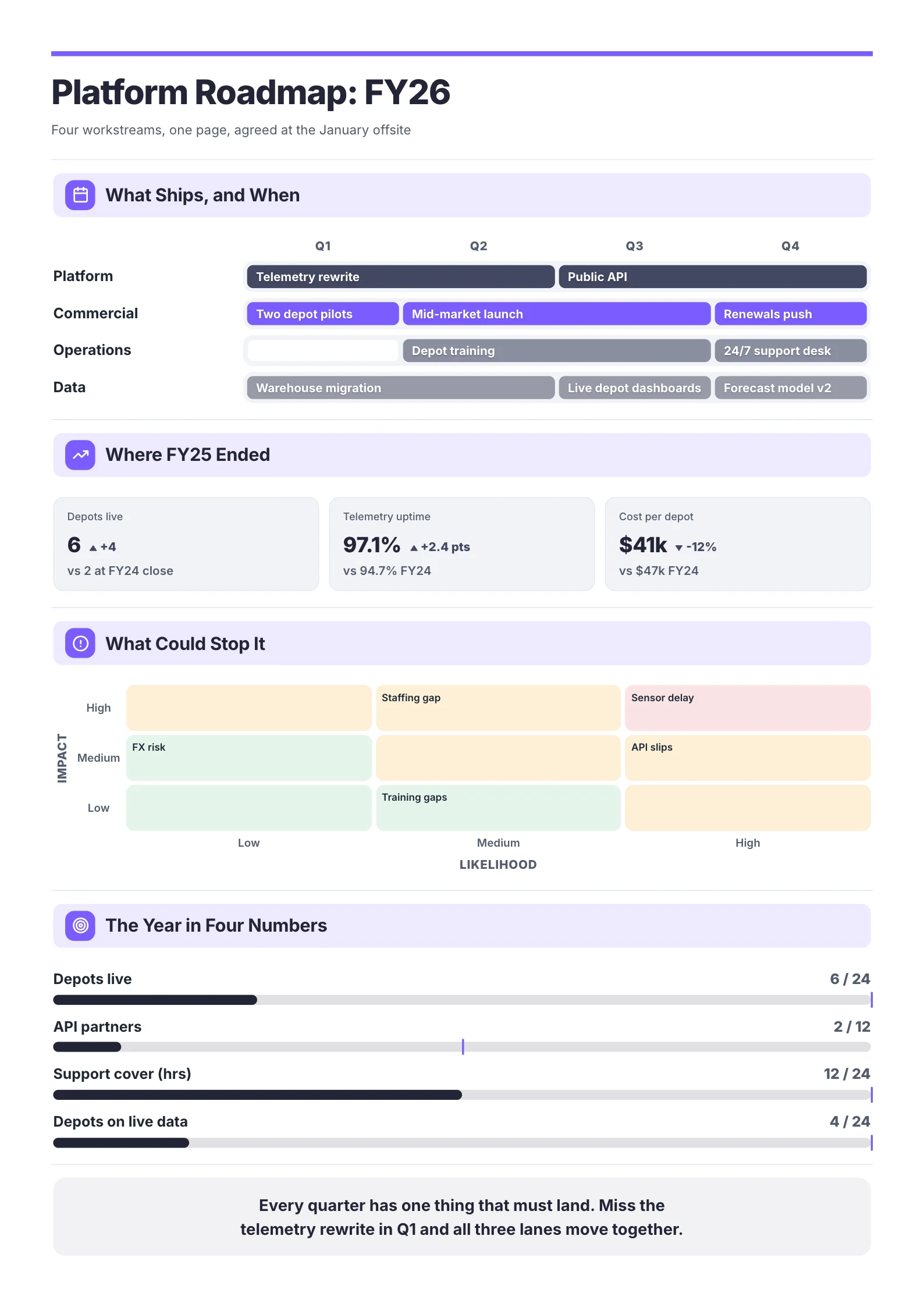 Product RoadmapEdit for free(opens in a new tab)
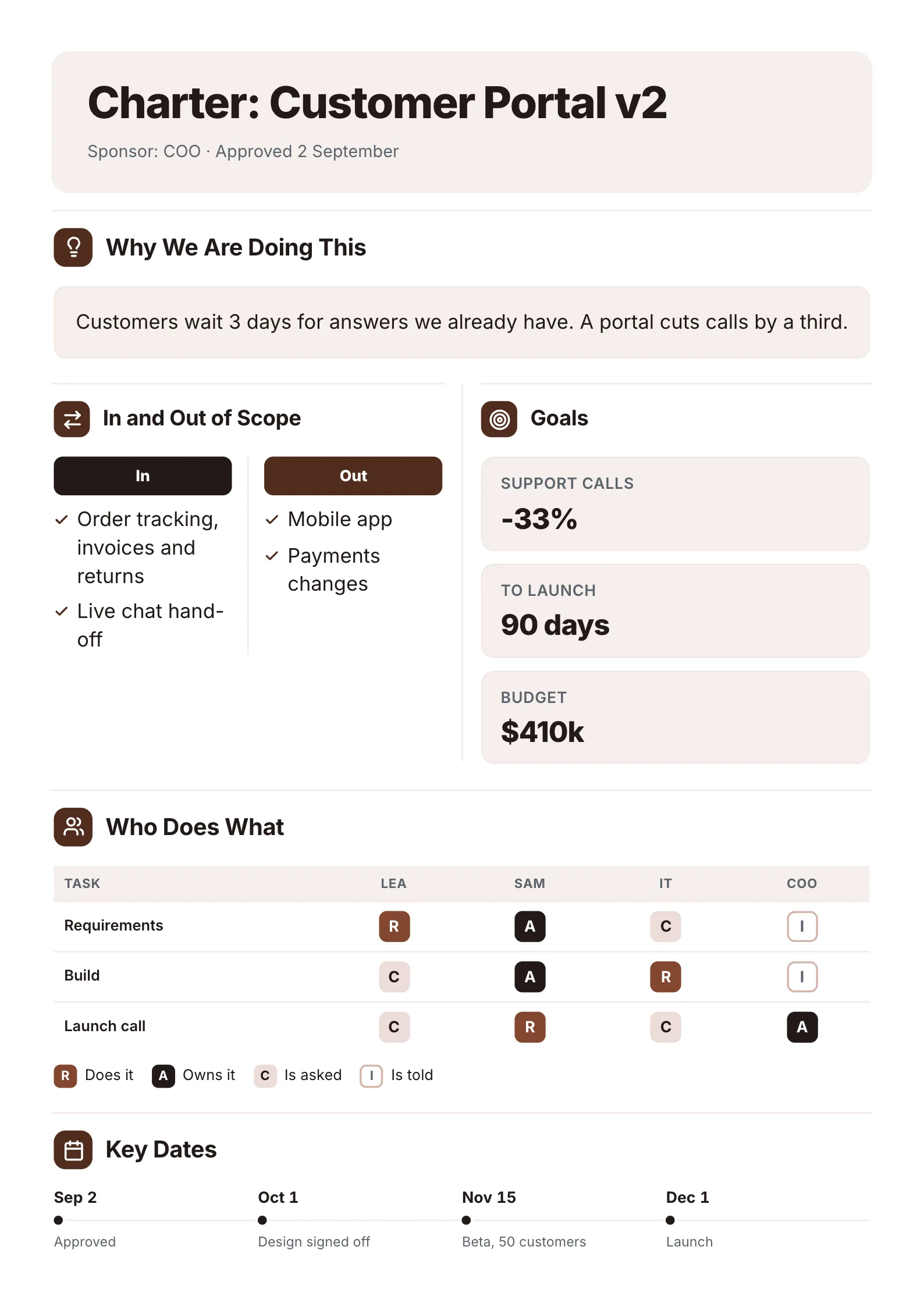 Project CharterEdit for free(opens in a new tab)
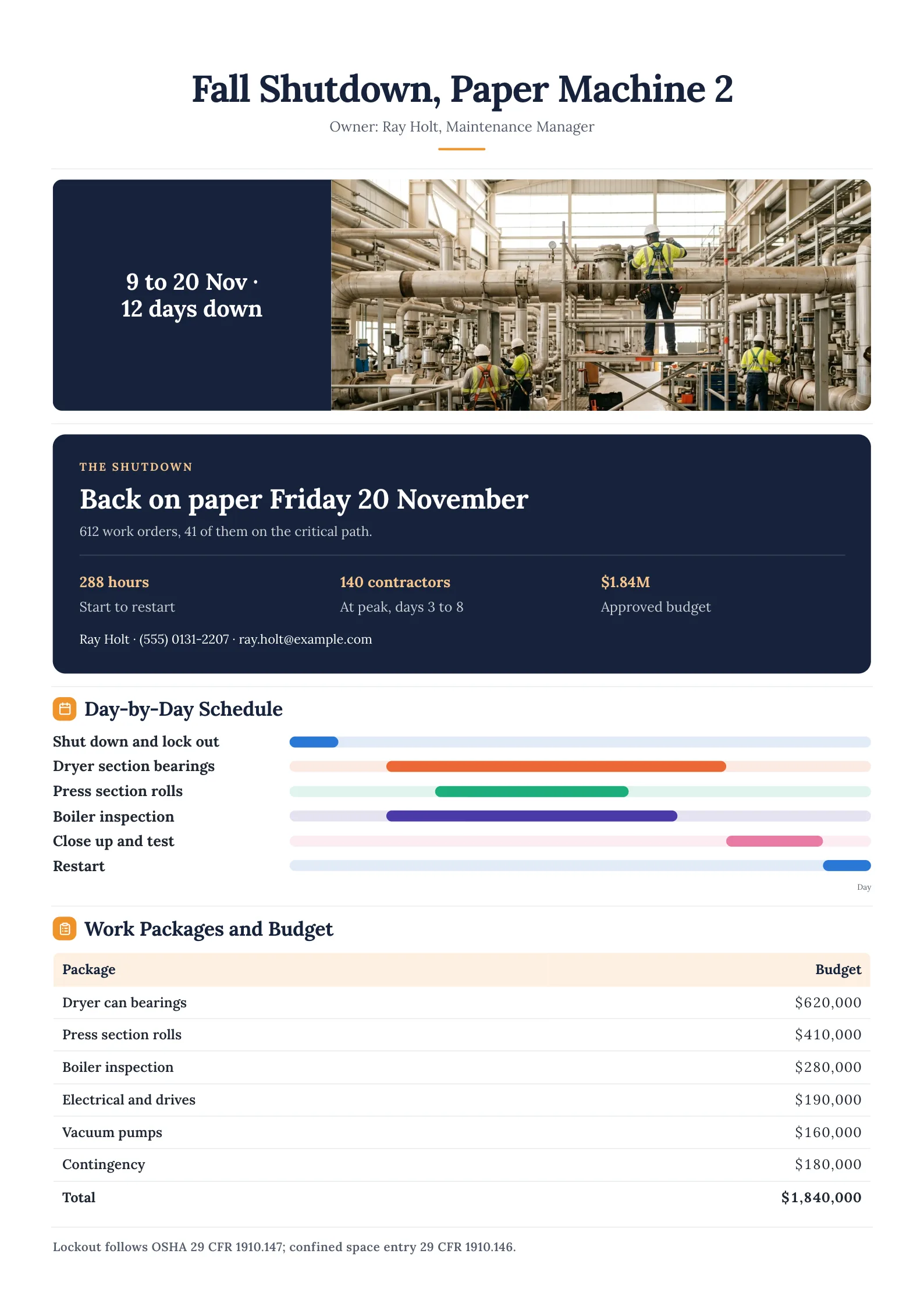 Maintenance Shutdown PlanEdit for free(opens in a new tab)
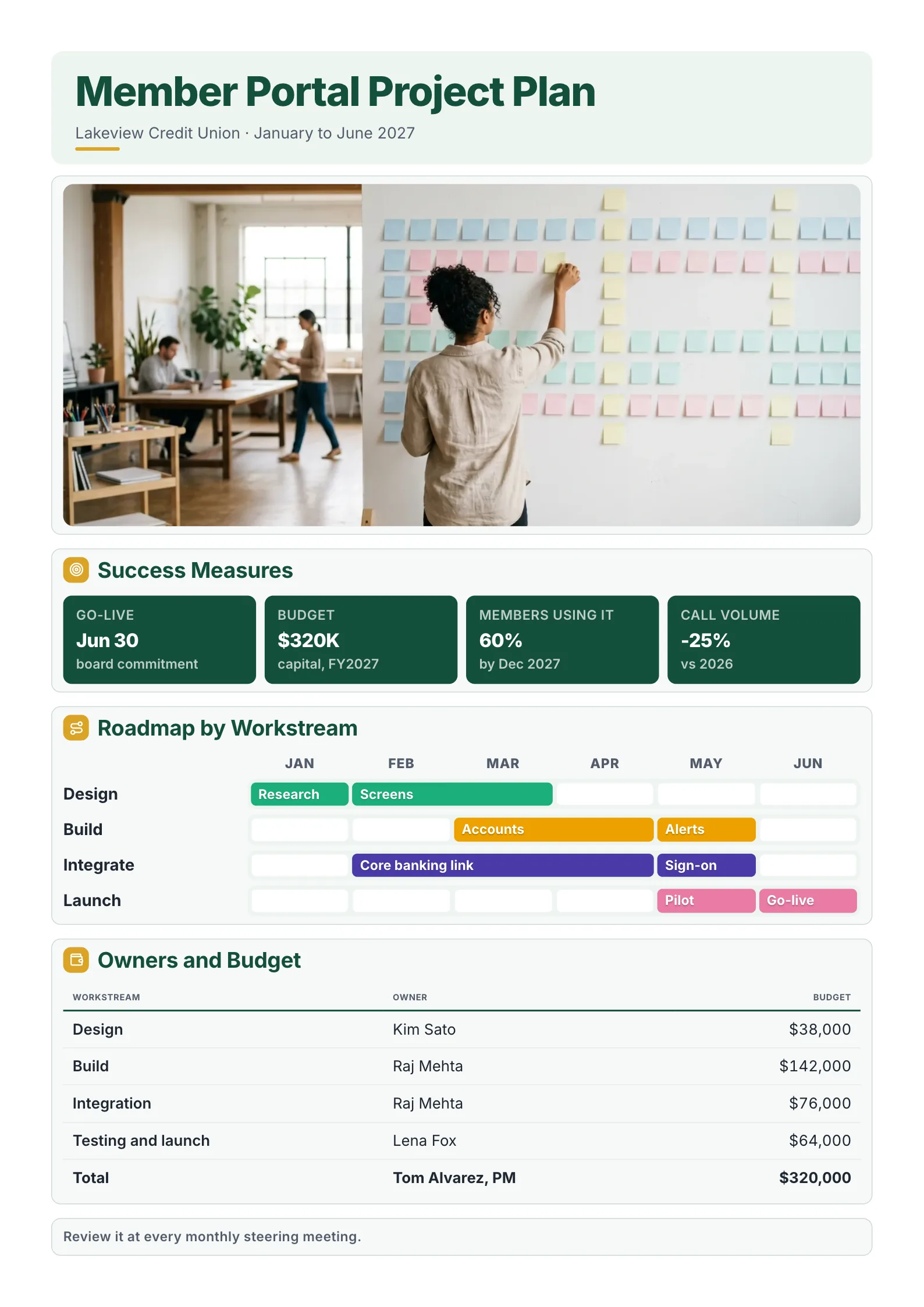 Project Plan on a PageEdit for free(opens in a new tab)
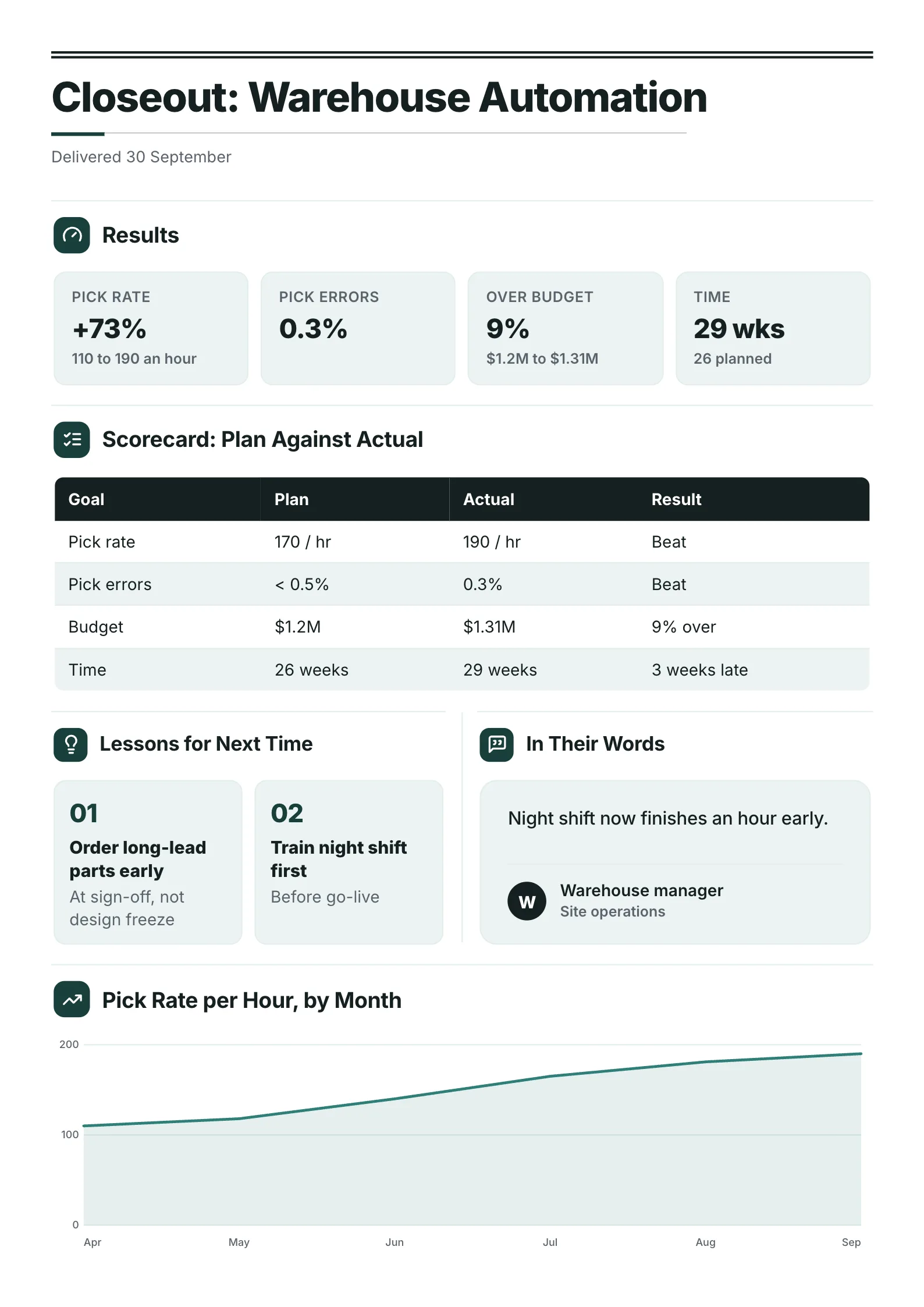 Project CloseoutEdit for free(opens in a new tab)
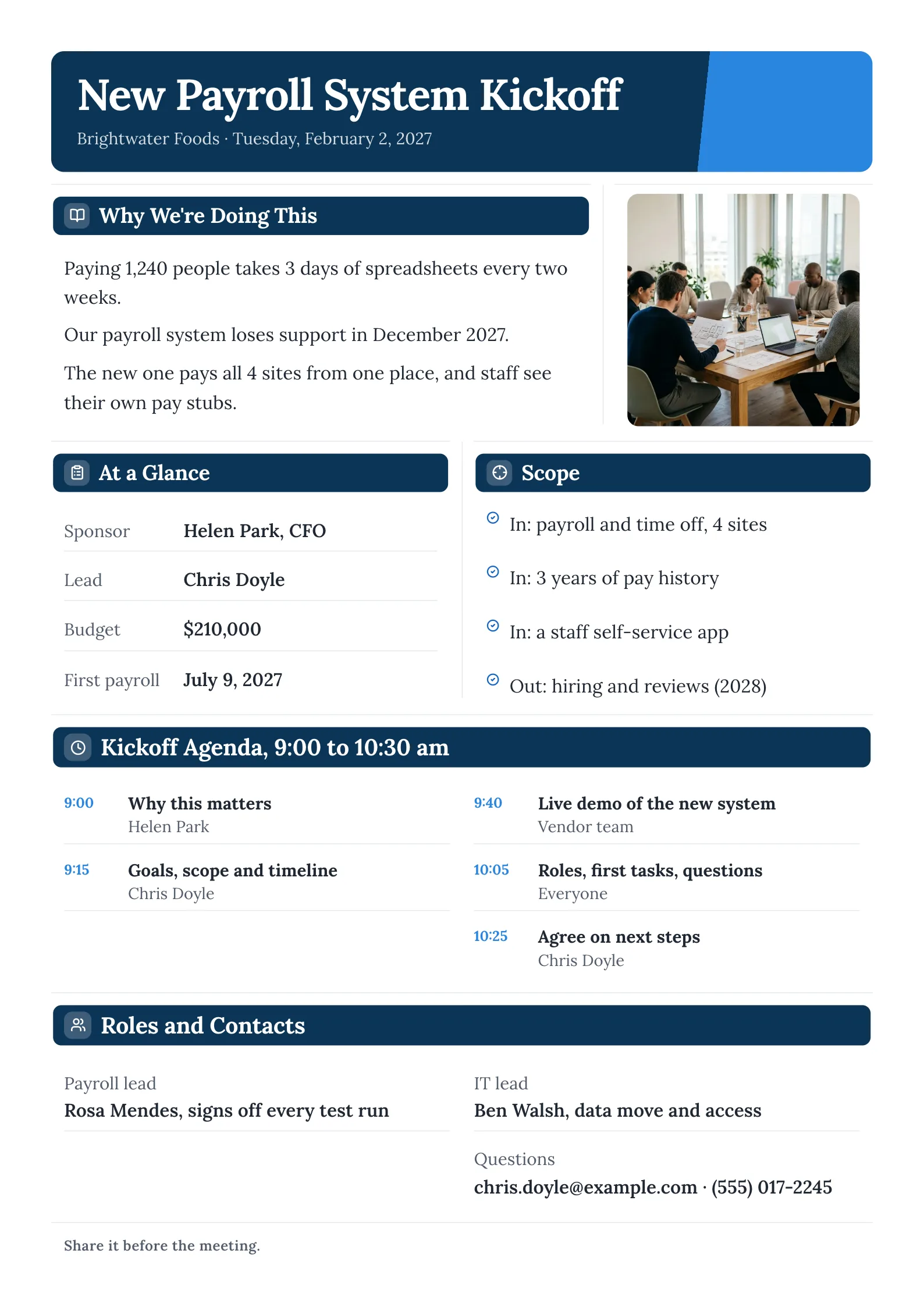 Project Kickoff BriefEdit for free(opens in a new tab)
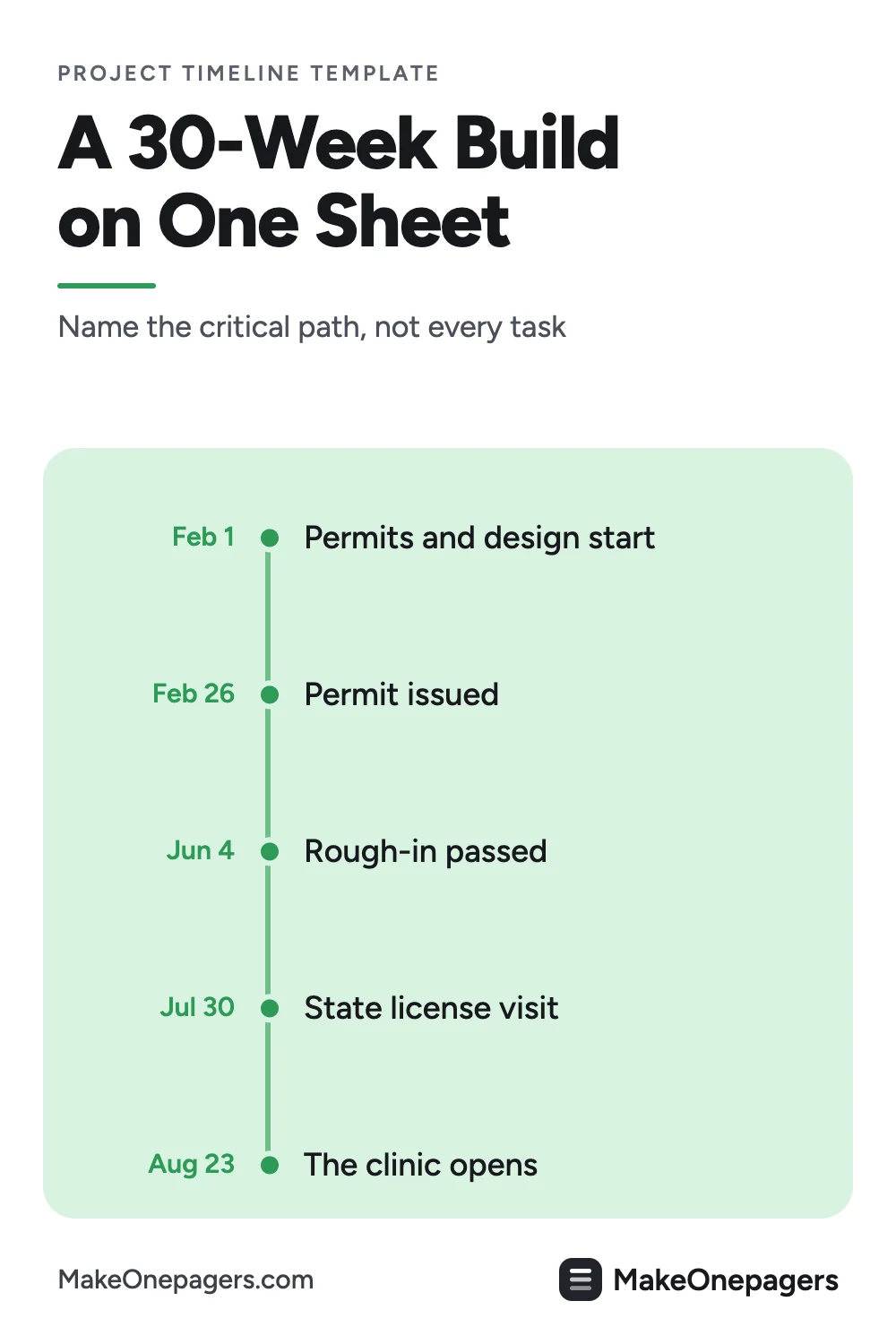
The example was made with MakeOnepagers. It opens as a template you can edit for free: every phase, date and color.
What is a project timeline?
A project timeline is a visual schedule of a project from start to finish. It lists the work in order, with a start and end date for each phase, and marks the milestones along the way. Most timelines are drawn as horizontal bars against a calendar, which is a simple form of Gantt chart.
The time scale depends on the project. A two-week sprint is shown in days. A six-month build is shown in weeks. A multi-year program is shown in months or quarters.
A timeline is a summary of the project plan, not a replacement for it. The plan holds every task, owner and estimate. The timeline holds what a sponsor, a client or the wider team needs to see.
What to include in a project timeline
| Part | What to write, with an example |
|---|---|
| Title and scope | Project, organization, dates. Clinic East Wing, February to August 2027 |
| The finish | The date that matters most. Opens Aug 23, 2027 |
| Duration and goal | One line. 30 weeks: eight new exam rooms, built while the clinic stays open |
| Key dates | 3 to 5 milestones. Feb 26 permit issued |
| Phases | 5 to 8 bars. Demolition and framing |
| Critical path | The items that move the finish date. Medical gas installer, booked 8 weeks ahead |
| Dependencies | What must happen before what. IT cabling before drywall |
| Contact | Who to call. Site lead and phone |
| Version | The date of the last update |
A free project timeline template
Copy this into any document or spreadsheet, or open the example below and edit it.
| Phase | Start week | End week | Owner |
|---|---|---|---|
| Permits and design | 1 | 4 | Architect |
| Demolition and framing | 5 | 12 | Contractor |
| Plumbing, power, gas | 11 | 18 | Trades |
| Finishes | 18 | 24 | Contractor |
| Equipment and IT | 23 | 26 | Clinic operations |
| Inspection and license | 25 | 28 | Site lead |
| Training, soft open | 29 | 30 | Clinic manager |
Overlap is normal. Plumbing starts before framing finishes, and equipment arrives while finishes are still going on. Show the overlap; hiding it makes the project look longer than it is.
Project timeline example
 Edit this template
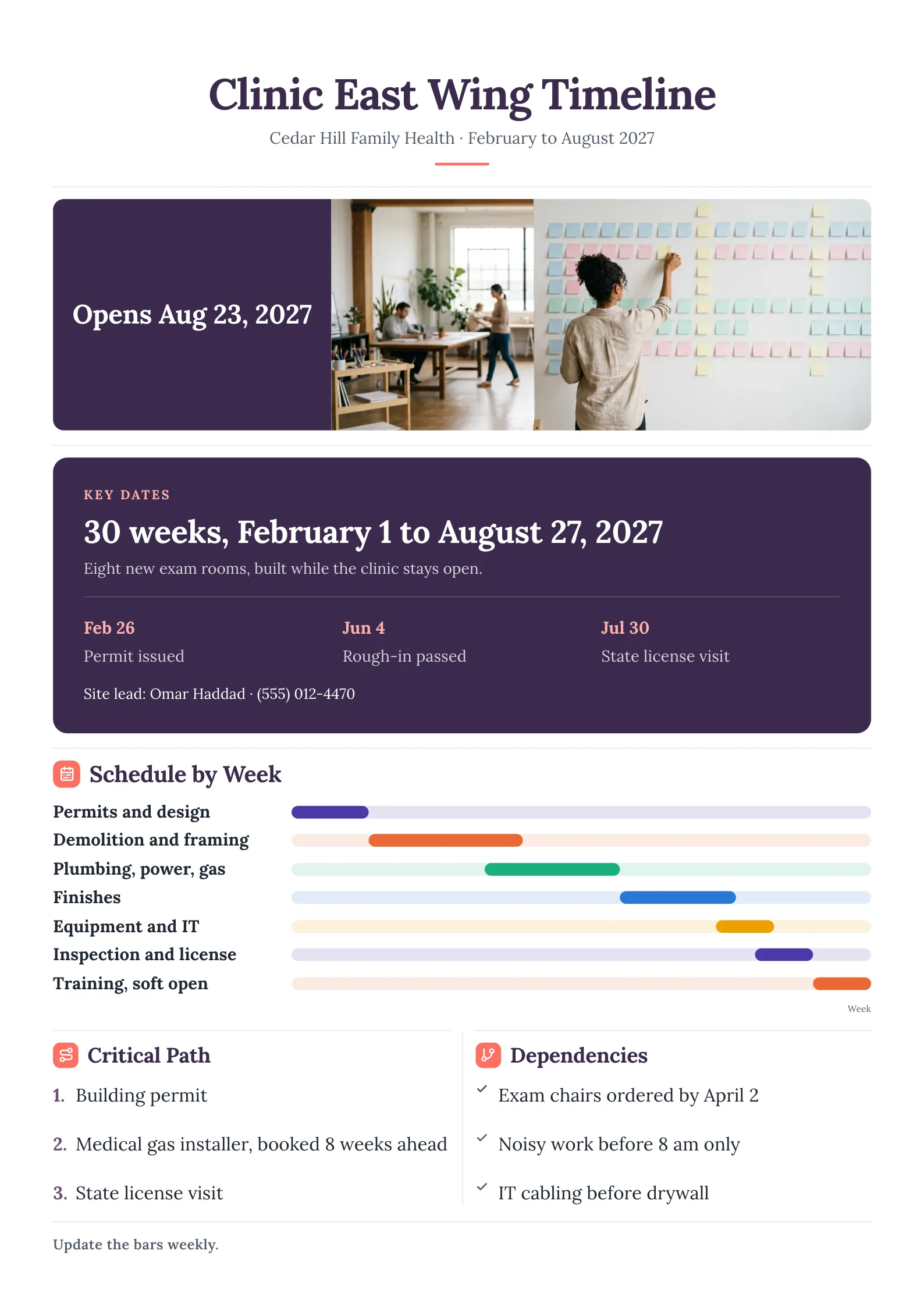
A 30-week build on one sheet: when it opens, what it depends on and what could make it late.
This is a sample for a fictional clinic, Cedar Hill Family Health. The clinic, dates and durations are illustrative. Here is how it is built:
- The finish date leads. Opens Aug 23, 2027, in large type at the top. Everything else on the sheet explains how the project gets there.
- Duration and goal in one line. 30 weeks, February 1 to August 27, 2027. Eight new exam rooms, built while the clinic stays open. That last part explains half the constraints.
- Three key dates, not twenty. Feb 26 permit issued. Jun 4 rough-in passed. Jul 30 state license visit. These are the dates a sponsor will ask about.
- Seven phases as bars by week. Permits and design. Demolition and framing. Plumbing, power, gas. Finishes. Equipment and IT. Inspection and license. Training, soft open. The bars overlap where the work does.
- The critical path, numbered. 1. Building permit. 2. Medical gas installer, booked 8 weeks ahead. 3. State license visit. If any of these slips, the opening slips.
- Dependencies as checks. Exam chairs ordered by April 2. Noisy work before 8 am only. IT cabling before drywall.
Edit for free: project timeline template.
How to make a project timeline in 6 steps
- Start from the finish date. Write the date the project must be done, and why. A fixed launch, a license visit or a season usually sets it.
- List the phases. Five to eight is right for one sheet. Group smaller tasks inside them.
- Estimate each phase with the people doing it. Ask for a realistic duration, not a hopeful one.
- Draw the bars and the overlaps. Put each phase on the calendar. Let phases overlap where the work can run in parallel.
- Find the critical path. Mark the chain of tasks where any delay moves the finish date. Long-lead orders and outside approvals are usually on it.
- Add three to five milestones and a contact. Pick the dates people will ask about, and name the person who can answer questions.
Have a long project plan or a schedule in a spreadsheet? Paste it into the free AI One-Pager generator and get back a designed project timeline for your next status meeting.
Keep the timeline honest
A timeline is only useful if it is true this week. Three habits help:
- Update the bars every week. Move them when the work moves. A timeline that still shows the original plan in month four misleads everyone who reads it.
- Show the baseline beside the forecast. When a phase slips, keep the original bar faint and draw the new one over it. The slip is visible without a separate report.
- Date the sheet. "Updated 12 May" at the foot tells readers whether they can trust it.
Project timeline vs roadmap vs Gantt chart
| Project timeline | Roadmap | Gantt chart | |
|---|---|---|---|
| Shows | Phases and dates for one project | Direction and themes over quarters | Every task, owner and dependency |
| Detail | Medium | Low | High |
| Reader | Sponsor, client, team | Leadership, customers | Project manager, team |
| Fits on | One sheet | One sheet | Often many sheets |
A one-page roadmap says where the product or business is heading. The project timeline shows how one project gets done. The Gantt chart is the working tool behind both.
Project timeline mistakes
- Every task on the sheet. Fifty bars cannot be read. Show phases on the timeline and keep tasks in the plan.
- No critical path. Without it, every delay looks equally serious, and the ones that matter get the same attention as the ones that do not.
- Dates without owners. A phase with no owner has no one to ask why it slipped.
- Hiding dependencies. "Exam chairs ordered by April 2" looks small until the chairs take ten weeks.
- Never updated. A beautiful timeline from kickoff is the most misleading document in the project by month three.
Make your project timeline
Open the free project timeline template and put in your own phases and dates, or drop your project plan into the free AI One-Pager generator and get a finished project timeline back.
Frequently asked questions
What should a project timeline include?
The project's scope and dates, the finish date, three to five key milestones, the phases as bars over time, the critical path, the main dependencies, a contact and the date it was last updated.
What is the difference between a project timeline and a project plan?
The plan holds every task, owner, estimate and resource. The timeline is the summary of it: phases and dates on one sheet for people who need the shape, not the detail.
What is a critical path?
The longest chain of dependent tasks in a project. Any delay on it delays the finish date, so those tasks get watched most closely.
How detailed should a project timeline be?
Detailed enough for the reader to see when each phase happens and what could make the project late. For most projects that means five to eight phases and three to five milestones.
How often should a project timeline be updated?
Every week while work is under way, and before every sponsor or client meeting.




