BlogGuide
IEP at a Glance Template: What IDEA Says Every Teacher Must Know
An IEP at a glance template built on IDEA's rule that each teacher learns their part, 5 published at-a-glance sheets compared, and a filled example.

By MakeOnepagers Team
Updated · 9 min read
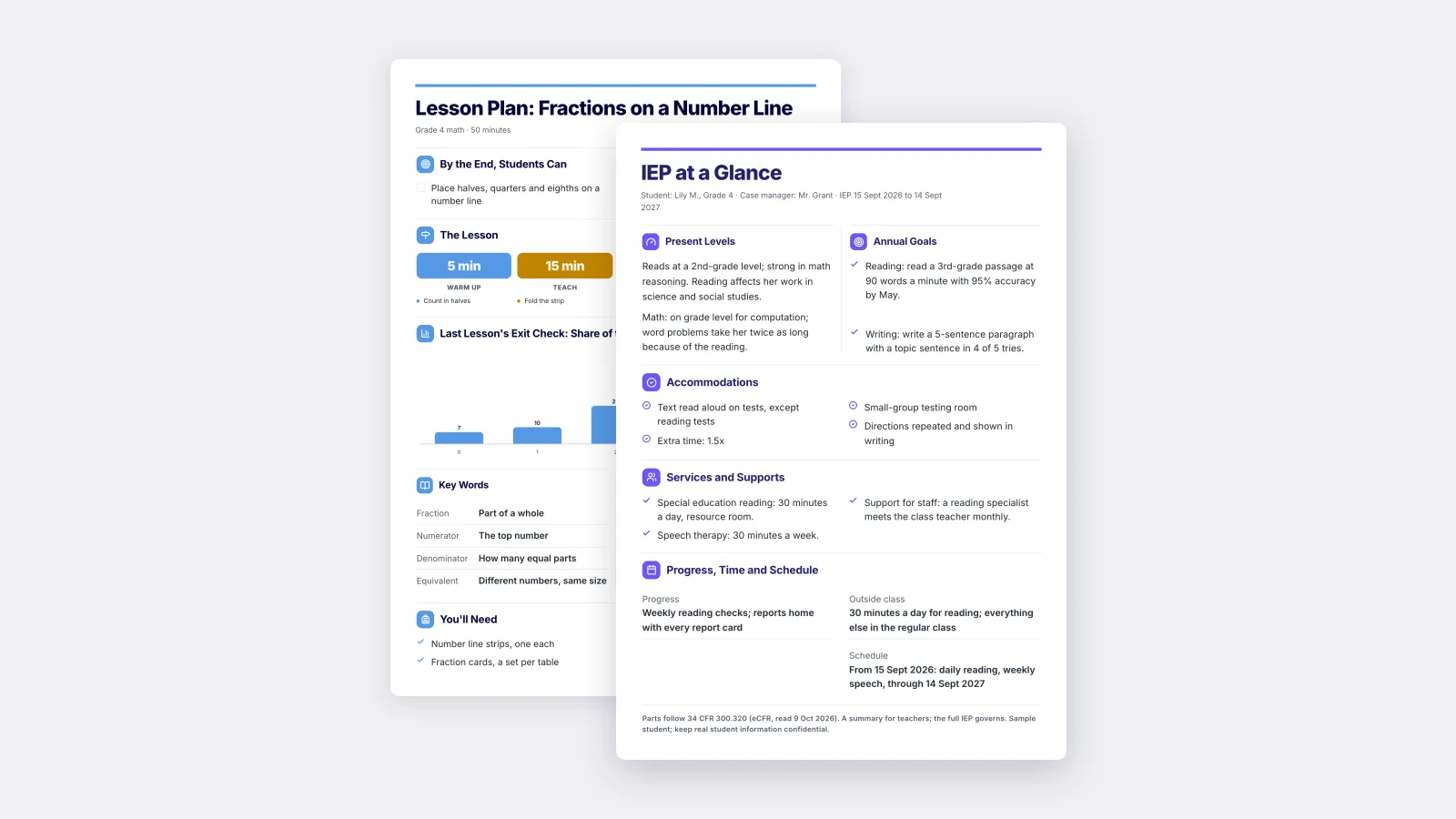
An IEP at a glance template turns a student's Individualized Education Program, often many pages long, into one sheet a teacher, aide or substitute can read before class: the student's strengths and needs, the annual goals, the accommodations and modifications, the services and their times, the key dates, and who to call. The reason it exists is in the federal rule itself. Under IDEA, 34 CFR 300.323(d), each teacher and provider responsible for an IEP must be informed of their specific responsibilities and of the specific accommodations, modifications and supports the student must get. We read that rule on eCFR on 12 October 2026, compared 5 published at-a-glance sheets against it, and built the template below from both.
One‑Pager examples
Real One-Pagers made with MakeOnepagers. Open any one to edit it as your own.
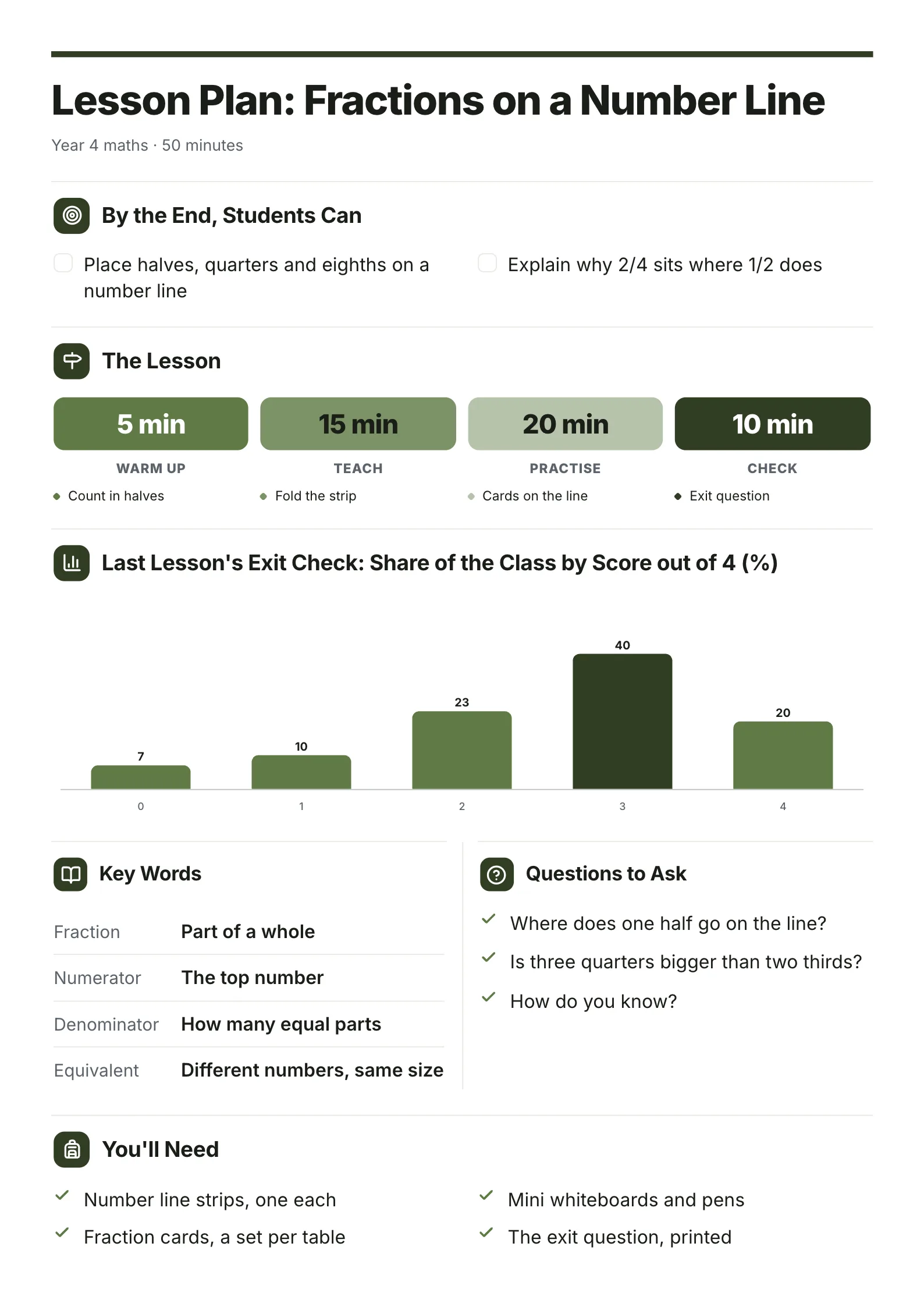 Lesson PlanEdit for free(opens in a new tab)
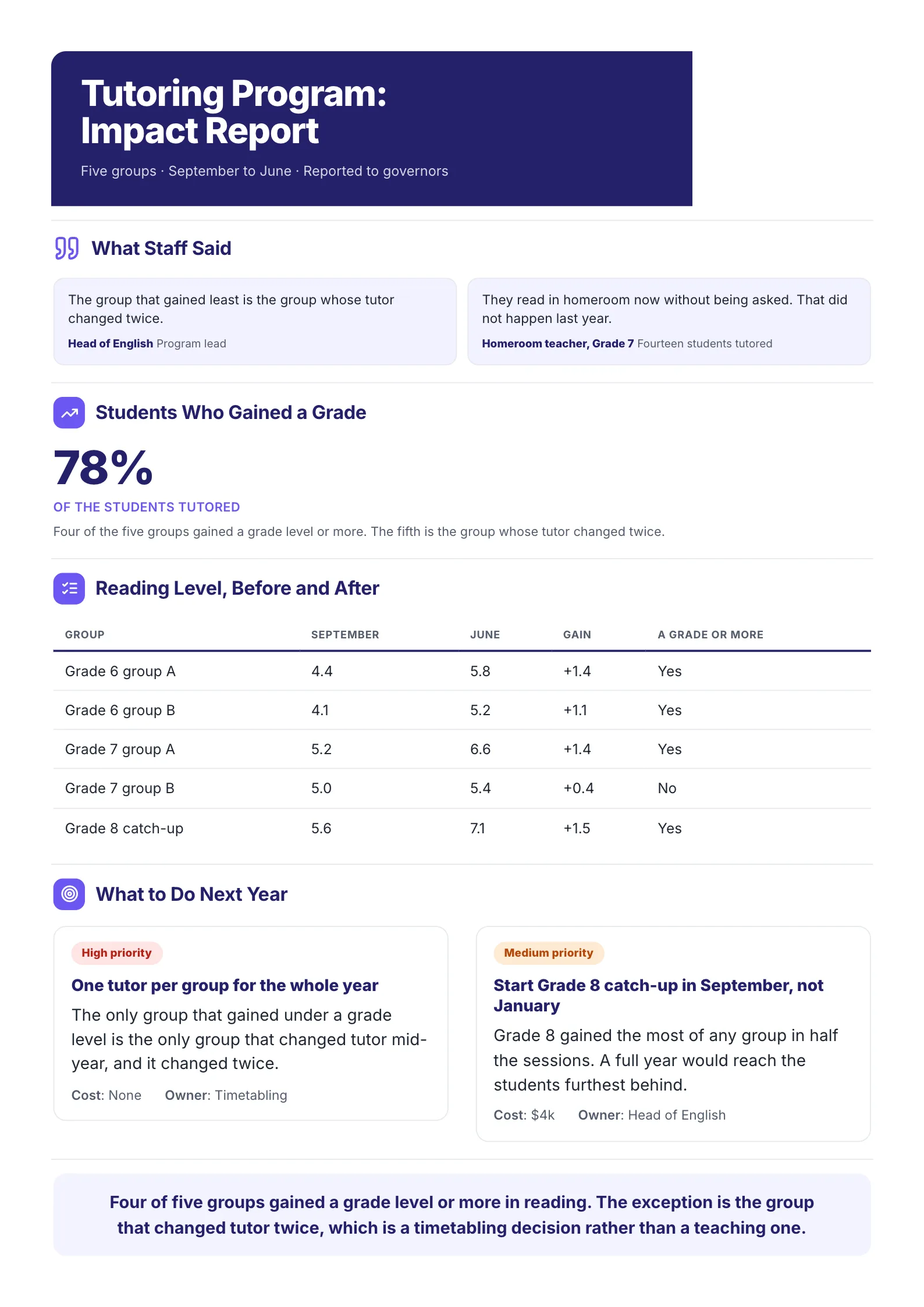 Tutoring Impact ReportEdit for free(opens in a new tab)
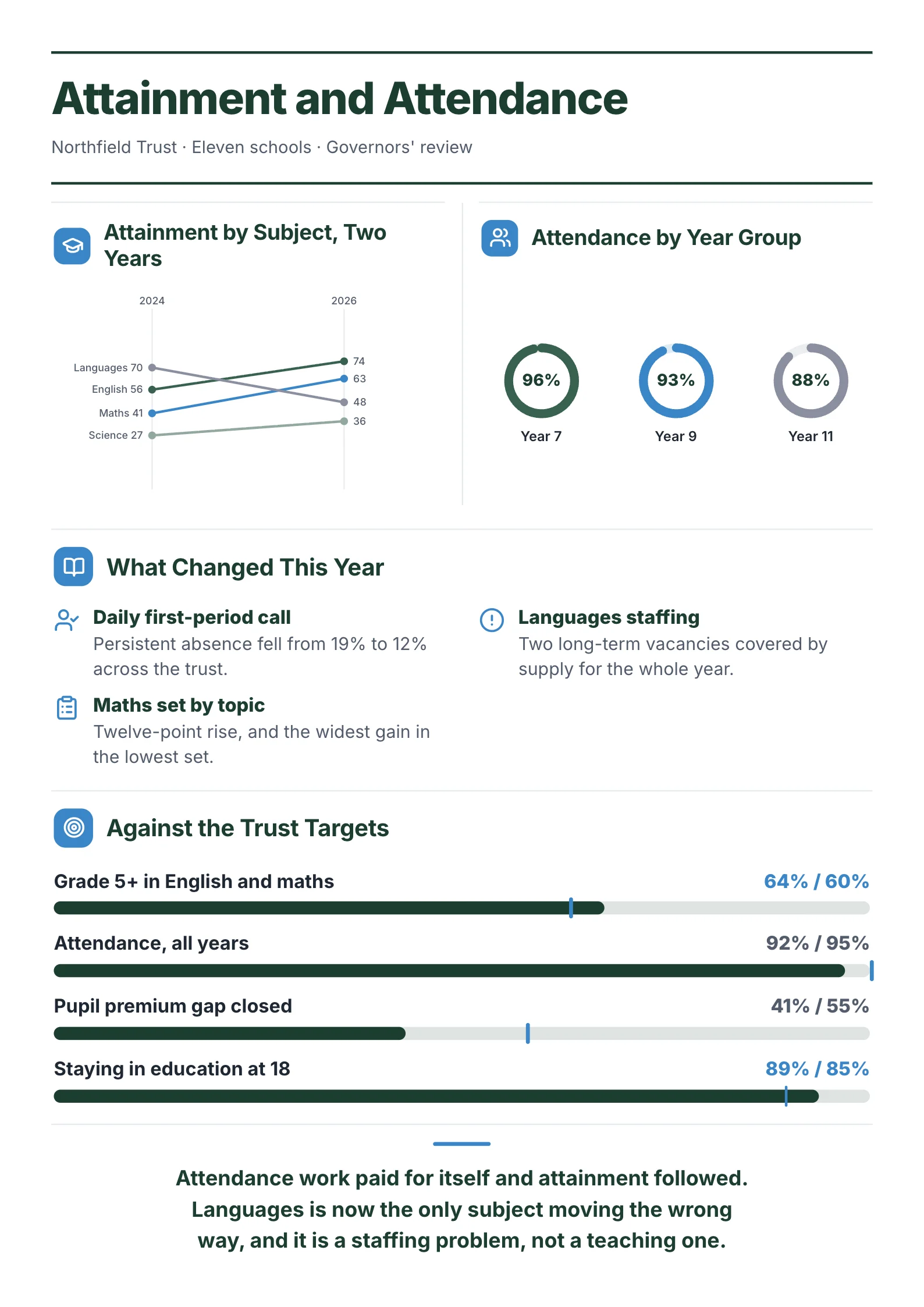 School Performance ReportEdit for free(opens in a new tab)
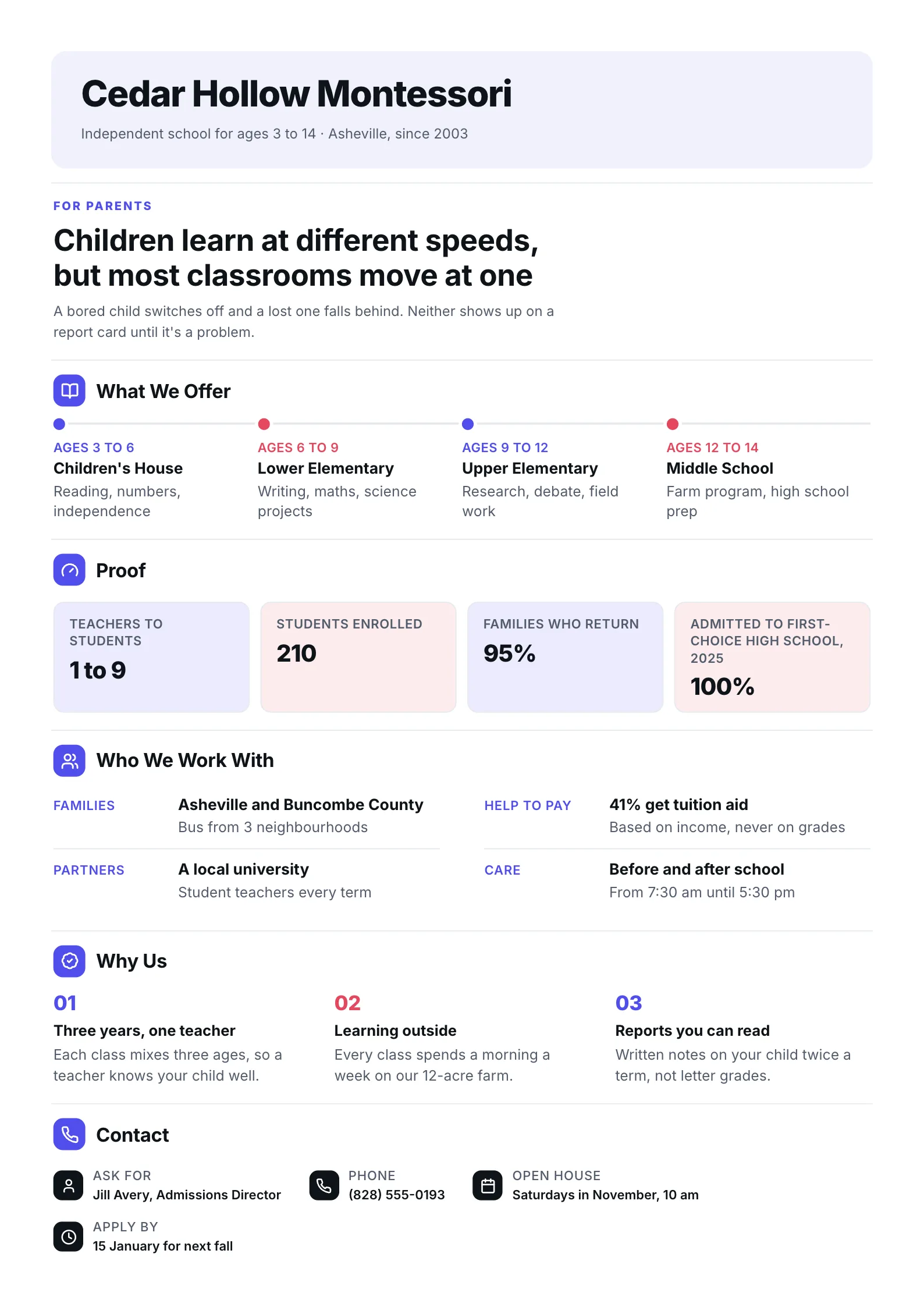 School ProfileEdit for free(opens in a new tab)
 Policy Brief: Free School BreakfastEdit for free(opens in a new tab)
 Patient Education SheetEdit for free(opens in a new tab)
This is a guide to what the federal rule says. States and districts add their own rules and forms; follow yours.
What is an IEP at a glance?
An IEP at a glance is a one-page summary of a student's IEP, written for the adults who work with the student every day. It does not replace the IEP. The IEP is the legal document; the summary is how the right parts of it reach the classroom.
It goes to:
- General education teachers, who carry out accommodations in their own class.
- Special education teachers and case managers, who often write it.
- Related service providers, such as a speech or occupational therapist.
- Aides and paraprofessionals, who may be with the student most of the day.
- Substitutes, specials teachers and other staff, who may meet the student once.
What the federal rule asks for
Two parts of IDEA's regulations shape an IEP at a glance.
300.323(d): every adult must know their part
The rule says each public agency must ensure that the IEP "is accessible to each regular education teacher, special education teacher, related services provider, and any other service provider who is responsible for its implementation." And that each of them is informed of:
- "His or her specific responsibilities related to implementing the child's IEP"; and
- "The specific accommodations, modifications, and supports that must be provided for the child in accordance with the IEP."
A one-page summary is a common way to meet the second point. The first point, each adult's own responsibilities, is the one most sheets leave out.
300.320: what the IEP itself contains
The summary draws from the IEP's required contents. Under 34 CFR 300.320(a), every IEP must include:
| 300.320(a) | What the IEP contains | On the at-a-glance sheet? |
|---|---|---|
| (1) | Present levels of academic achievement and functional performance, including how the disability affects progress in the general curriculum | Yes, as strengths and needs in a line or two |
| (2) | Measurable annual goals, academic and functional | Yes, one line each |
| (3) | How progress will be measured, and when progress reports go home | Yes, the reporting dates |
| (4) | Special education, related services, supplementary aids and services, program modifications and supports for school personnel | Yes, with times and who provides them |
| (5) | How far, if at all, the student will not participate with nondisabled children in the regular class | Yes, in one line |
| (6) | Accommodations for state and districtwide assessments, or why an alternate assessment | Yes, testing accommodations |
| (7) | When services start, and how often, where and for how long | Yes, the start date and schedule |
From the first IEP in effect when the student turns 16, or younger if the team decides, the IEP also includes postsecondary goals and transition services (300.320(b)). And the team reviews the IEP "not less than annually" (300.324(b)), which gives the summary its review date.
What 5 published at-a-glance sheets include
We read 5 IEP at a glance sheets that rank for this search on 12 October 2026: four from teacher blogs and resource sites and one from a teacher marketplace store. We counted a part only when the sheet's own description names it.
| Part | Sheets that name it |
|---|---|
| Annual goals | 4 of 5 |
| Services or related services | 4 of 5 |
| Accommodations and modifications | 3 of 5 |
| Student details and disability category or eligibility | 3 of 5 |
| Key dates: annual review, progress reports | 1 of 5 |
| Strengths and challenges | 1 of 5 |
| Behavior plan | 1 of 5 |
| Contacts for parents and case manager | 1 of 5 |
| Keep it secure | 1 of 5 |
| Each adult's own responsibilities | 0 of 5 |
| Testing accommodations | 0 of 5 |
Two things stand out:
- Goals and services come first. Four of five name them.
- The rule's first point is missing. IDEA says each teacher and provider must be told their specific responsibilities. None of the five gives that its own line, and only 3 list the accommodations, the rule's second point.
A free IEP at a glance template
| Part | What to write |
|---|---|
| Student, grade and dates | Name or initials, grade, IEP date, annual review date, progress report dates |
| Strengths | 2 or 3, in the student's favor |
| Needs | 2 or 3, from the present levels |
| Annual goals | One short line per goal, with the area: reading, math, behavior, communication |
| Classroom accommodations | The ones every teacher applies: seating, extra time, breaks, materials |
| Testing accommodations | For classroom tests and state assessments |
| Modifications | Any changes to what the student is expected to learn or show |
| Services | Each service, minutes per week, where, and who provides it |
| Who does what | Each adult and their part: "Science teacher: check planner at end of class" |
| Behavior or health notes | Only what staff need to act on, with the plan's name |
| Contacts | Case manager, parent or guardian, and how to reach them |
| Confidential | A line saying who may see the sheet and where it is kept |
An IEP at a glance example
A filled sheet for a sample student, the way a case manager might hand it to a science teacher at the start of the year.
| Part | Sample |
|---|---|
| Student | M.R., grade 6. IEP dated 14 September. Annual review by 13 September next year. Progress reports with each report card |
| Strengths | Strong oral vocabulary; works well in pairs; likes hands-on labs |
| Needs | Reading fluency at a grade 4 level; written work is slow to start |
| Goals | Reading: read grade-level text at 110 words per minute. Writing: plan and write a five-sentence paragraph with a graphic organizer |
| Classroom accommodations | Text read aloud on request; graphic organizer for written tasks; seat near the board; a 2-minute movement break each hour |
| Testing accommodations | Extended time, 1.5x; read-aloud for science and math |
| Modifications | None. Grade-level content |
| Services | Reading intervention, 30 minutes a day in the resource room, special education teacher. Speech and language, 30 minutes a week, speech therapist |
| Who does what | Science teacher: give the lab steps on a printed sheet and read them aloud once. Aide: check the planner at the end of each class. Case manager: collect work samples every two weeks |
| Contacts | Case manager, ext. 214. Parent, through the school office |
| Confidential | For staff who work with M.R. Keep in the planning folder, not on the wall |
The student is a sample. The "who does what" row is the one the rule asks for and most sheets skip.
How to write an IEP at a glance in 6 steps
- Start from the current IEP, after it is signed, and copy dates exactly.
- Pull one line per goal, in plain words, from the measurable annual goals.
- List the accommodations each teacher applies, separately from testing accommodations.
- Write the services with minutes, place and provider.
- Write the "who does what" row, one line per adult. This is 300.323(d)(2)(i) in practice.
- Hand it over in person at the start of the year or after any IEP change, and update it when the IEP is revised.
Have a long IEP to boil down? Paste the parts you are allowed to share into the free AI One-Pager generator to get a first layout, then check every line against the signed IEP. Remove names and other identifying details before you use any online tool, and follow your district's privacy rules.
Keep it confidential
An IEP at a glance holds personally identifiable information about a child. IDEA's confidentiality rules require each participating agency to "protect the confidentiality of personally identifiable information at collection, storage, disclosure, and destruction stages" (34 CFR 300.623(a)), and staff who use it must be trained on those policies.
In practice: give it only to the adults who work with the student, keep it in a planning folder rather than on a wall, use initials where your district allows, and collect old copies when the IEP changes.
IEP at a glance mistakes
| Mistake | Fix |
|---|---|
| Goals and services, but no accommodations | List the accommodations each teacher applies, as 300.323(d)(2)(ii) asks |
| No line for each adult's part | Add a "who does what" row, as 300.323(d)(2)(i) asks |
| Classroom and testing accommodations mixed together | Give each its own line |
| Dates missing | Add the IEP date, annual review and progress report dates |
| Pinned on the classroom wall | Keep it confidential, in a folder |
| Never updated after the IEP changes | Replace it after every revision and collect the old one |
Make your IEP at a glance
Start from the template table above, fill it from the signed IEP, and add the "who does what" row for every adult on the student's team. To design it as a One-Pager, drop your notes, with names removed, into the free AI One-Pager generator, then check every line against the IEP before you hand it out. For a layout to start from, browse the MakeOnepagers education templates.
Frequently asked questions
What should be on an IEP at a glance?
The student's grade and IEP dates, strengths and needs, the annual goals, classroom and testing accommodations, modifications, services with minutes and providers, each adult's responsibilities, behavior or health notes staff must act on, and contacts. Mark it confidential.
Is an IEP at a glance required?
The sheet itself is not named in the federal rule. What IDEA requires, in 34 CFR 300.323(d), is that each teacher and provider responsible for the IEP can access it and is informed of their specific responsibilities and of the accommodations, modifications and supports. An at-a-glance sheet is one practical way to do the second part, and a "who does what" line covers the first.
Who writes the IEP at a glance?
Usually the special education teacher or case manager, after the IEP meeting. Parents also write their own one-page versions to introduce their child to new teachers.
Can parents make an IEP at a glance?
Yes. A parent's version often adds what works at home and how the child likes to be helped. Share it with the case manager so it matches the signed IEP.
How often should it be updated?
Whenever the IEP is revised, and at least once a year after the annual review that 34 CFR 300.324(b) requires.