How to Write an About Me for 5 Different Readers, From 6 Staff Bio Guides
How to write an about me for a new team, clients, families, a sports team and a class. We read 6 staff bio guides. 4 cap the length at 150 to 500 words.

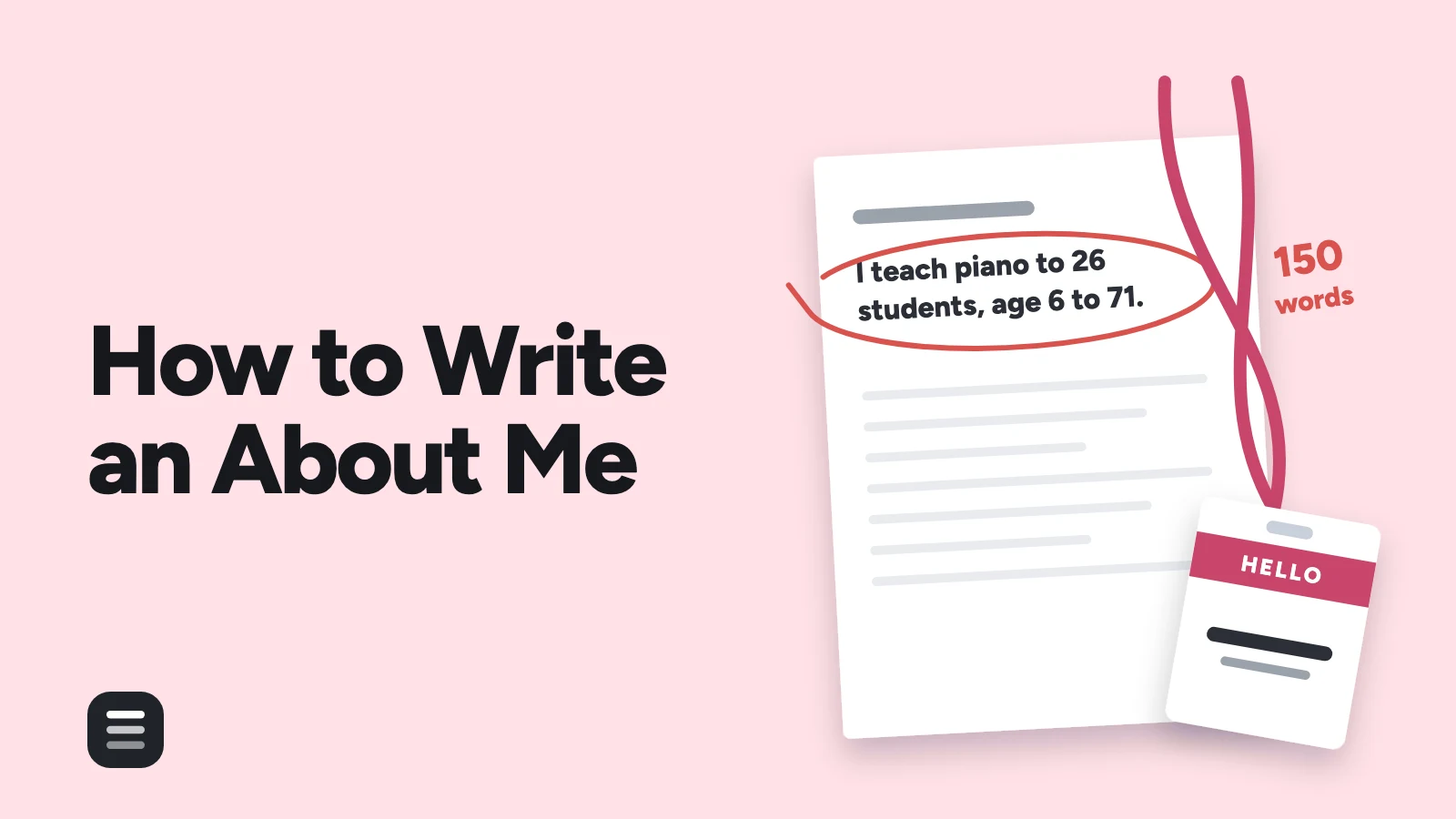
To write an about me, start with two facts, your name and what you do, in one or two sentences. Then add the few facts your reader needs, keep one personal detail, and stop before about 300 words. How you write the middle depends on who's reading. A new team, a client, a family, a sports team and a class each want something different from the same page. Start from a free one pager template.
One‑Pager examples
Real One-Pagers made with MakeOnepagers. Open any one to edit it as your own.
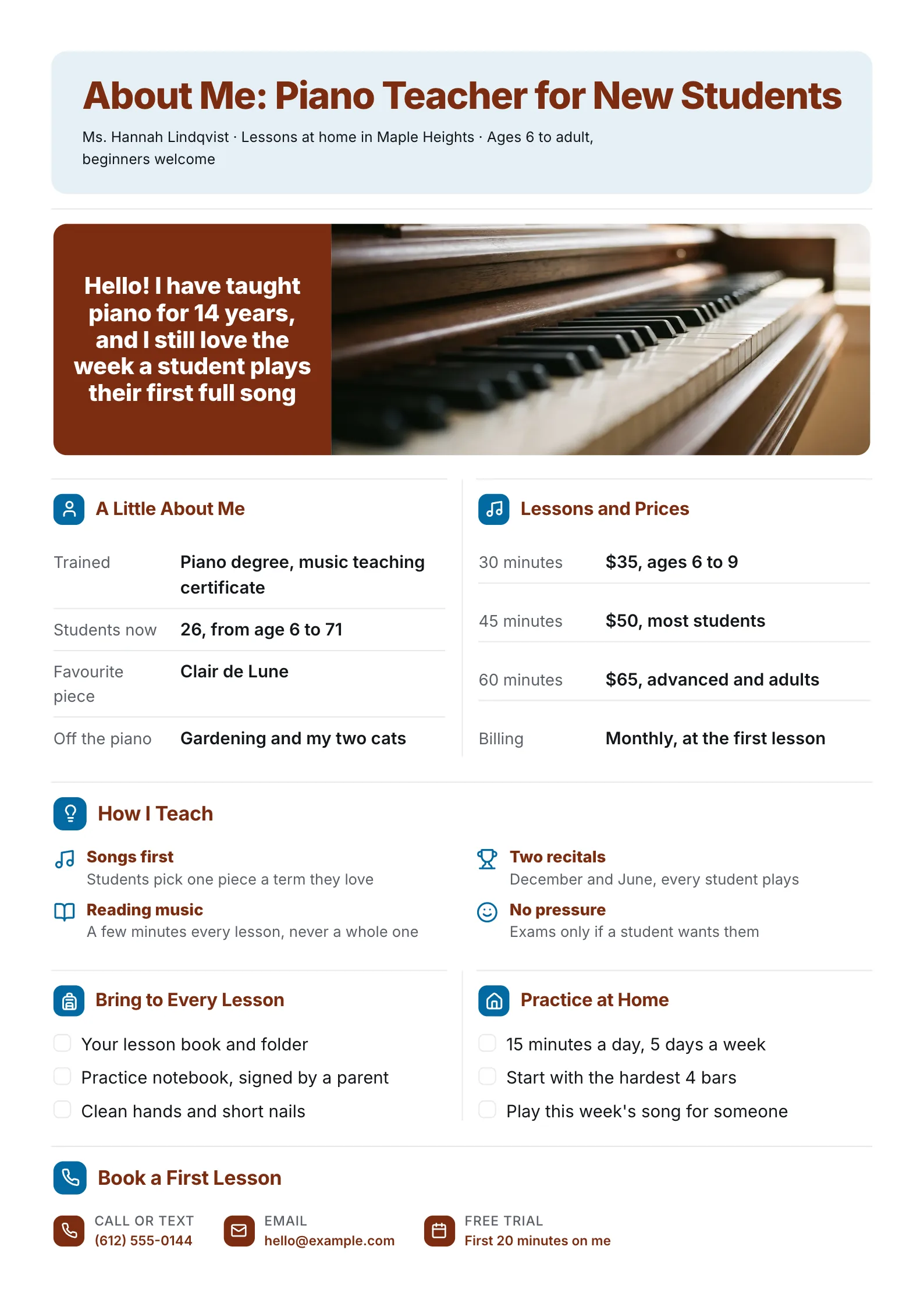 About Me: Piano Teacher for New StudentsEdit for free(opens in a new tab)
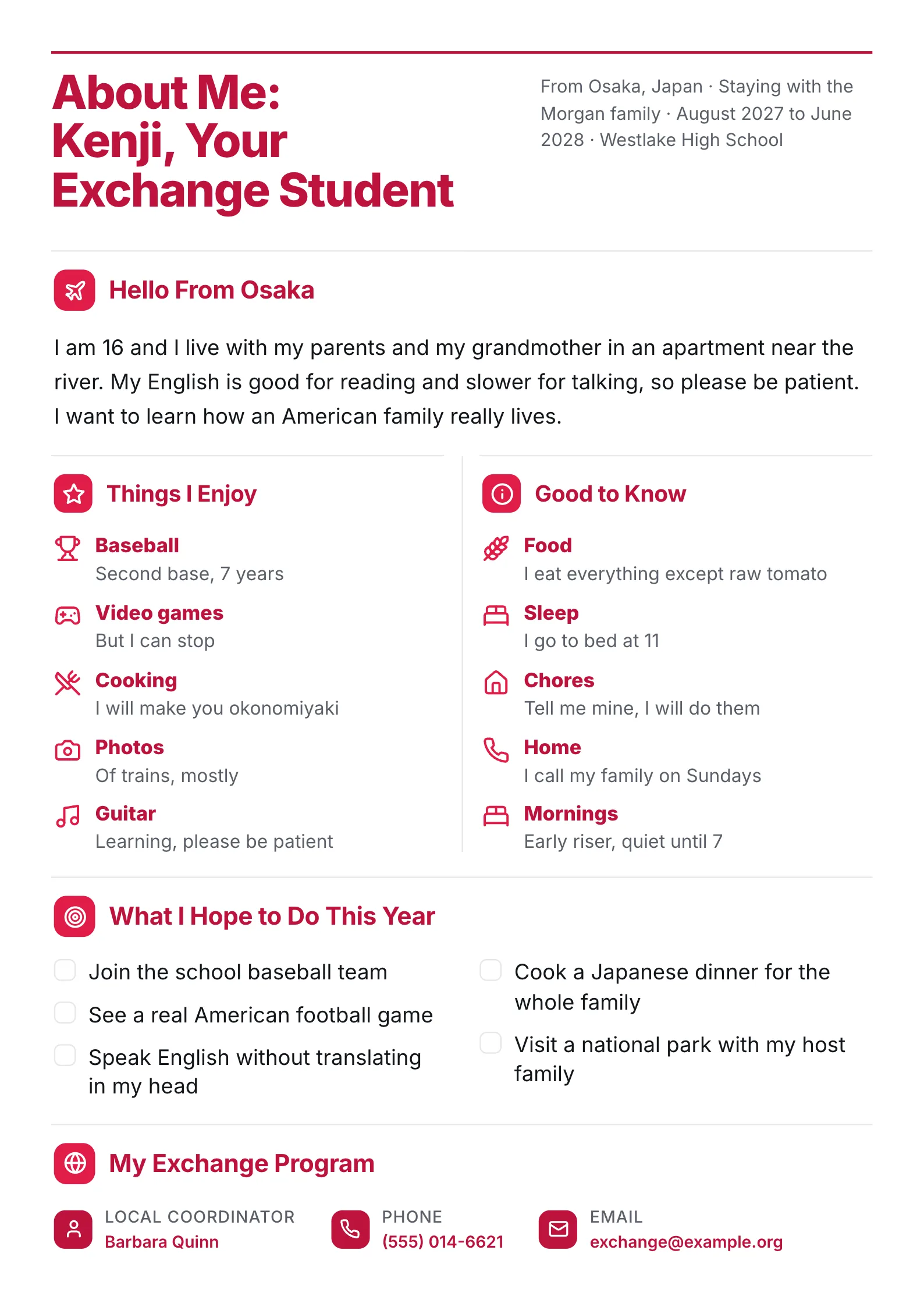 About Me: Exchange StudentEdit for free(opens in a new tab)
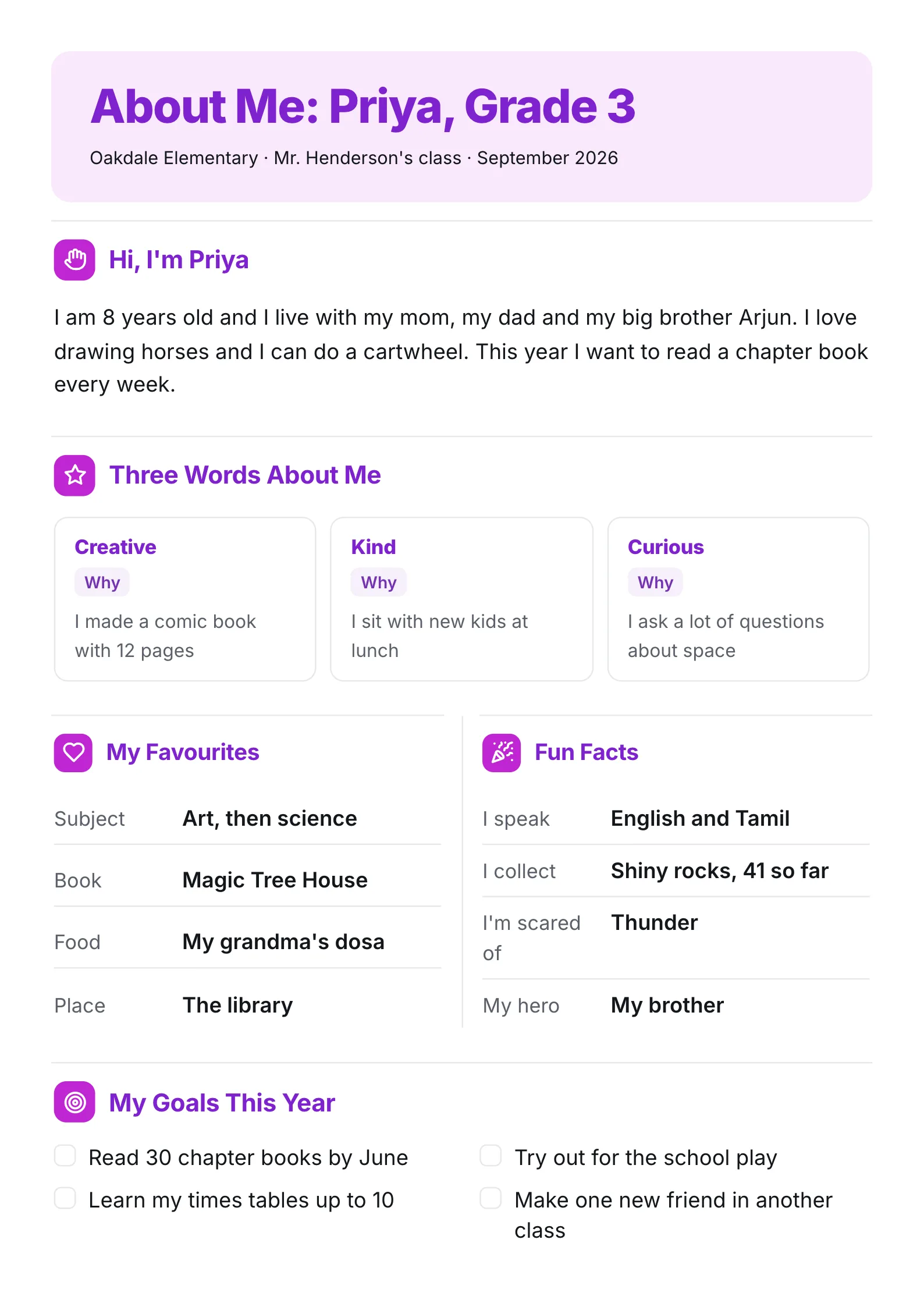 About Me: Elementary StudentEdit for free(opens in a new tab)
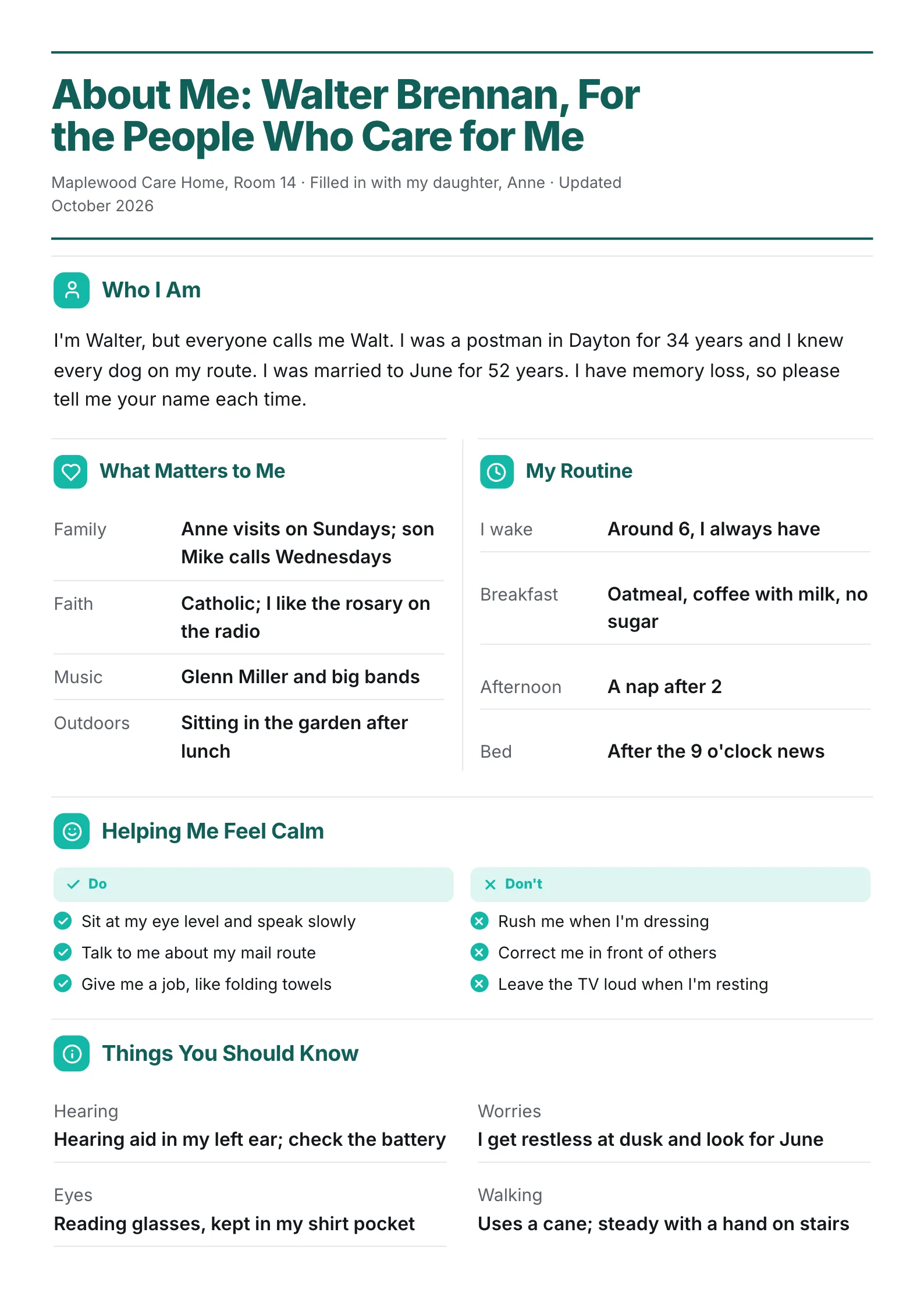 About Me: Care Home Resident ProfileEdit for free(opens in a new tab)
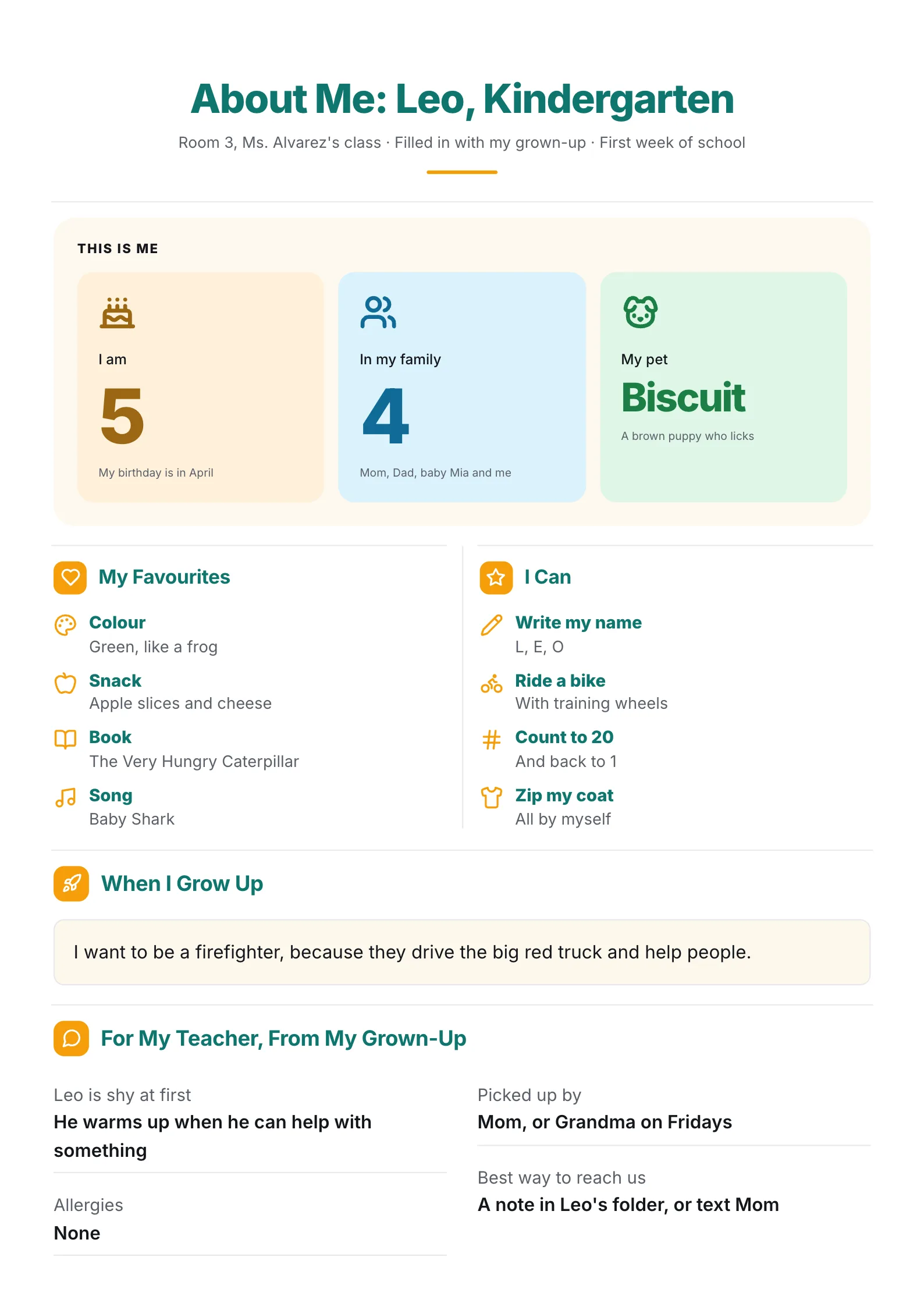 About Me: Kindergarten StudentEdit for free(opens in a new tab)
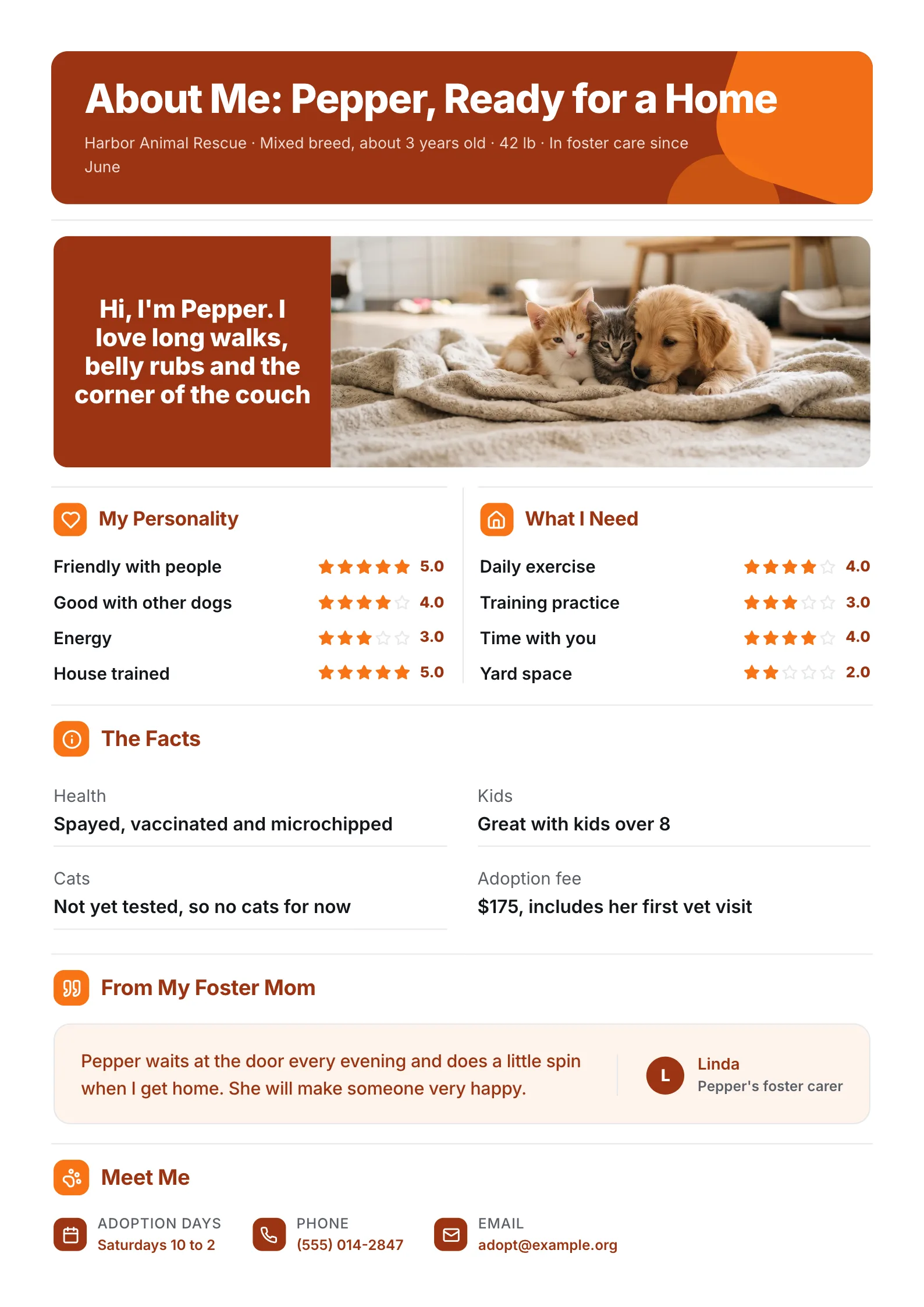 About Me: Rescue Pet Adoption ProfileEdit for free(opens in a new tab)
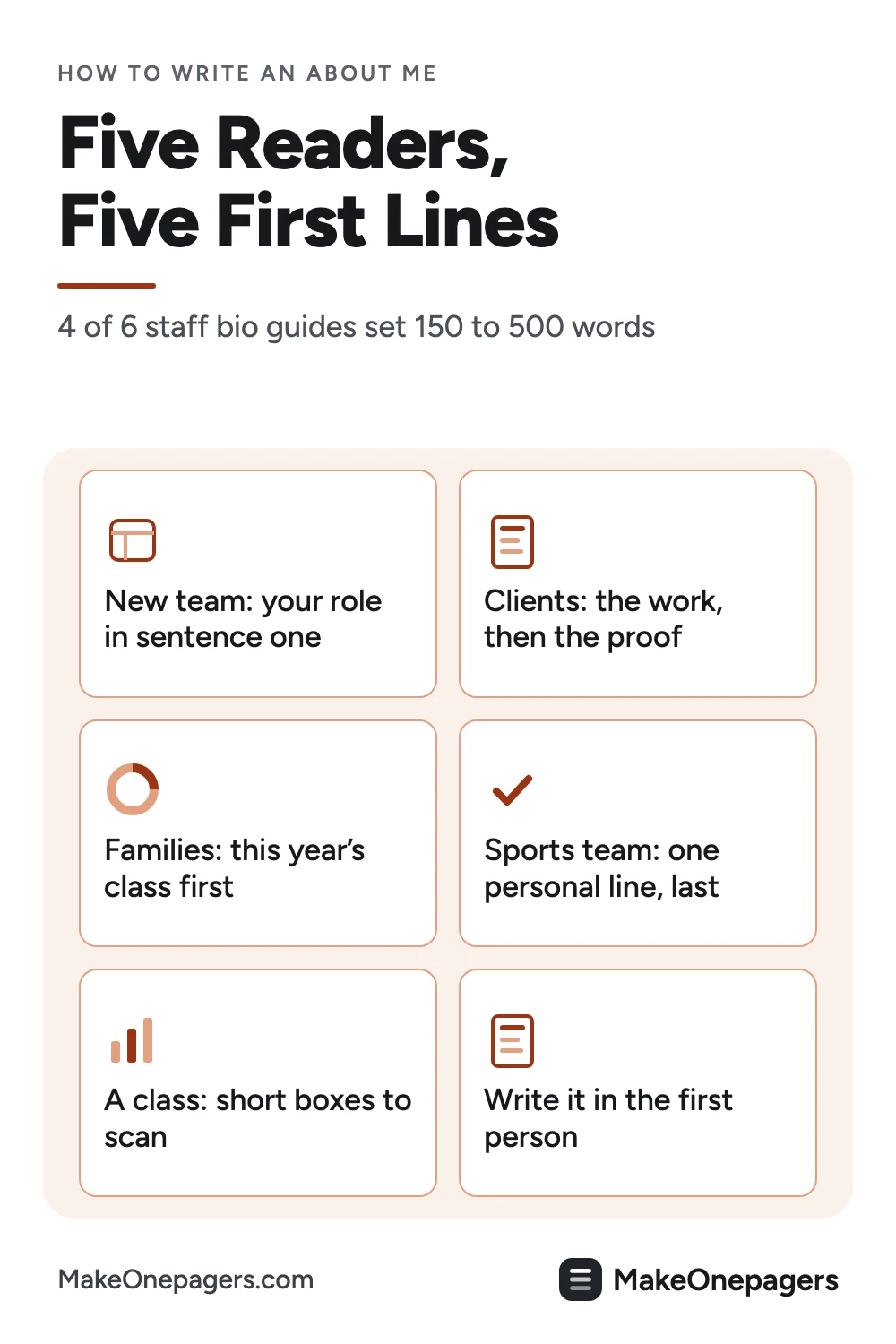
So this guide goes reader by reader. The rules come from 6 bio guides that schools and a national lab give their staff. All 6 ask for third person, four set a word limit, and two tell you to leave out family, pets and hobbies. We'll show you which rules to keep for each reader and which to break.
First, the voice and the length
A bio is written so other people can reuse it. Pratt Institute's guide asks for third person because event listings, conference programs and exhibition notes usually print bios that way, often next to other people's. Binghamton University gives the same reason. In third person, colleagues can copy and paste your bio as it stands.
An about me is written for one reader who is about to meet you, so first person works better. "I teach piano to 26 students, from age 6 to 71" sounds like a person. "Lindqvist teaches piano to 26 students" sounds like a program note. If you need both, write the about me first. Turning "I" into your name later takes five minutes.
Keep the guides' discipline on length, though. Wisconsin Extension aims for about 150 words. Lenoir-Rhyne University says 300 words or less. Metropolitan State University wants 200 to 300 and won't take more than 500. Pratt suggests 200 to 500. We read all six guides on October 30, 2026. If you write to the shortest of these, your page fits on a card, a slide or the top third of a sheet.
For a new team: your role in the first sentence
Your new colleagues want to know what you do and how to work with you. Wisconsin Extension builds the opening into its guide as a Role section of 1 to 2 sentences, with the name you like to be called and your working title. Lawrence Berkeley National Laboratory's starter template starts the same way, with your name, your title and your group. It also warns against opening with your years of experience.
The lab asks for reverse order after that. Start with where you work now, then any earlier jobs worth naming, then education. Three of the 6 guides put the current role first in some form. Readers stop early, so if someone reads only your first paragraph, they should still know what you do today.
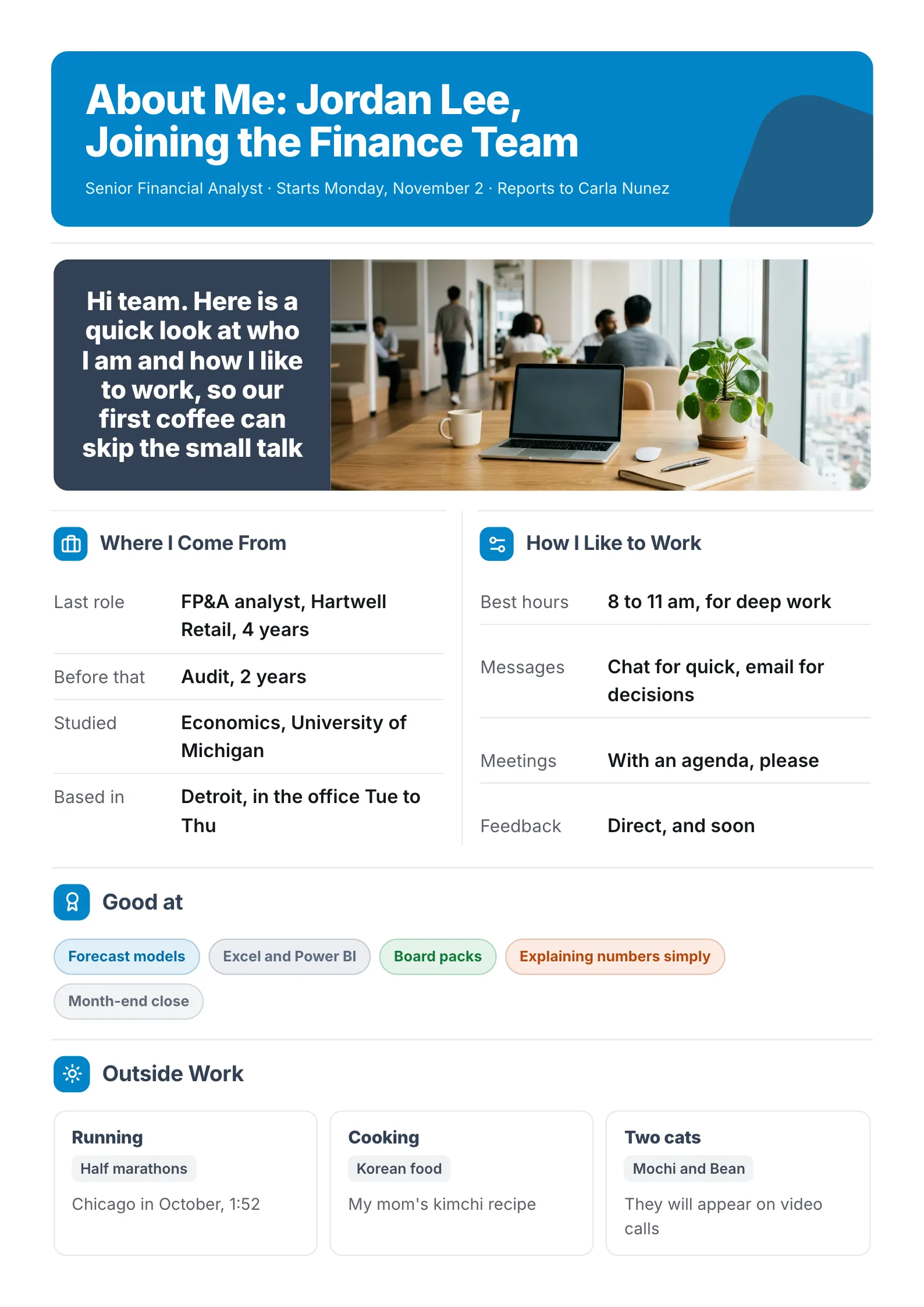
The new employee sample below opens with "Hi team" and a reason for the page, so the first coffee can skip the small talk. Name, title, start date and manager sit in the header, so the opening line doesn't have to carry them. For a team chat intro, cut the same text under 100 words.
 Edit this template
The people in these samples are made up. The header holds the facts, so the first line can be friendly.
For clients: the work, and only the background that proves it
A client cares how you work and what you've made, not every course you've taken. The guides agree on this from different angles. Lenoir-Rhyne tells staff not to write out their degrees, because the page already lists them at the top. Pratt suggests touching on highlights and keeping the full list of publications and shows for the CV below. Metropolitan State gives that list its own space of up to 1,000 words, apart from a narrative of 200 to 300. Three of the 6 keep credentials in a separate list.
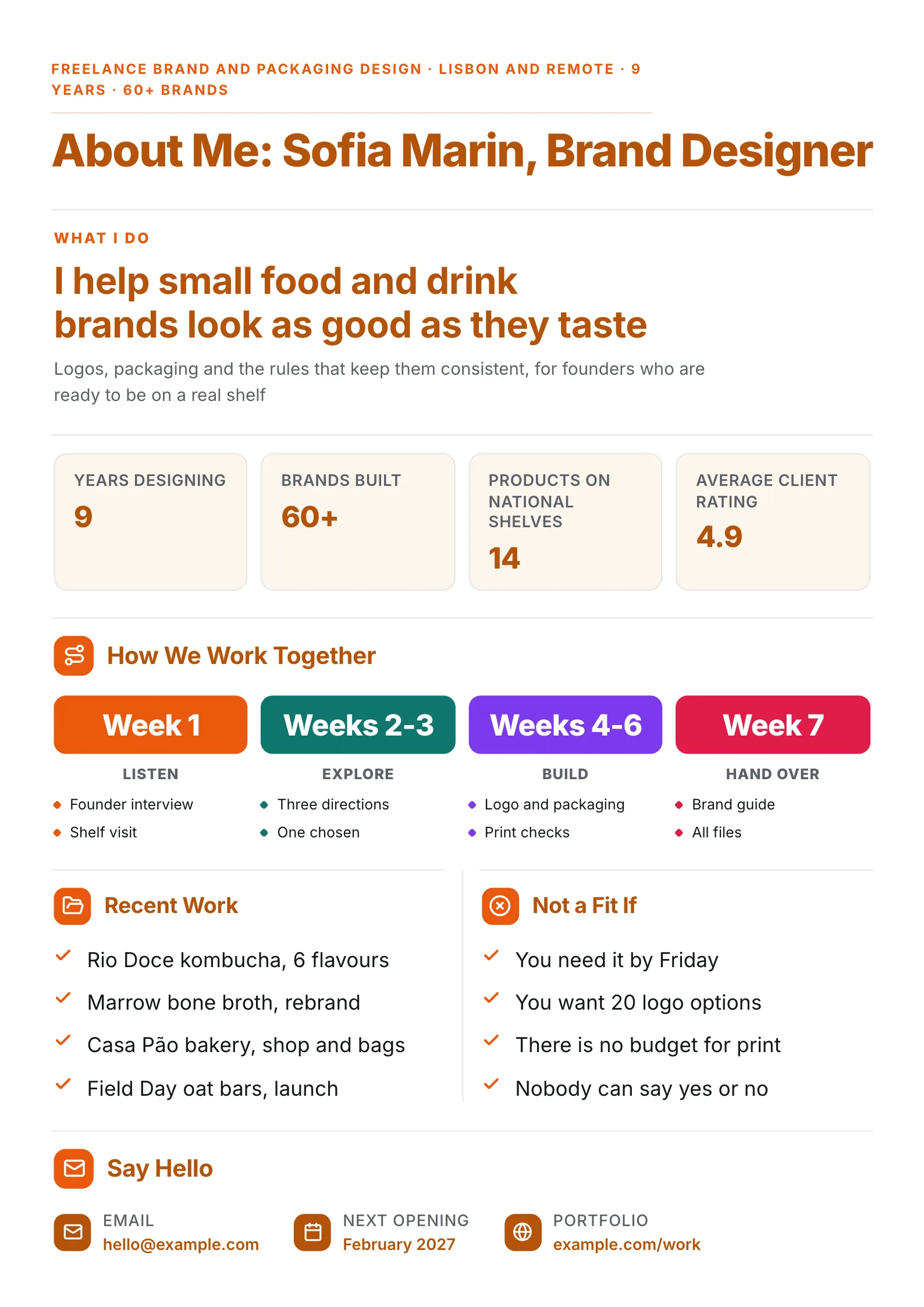
The freelancer sample does this well. It names the work in one line, gives three numbers a client would ask about, and lays out the seven weeks of a project. It even has a short list called Not a Fit If, which saves both of you a wasted call.
 Edit this template
A client sees the work, the process and the limits on one page.
For families: this year's class before your career
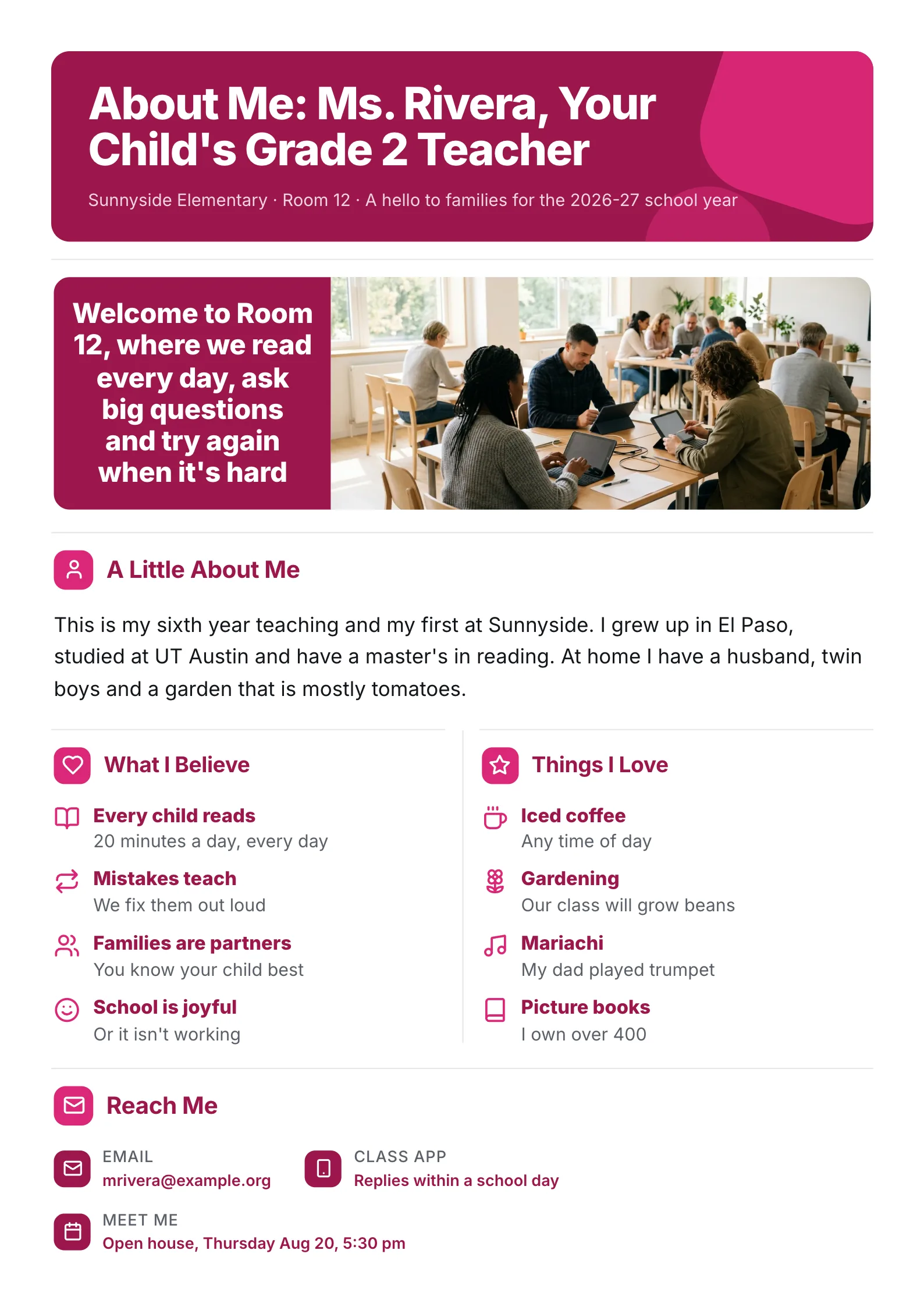
If you teach, the families reading your page want to know what this year looks like for their child. Newest first, the lab's rule, means this year's class comes before your career history. The sample below welcomes families to Room 12 before it says anything about the teacher's degrees.
Then comes the personal question, and here the guides split. Wisconsin Extension and Binghamton ask staff to leave out family, pets and hobbies on official pages. Wisconsin's own example of what to avoid is a line about living in Madison with 3 children and a pet dog. For a family audience, a little of that warmth helps. Ms. Rivera's page names a few things she loves, like gardening and mariachi, and keeps them short.
 Edit this template
The class comes first, and the career history is two sentences.
For a sports team: one personal line, placed last
The lab lets you add hobbies or volunteer work, but only as the very last, brief item. For a coach writing to players and parents, that's the right call. A good test for your personal line is whether someone could start a conversation with it.
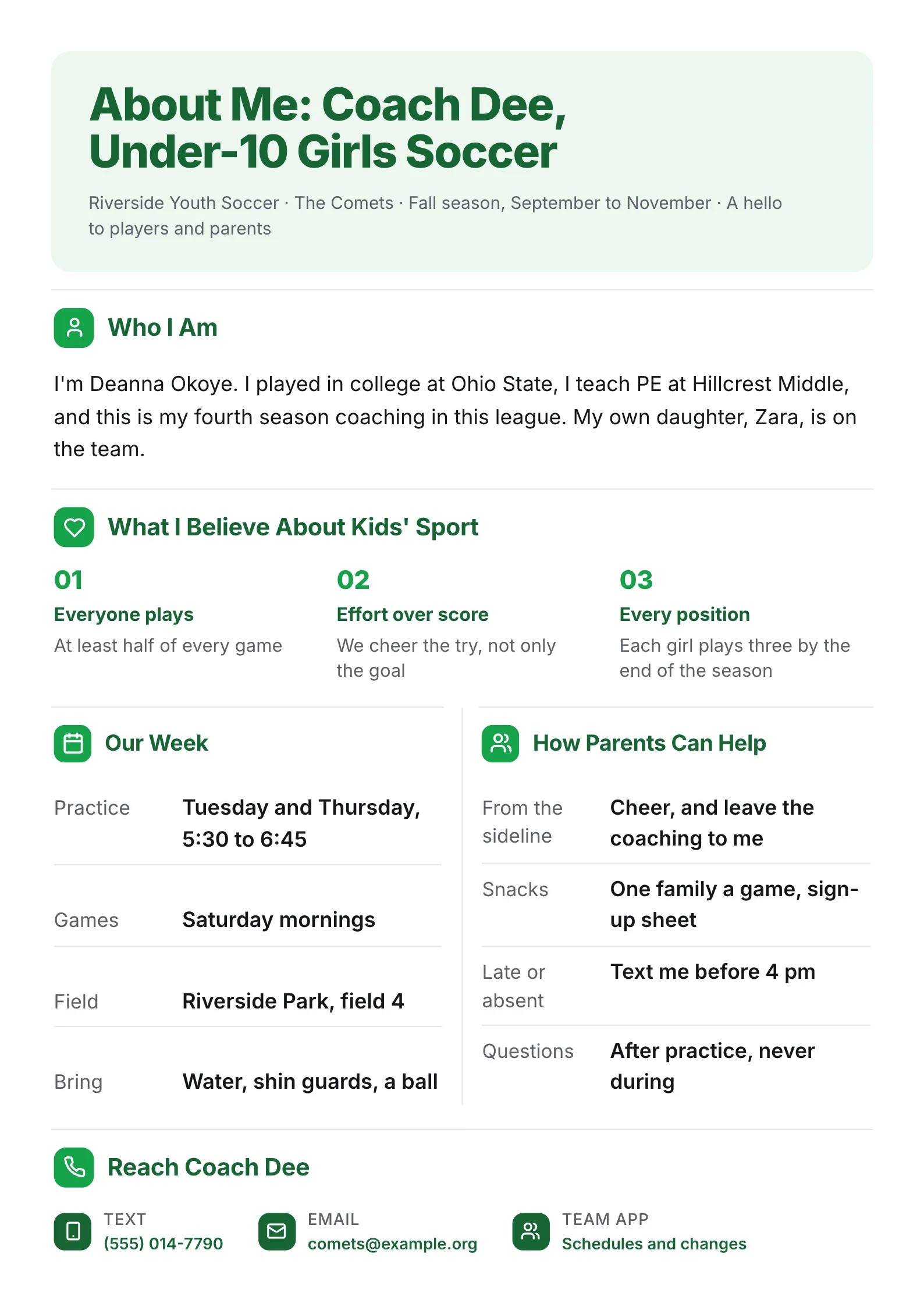
Coach Dee's Who I Am box covers her college soccer, her teaching job and her fourth season in the league. Then it ends with one sentence, that her own daughter, Zara, is on the team. For the parents reading it, that line says she's one of them. The page then moves on to practice times and how parents can help, which is what they came for.
 Edit this template
One family detail closes the intro, and the schedule gets more space.
For a class: short boxes a teacher can scan
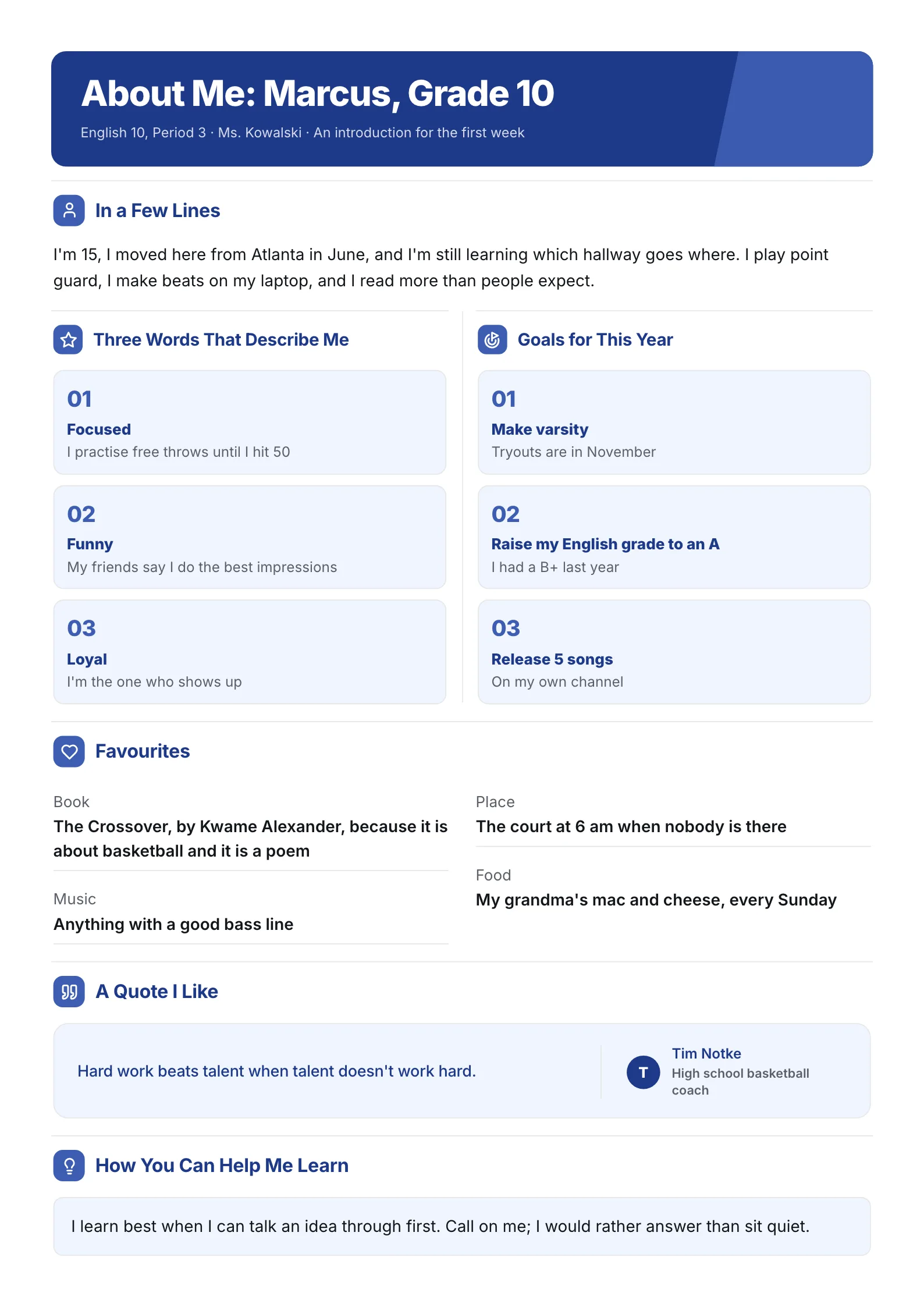
A student's about me has a reader with very little time, because a teacher may read 30 of them in one evening. Metropolitan State's style advice fits perfectly: short, snappy paragraphs made of short, snappy sentences. The high school sample keeps its opening to two sentences and puts everything else into short boxes, three words that describe him, three goals and a few favorites.
Whatever your reader, finish the same way. Count your words, cut to your limit, then read the page out loud. If a sentence makes you wince, your reader will feel it too. Metropolitan State also asks writers to drop titles after the first mention, so its example reads "Arthur," not "President Arthur." In first person you get that for free, since you only say "I."
 Edit this template
Two sentences up top, then short boxes a teacher can scan.
For a printable page with room for a photo and a few facts, see our about me template post.
One paragraph, before and after
Here's what all of this does to a real first draft. On the left is the paragraph many people write for a new job. On the right is the same person, written for a new team.
| Draft | Rewritten for the reader |
|---|---|
| "I was born in Ohio and have always loved numbers. After college I worked in audit for two years, then moved to retail finance. I'm passionate about data and excited to join this amazing team!" | "Hi team, I'm Jordan, your new senior financial analyst. I build the monthly forecasts, and I'm happiest turning a messy month-end into a one-page summary. Ask me about half marathons." |
| 35 words, never says what the new job is, two vague claims | 30 words, the new role in sentence one, one real skill, one personal detail |
The second version is shorter and says more, and it gives your reader something to ask you about. Write yours the same way, then set it in one of the about me designs in MakeOnepagers, which already split the header facts from the opening line.
Frequently asked questions
Should an about me be in first or third person?
Use first person when you're introducing yourself to someone you'll meet, like a new team, a class or a client. Use third person for a bio other people will print, such as a conference program. All 6 guides we read ask for third person, because their bios get reused.
How long should an about me be?
Aim for 150 to 300 words for a full page and under 100 for a chat intro or profile. The guides we read set limits from about 150 words to 500, and two of them put the ideal at 300 or less.
What should I not put in an about me?
Leave out a full list of degrees, awards or publications, since a separate list or CV holds those better. Keep family, pets and hobbies to one short line, or skip them on a formal page. Two of the 6 guides ask staff to leave them out entirely.
How do I start an about me for school?
Start with your name, your grade and one sentence about something you care about. Then add two or three short facts, like a goal for the year and a favorite book. Teachers read many of these at once, so short boxes work better than one long paragraph.




