How to Write a Church Newsletter People Actually Read
How to write a church newsletter people read, using advice from a working editor, the Lewis Center and the Ensign, plus 5 one-page samples to copy.

A church newsletter gets easier to write once you know how to decide what stays in. Linda Werman, who edited her church's newsletter in Mansfield, Ohio, warned against filler and gave the reason in one line: "News is what sells newspapers, and news about the church is what holds the newsletter reader." Her advice ran in Ministry magazine in 1986, and it still holds now that yours may go out by email. Start from a free one pager template.
One‑Pager examples
Real One-Pagers made with MakeOnepagers. Open any one to edit it as your own.
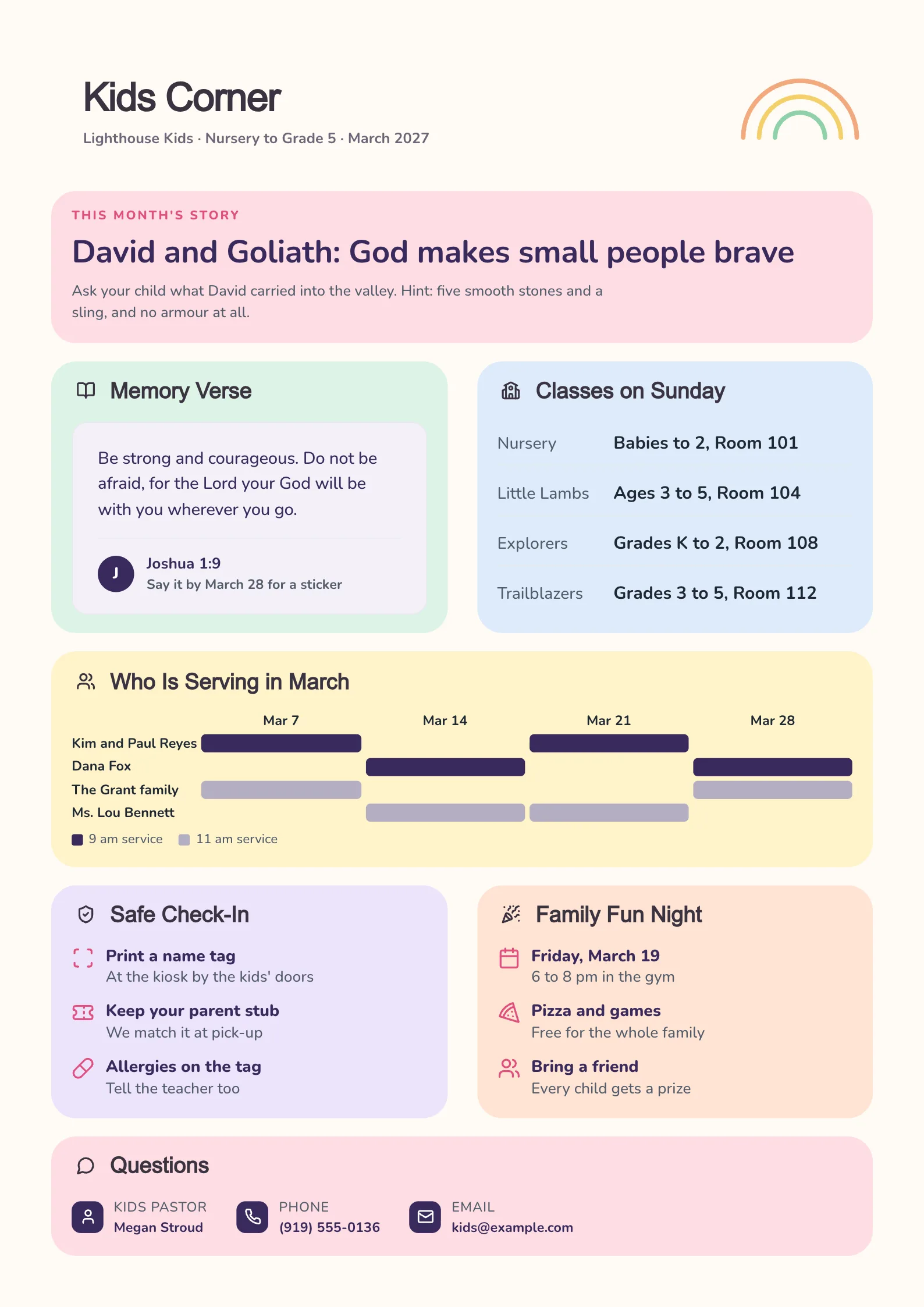 Church Newsletter: Children's MinistryEdit for free(opens in a new tab)
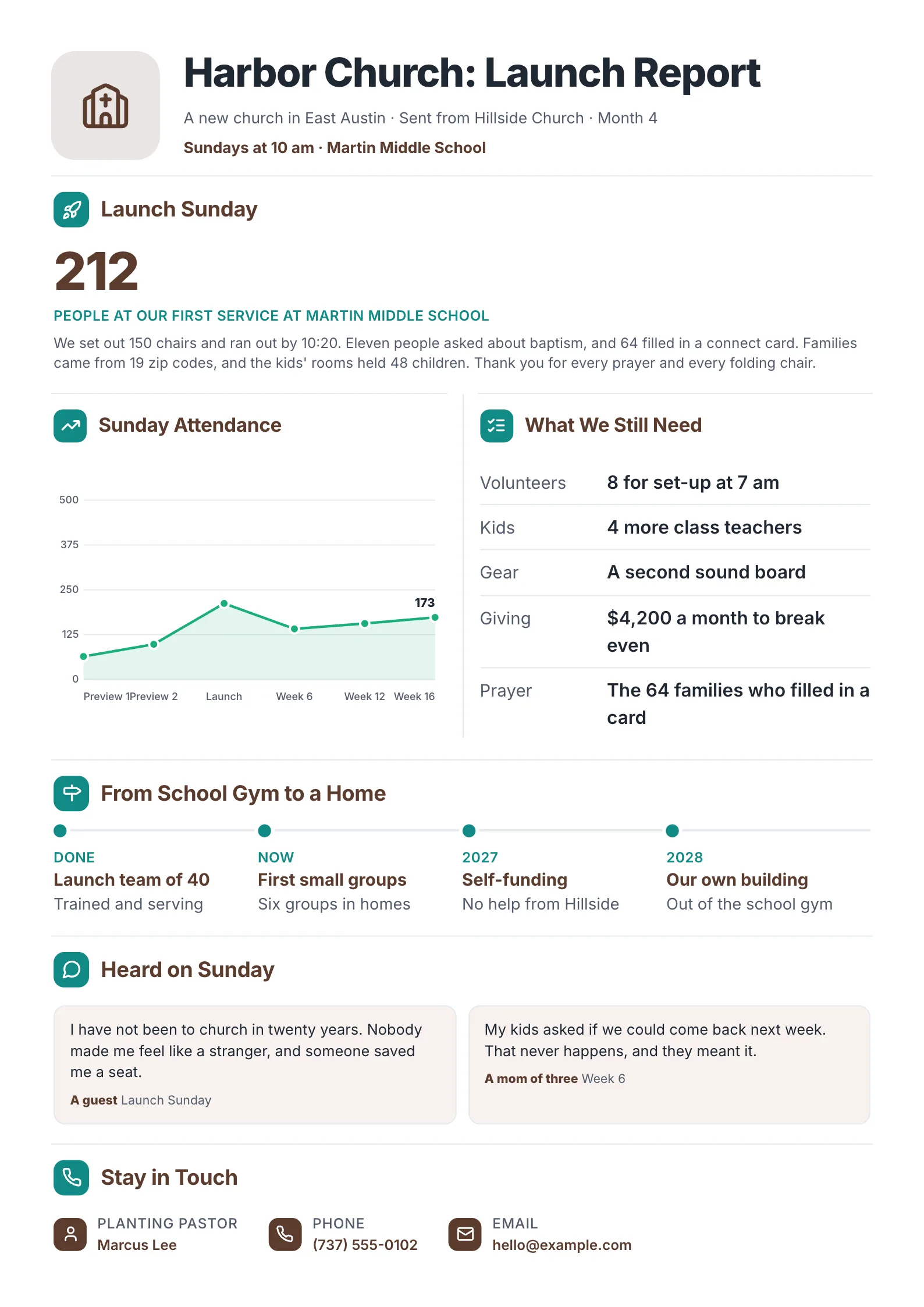 Church Newsletter: Church Plant LaunchEdit for free(opens in a new tab)
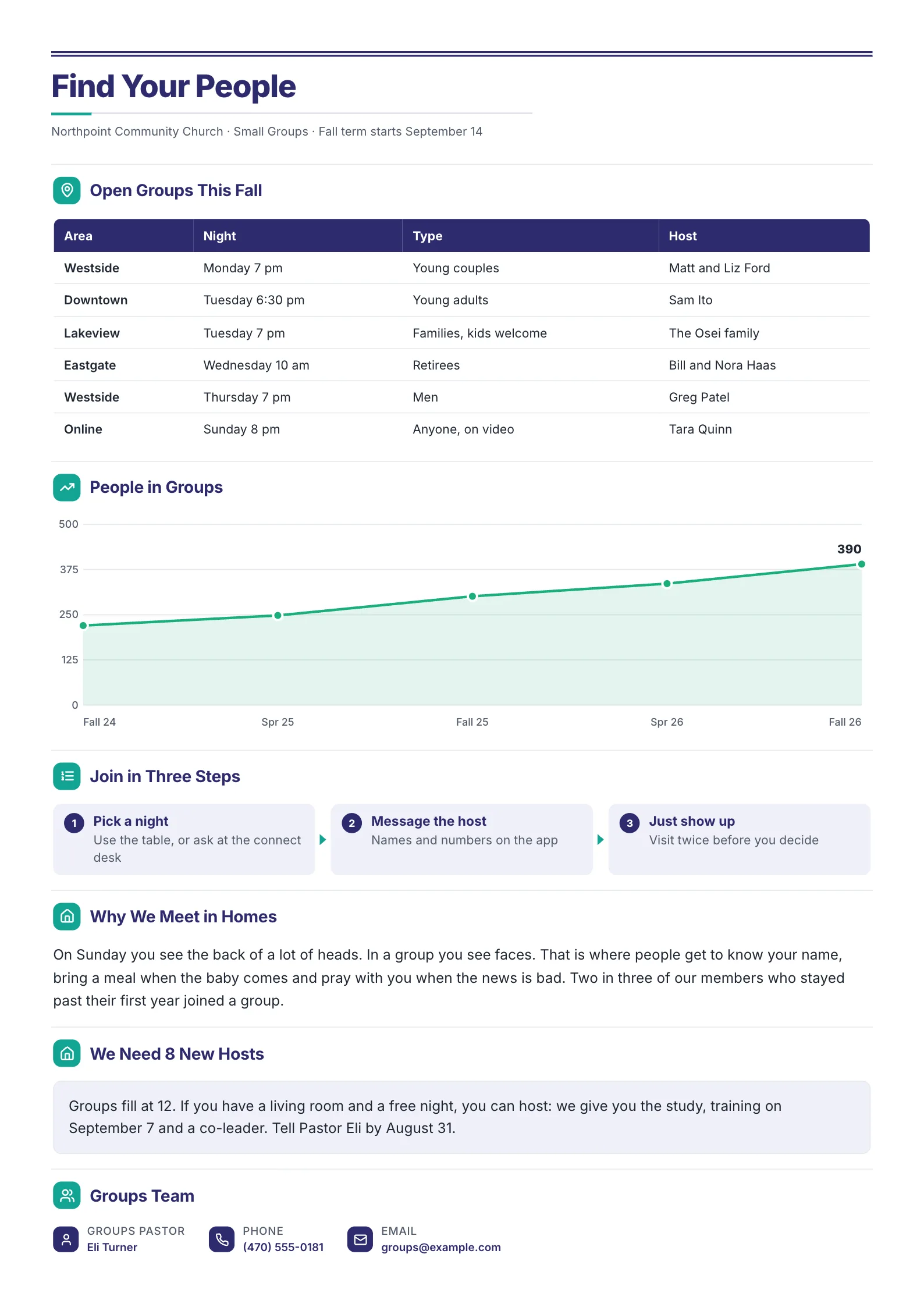 Church Newsletter: Small GroupsEdit for free(opens in a new tab)
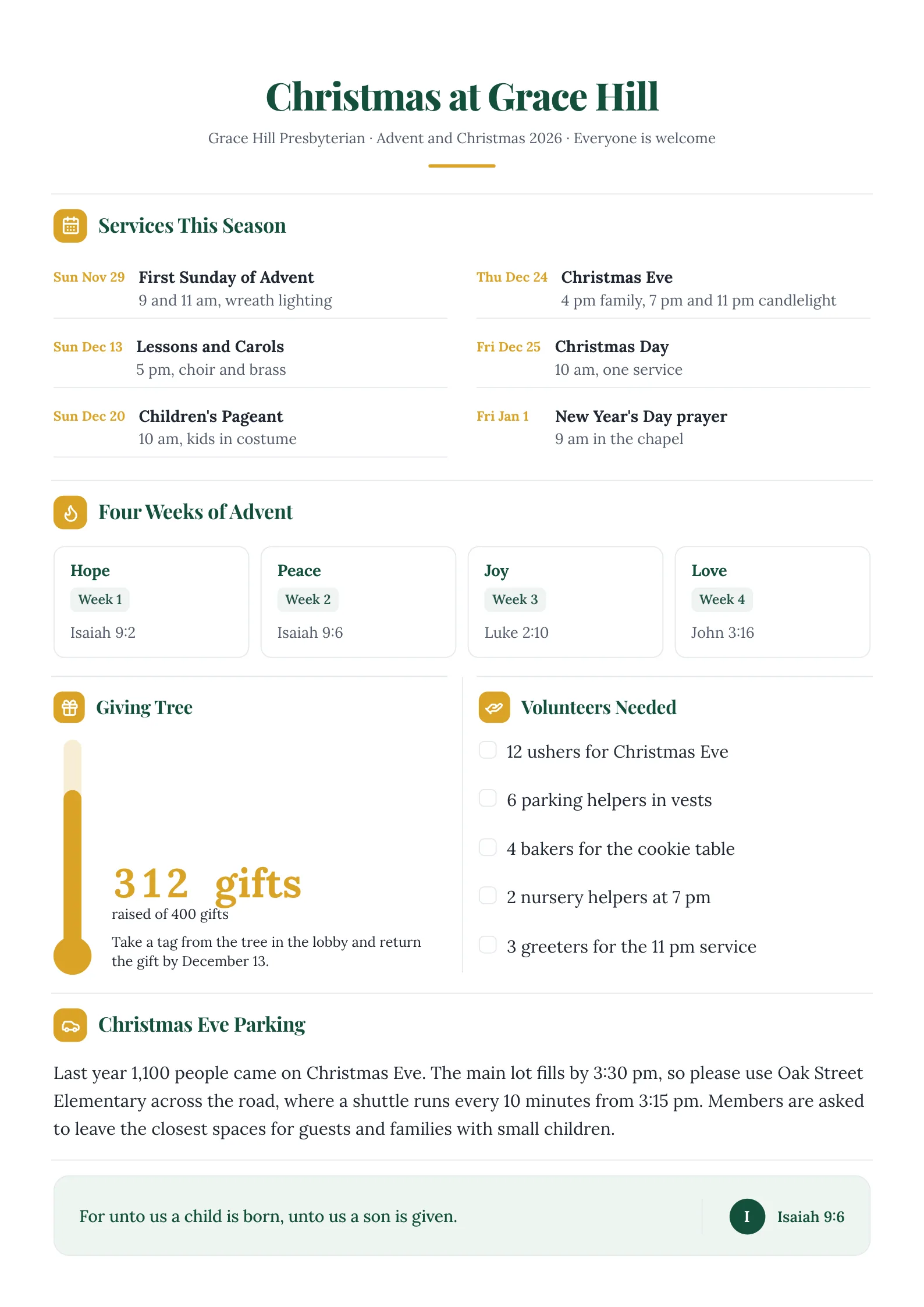 Church Newsletter: Advent and ChristmasEdit for free(opens in a new tab)
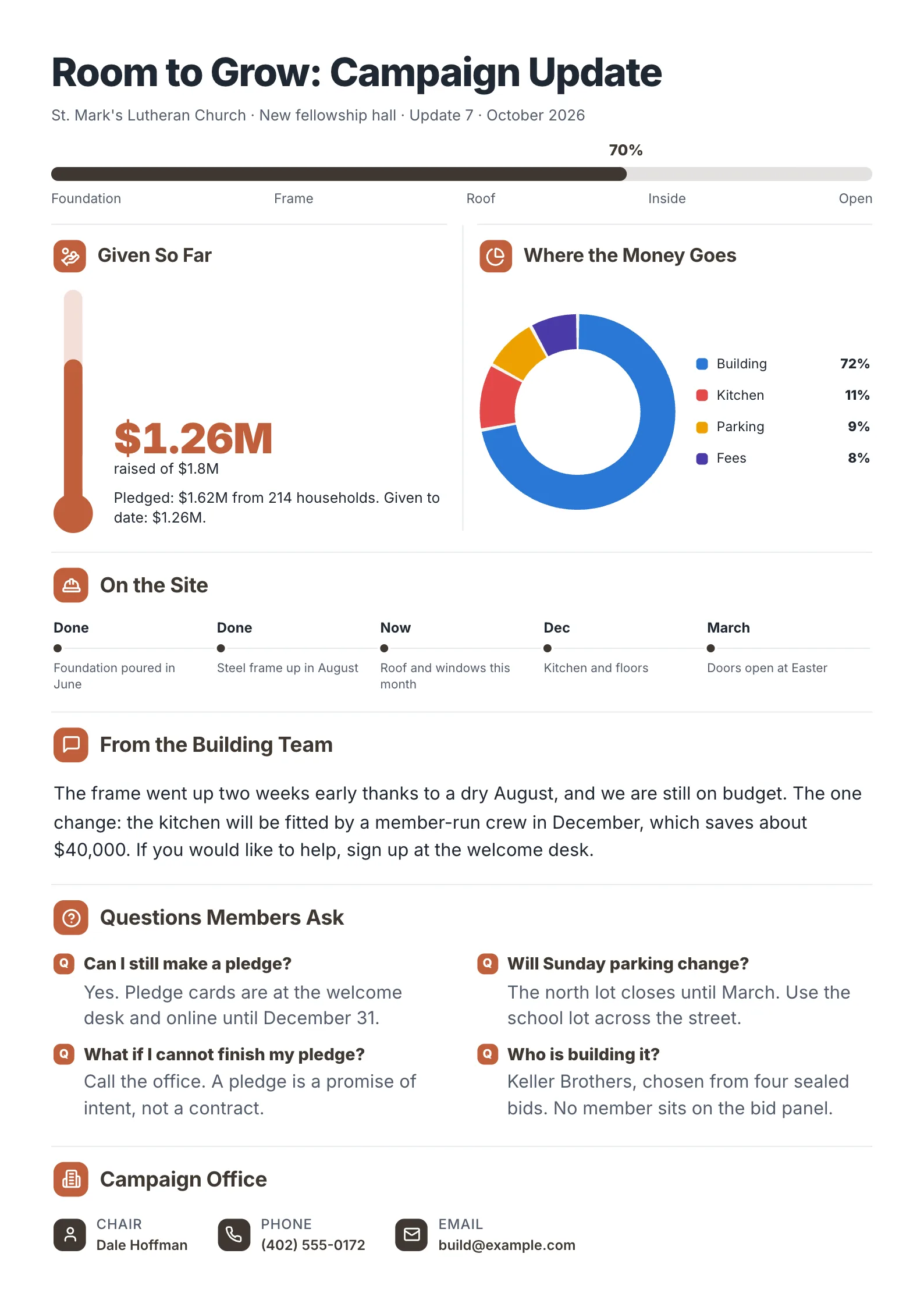 Church Newsletter: Building CampaignEdit for free(opens in a new tab)
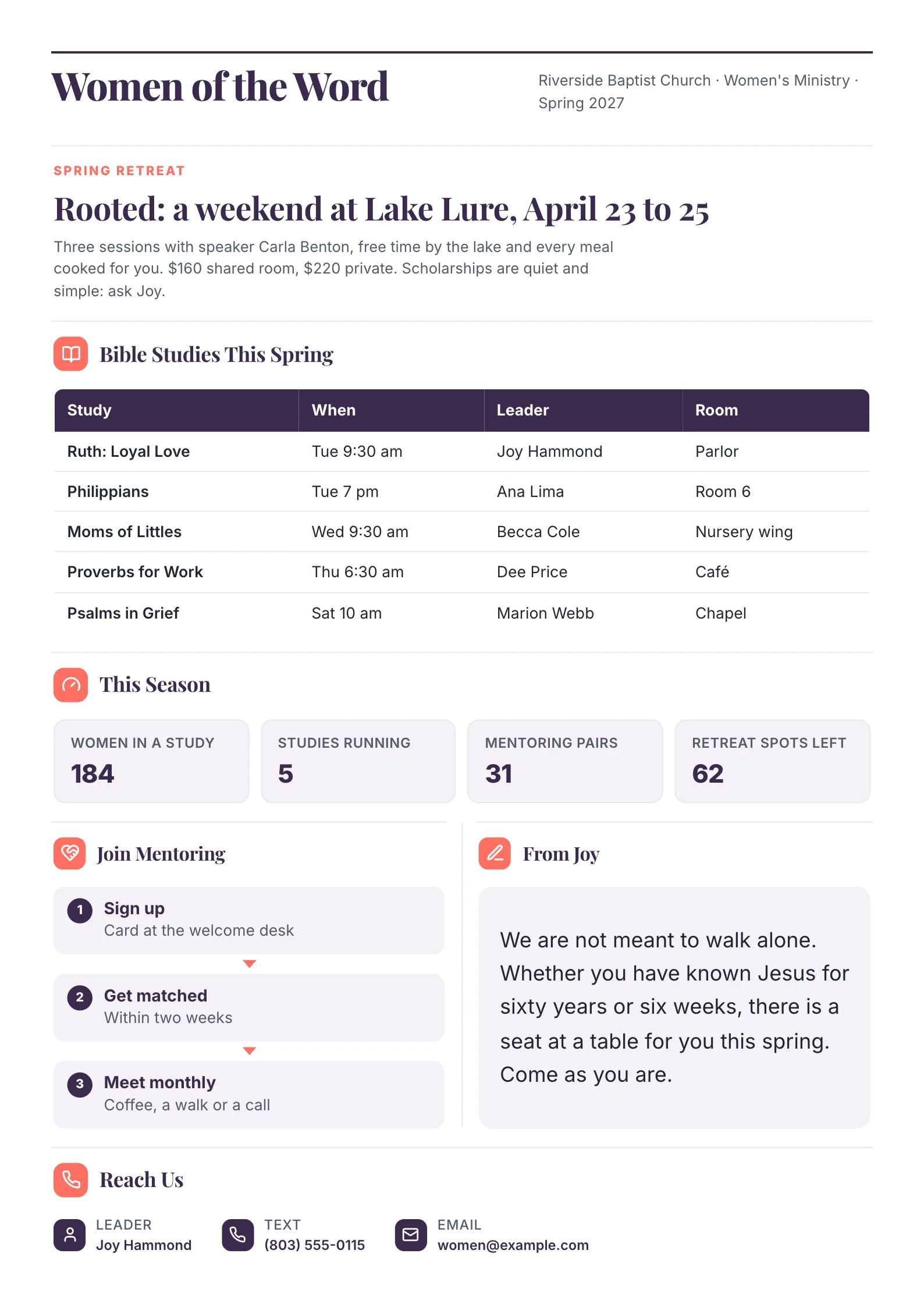 Church Newsletter: Women's MinistryEdit for free(opens in a new tab)
We read her guide beside a 2025 piece from the Lewis Center for Church Leadership and a short list of tips from the Ensign. Below is what they tell you to do, along with five one-page samples from MakeOnepagers that show each idea on the page, with invented churches and figures.
What three church sources tell an editor
| Advice | Ministry, 1986 | Lewis Center, 2025 | Ensign, 2002 |
|---|---|---|---|
| Lead with news of your people | Yes | Share anecdotes, with permission | |
| Tie articles to why the church exists | Yes, "connect the dots" | ||
| Cover a ministry people don't know | Open to clubs and groups | Yes, "move out of ministry silos" | |
| Teach something | Yes, "teachable moments" | ||
| Cut borrowed filler | Yes | ||
| Check names and dates | Yes |
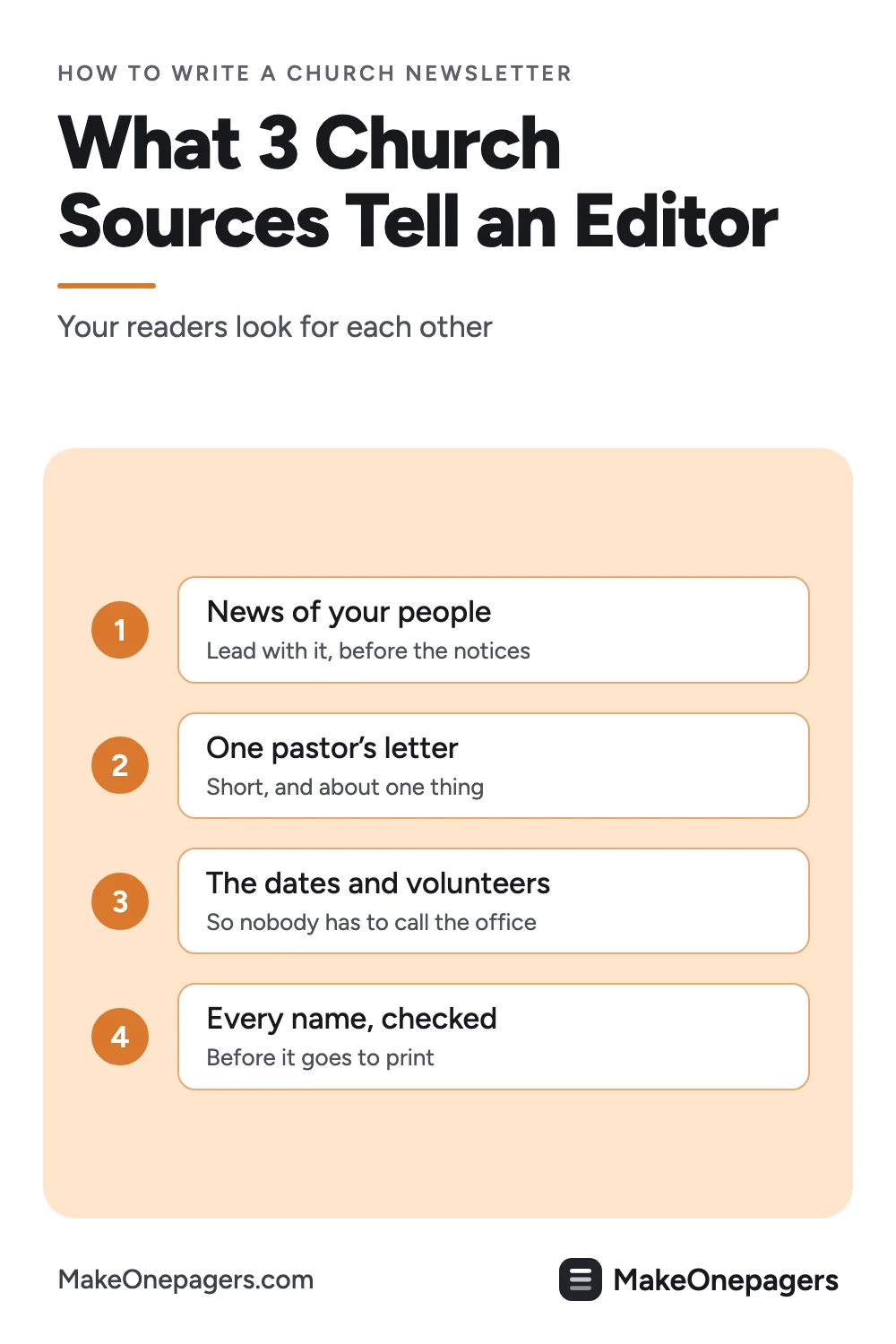
They come from three different traditions, and they don't contradict each other. They do answer different problems. Werman helps when you have too little time, the Lewis Center when you have nothing to say, and the Ensign when you're about to press print.
Start with who it's for
Werman names readers you might forget. A newsletter can "inform shut-in church members," she writes, and act as "a bridge of friendship to visitors and inactive church members." It also keeps in touch with members who've moved away.
So picture one of them before you write: a widow who can't get to worship anymore, or a family who visited twice. Would your opening line mean anything to them? "Thanks to all who helped" tells them little. "The pantry fed 46 families this month" tells them what their church is doing.
Put the news of your people first
Werman's starter list is births, weddings, graduations, deaths, illnesses and baptisms, plus the groups that meet at your church. She also ran a simple feature of upcoming birthdays and anniversaries, so members could send a card.
A real issue shows this still works. The October 2026 newsletter of St. Paul's Lutheran Church in Webster City, Iowa, runs two pages. It lists birthdays and anniversaries by date, who's serving each week as elder and greeter, and the worship times in English and Lao. Pastor Joseph Pierson's letter that month covers a plain practical matter: the software they use to make the newsletter is being discontinued, so the format will change. He tells his readers before they notice.
Ask permission before you tell anyone's story. The Ensign says it's fun to share anecdotes "with their permission," and warns against printing anything confidential or embarrassing. A hospital stay is the family's news to share.
 Edit this template
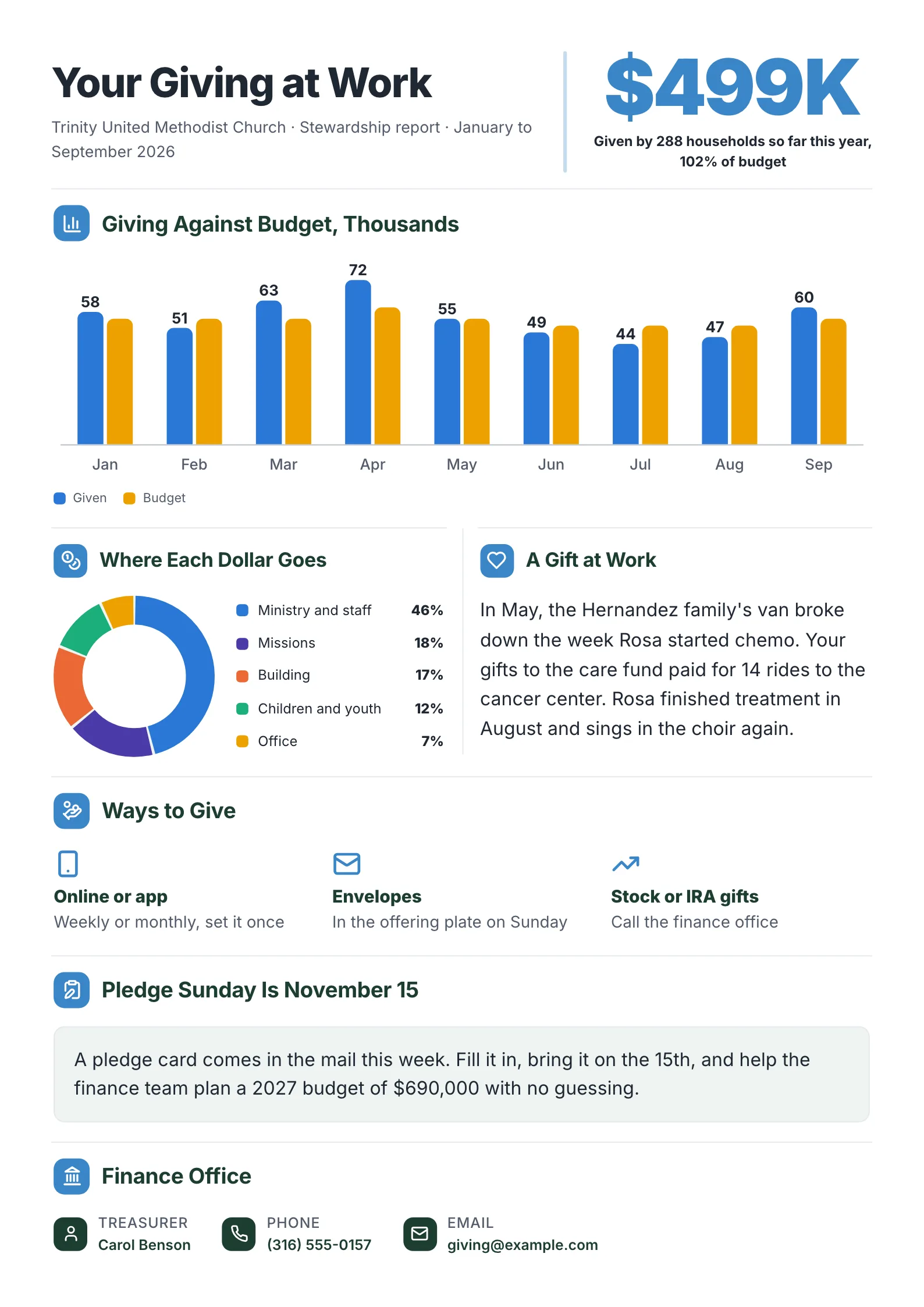
A Gift at Work turns a budget line into 14 rides for one family, and that family's story needs their yes.
Give the pastor's letter one aim
Werman's paper ran "two editorial columns," The Pastor's Corner and From the Editor's Desk. Both either encouraged people toward an upcoming event, urged them to good works or showed ways to minister to others. She wrote hers last, to fit the space left, and steered clear of the pastor's topic. Picking one of those aims per letter is our own suggestion.
 Edit this template
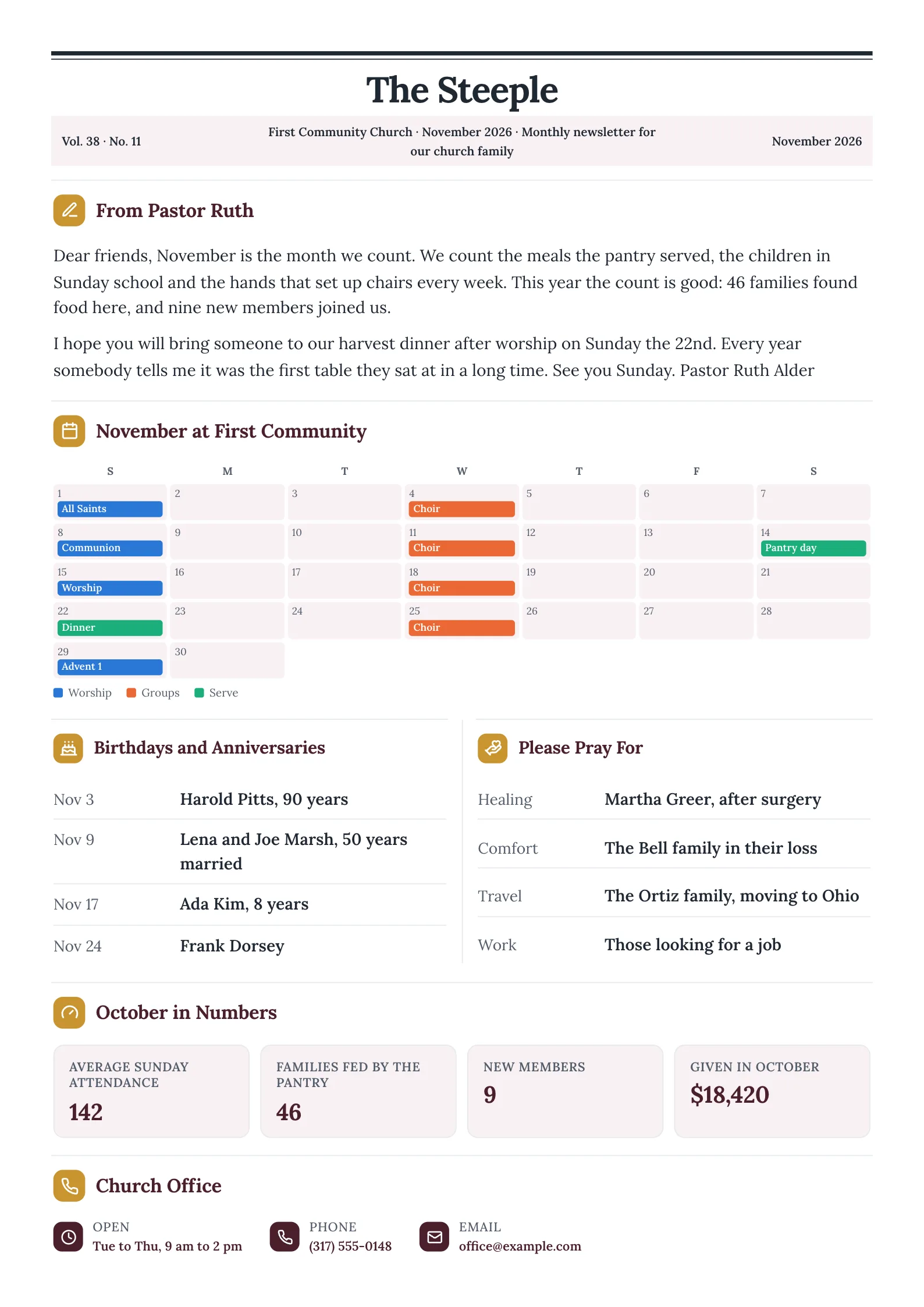
Pastor Ruth's letter is two short paragraphs, and it ends by asking you to bring someone to dinner on the 22nd.
If you're stuck, the Lewis Center's questions will get you going. How does this ministry connect to your mission? Which group do most members know nothing about? What does a regular attender still not understand about the order of worship? Pick one question for each issue, and you won't run out for a year.
Write the details in full
Most newsletter reading is checking when, where and what you need to bring. So give each event its full set of facts.
 Edit this template
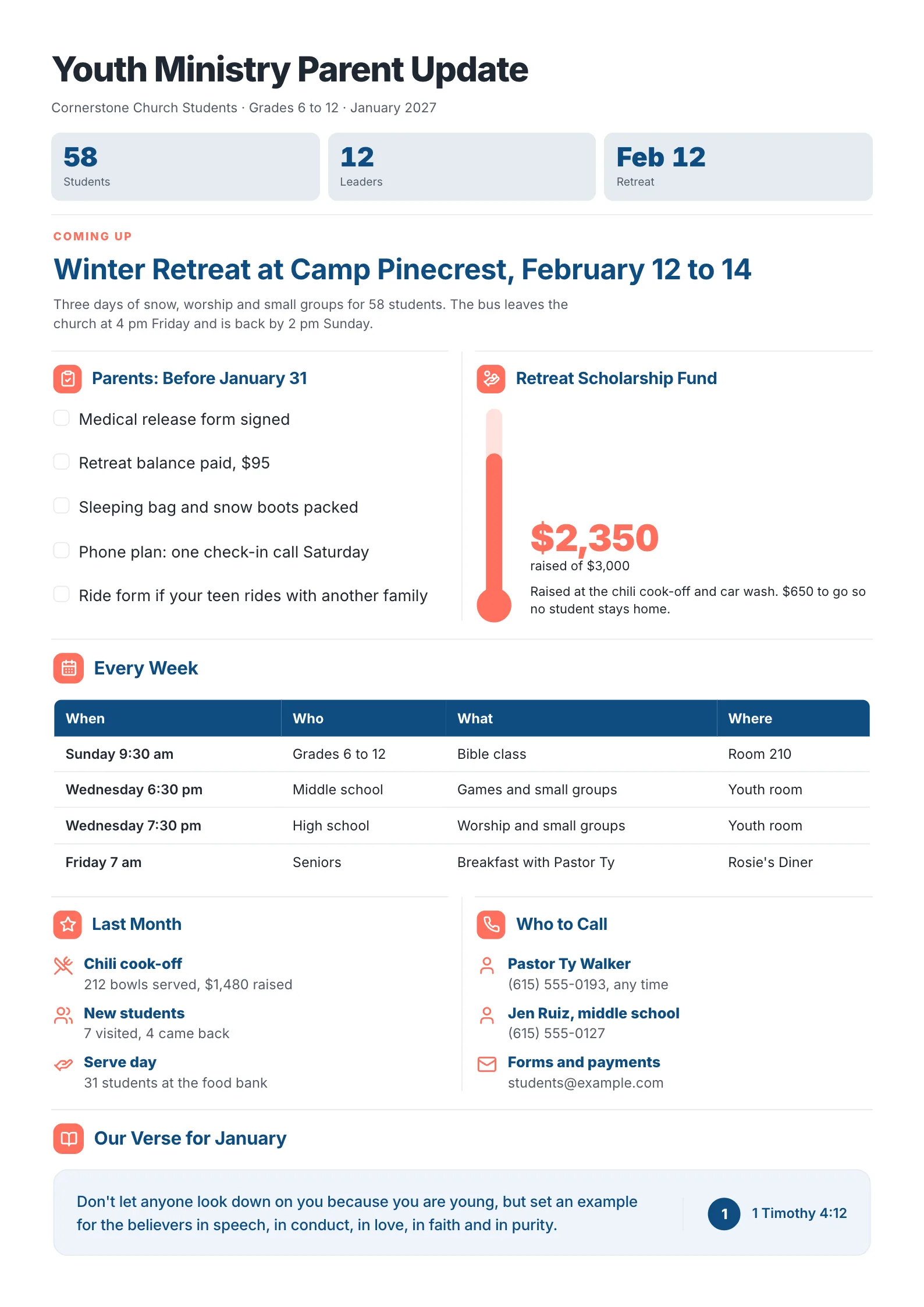
Parents get a checklist with one date, because that's all they came to find.
Write for one audience when you can. This page talks only to parents, and that lets it skip everything a teen would want to read. Your women's group, your choir and your parish council could each get the same treatment.
 Edit this template
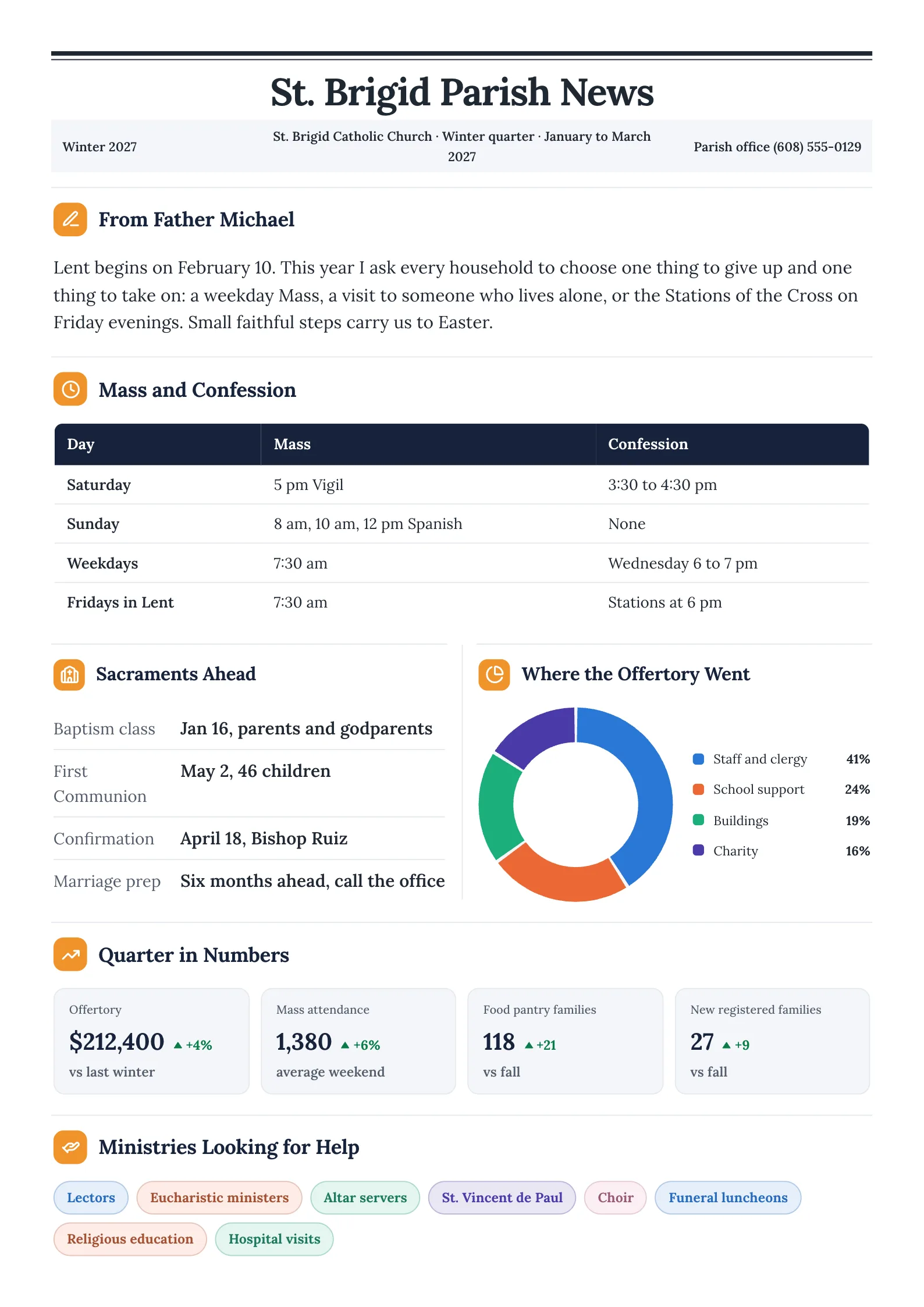
A quarterly has to last three months, so the Mass and Confession table does most of the work.
Tell one story you can prove
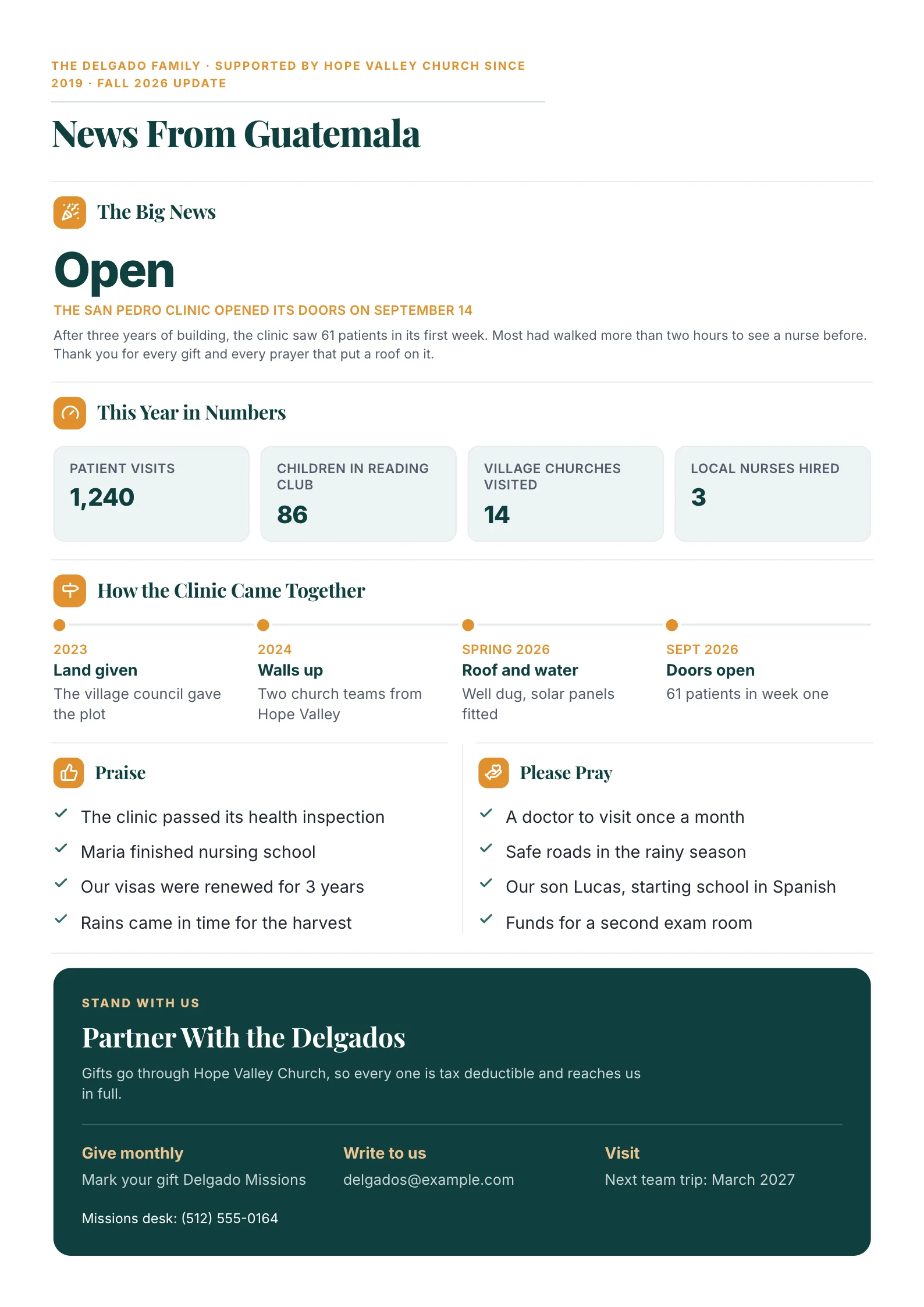
Mission and giving news works best with a number and a date. That's our own advice, since none of the three sources covers reporting, and the sample below shows the idea.
 Edit this template
"61 patients in its first week" tells the people who paid for the roof what they bought.
Your version can be small: how many meals, how many kids at camp, what the new roof cost. Put your thanks right next to the number.
Cut the filler
"Too many of these make a newsletter boring," Werman says. She means the poems and sayings editors copy from other newsletters. If you love one, give it a reason to be there. Her example of a lead-in is "Mary Smith found this very uplifting during her hospital stay." Check the copyright, too. She'd write to the magazine or author for permission, and she says she was never refused.
Check it before you send
The Ensign gives the reason plainly: "People notice when their names are misspelled or when dates are listed incorrectly." Run this list on your last draft:
- Spell every name against your member list.
- Check each date against the calendar, including the day of the week.
- Read it once as a visitor, and explain any initials or nicknames.
- Make sure the phone number, email and worship times are on the page.
- Pick fonts that a member with impaired vision can read.
Make the deadline easy to keep
Werman's newsletter went to about 200 people with a staff of an editor and one reporter. Her fix for late copy starts with you. Announce the deadline well ahead, then send a personal reminder a week before. She also says to "be willing to take No for an answer" when you ask for help. A willing reporter who covers one picnic is worth more than a reluctant one with a column.
Back to Werman's one line
News about the church is what holds the reader, she said, and that still answers most editing questions. Unsure about a piece? Ask whether it happened in your church this month to someone a member could name, and cut whatever fails that question first.
See more layouts in our church newsletter template post.
Frequently asked questions
How often should a church send a newsletter?
Weekly if you have that much real news, and monthly for most congregations. A quarterly suits a parish that also has a weekly bulletin, as long as your dates hold for three months.
Who should write a church newsletter?
One editor, plus anyone who'll cover one thing. Werman's advice is to fix the grammar and keep the writer's personality. She also got children ages 7 to 14 writing short pieces, and found them among her most reliable reporters.
Should a church newsletter be printed or emailed?
Do both if you can afford to. Your shut-in members may never open an email, and your newcomers may never see the printed copy.
What should be in a church newsletter?
Start with news of your people, one letter from the pastor, the dates with full details and who's serving. Werman's starter list adds births, weddings, graduations, deaths, illnesses and baptisms.




