Donor One Pager: How to Write One That Gets a Gift, With Example
How to write a donor one pager that turns a meeting or appeal into a gift: the 7 parts, a worked winter housing appeal with gift levels, and what to leave out.

A donor one pager is the single sheet a nonprofit leaves with a donor or sends after a call: what you are asking for, why now, what last year's gifts achieved, where each dollar goes and what a gift of each size will do. It is shorter than a case for support and more specific than a brochure. Below are the seven parts of a donor one pager that leads to a gift, a free template, a worked example and the mistakes that make donors put the sheet down. Start from a free one pager template.
One‑Pager examples
Real One-Pagers made with MakeOnepagers. Open any one to edit it as your own.
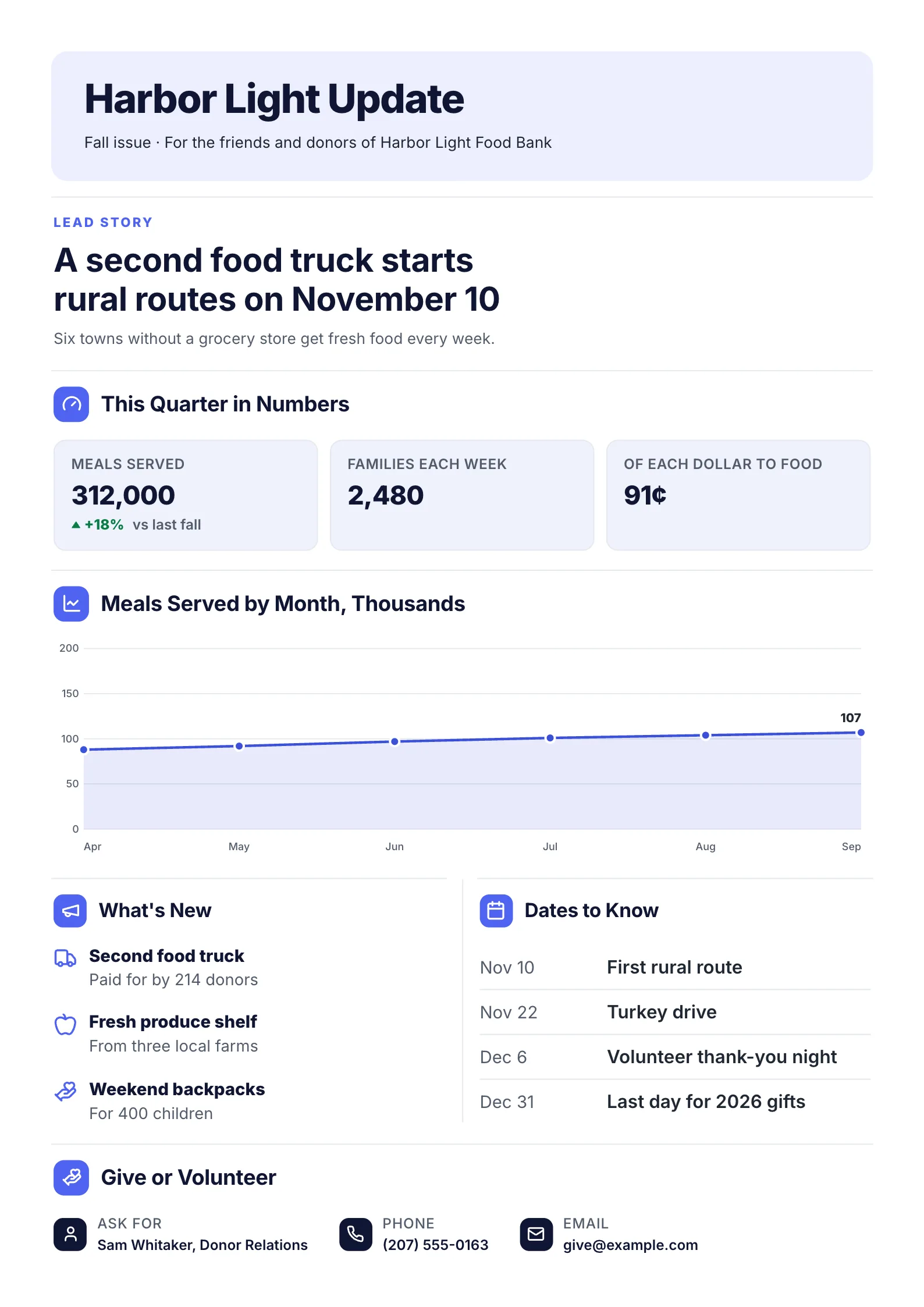 Nonprofit Donor NewsletterEdit for free(opens in a new tab)
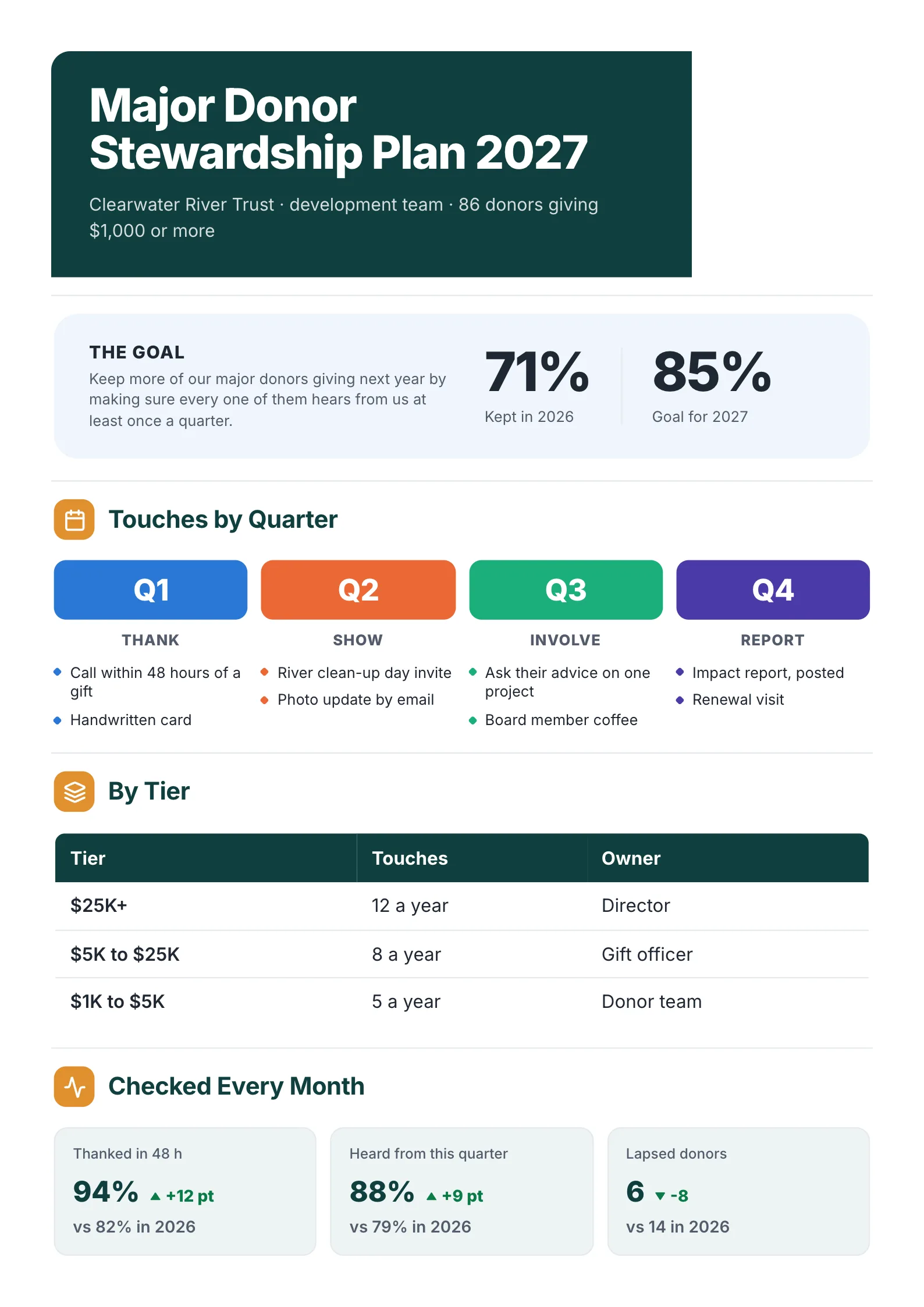 Donor Stewardship PlanEdit for free(opens in a new tab)
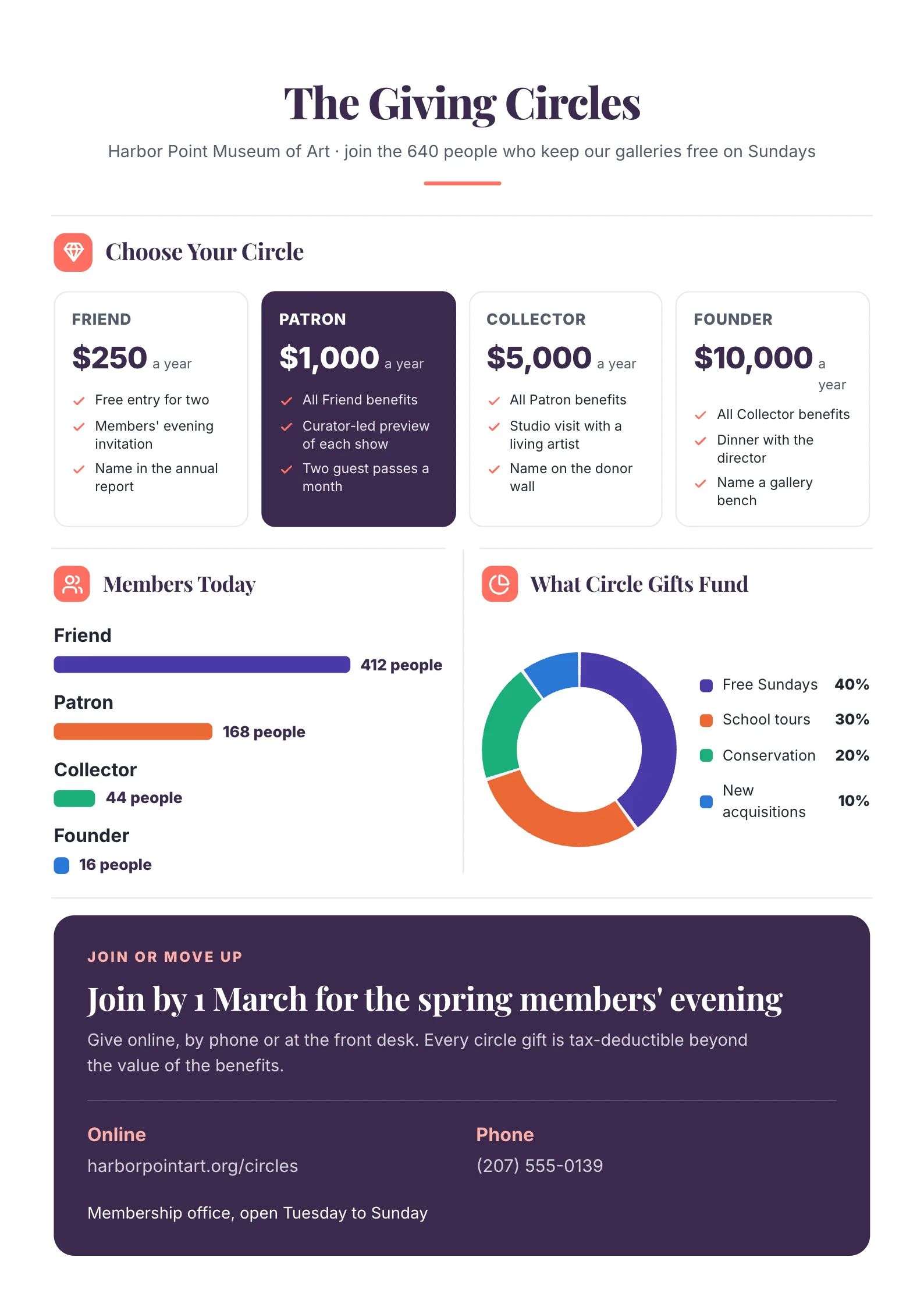 Donor Giving CirclesEdit for free(opens in a new tab)
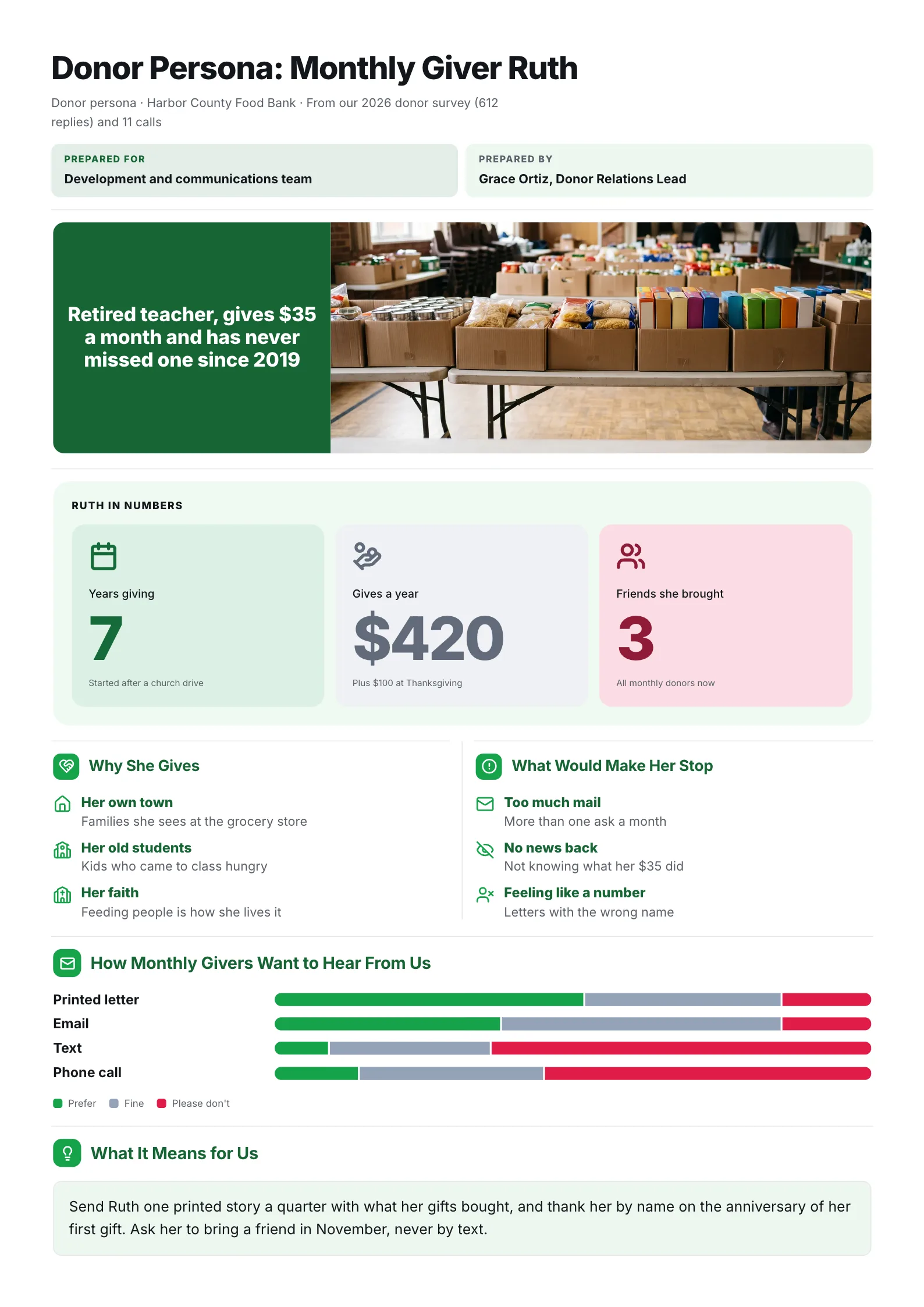 Customer Persona: Nonprofit DonorEdit for free(opens in a new tab)
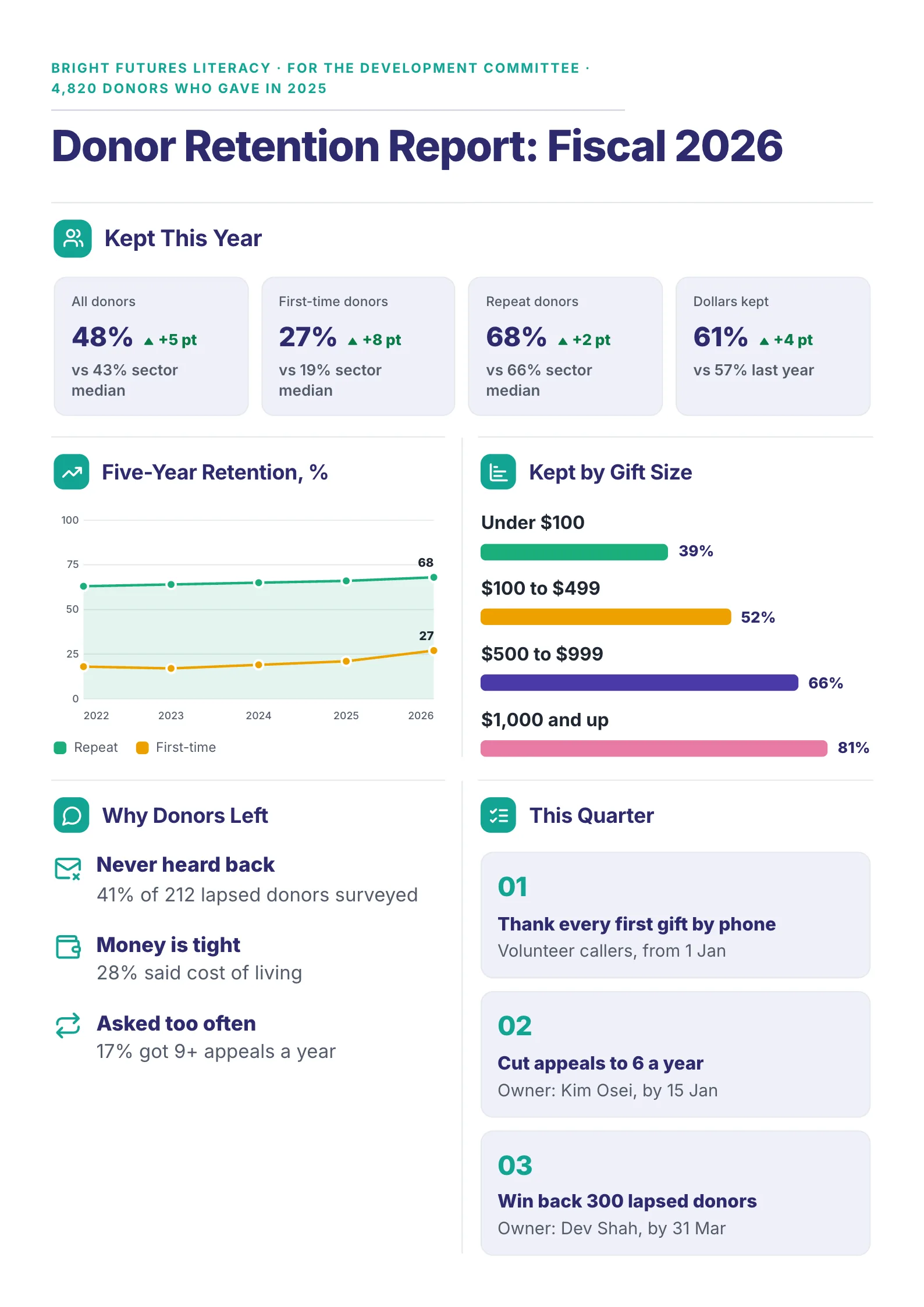 Donor Retention ReportEdit for free(opens in a new tab)
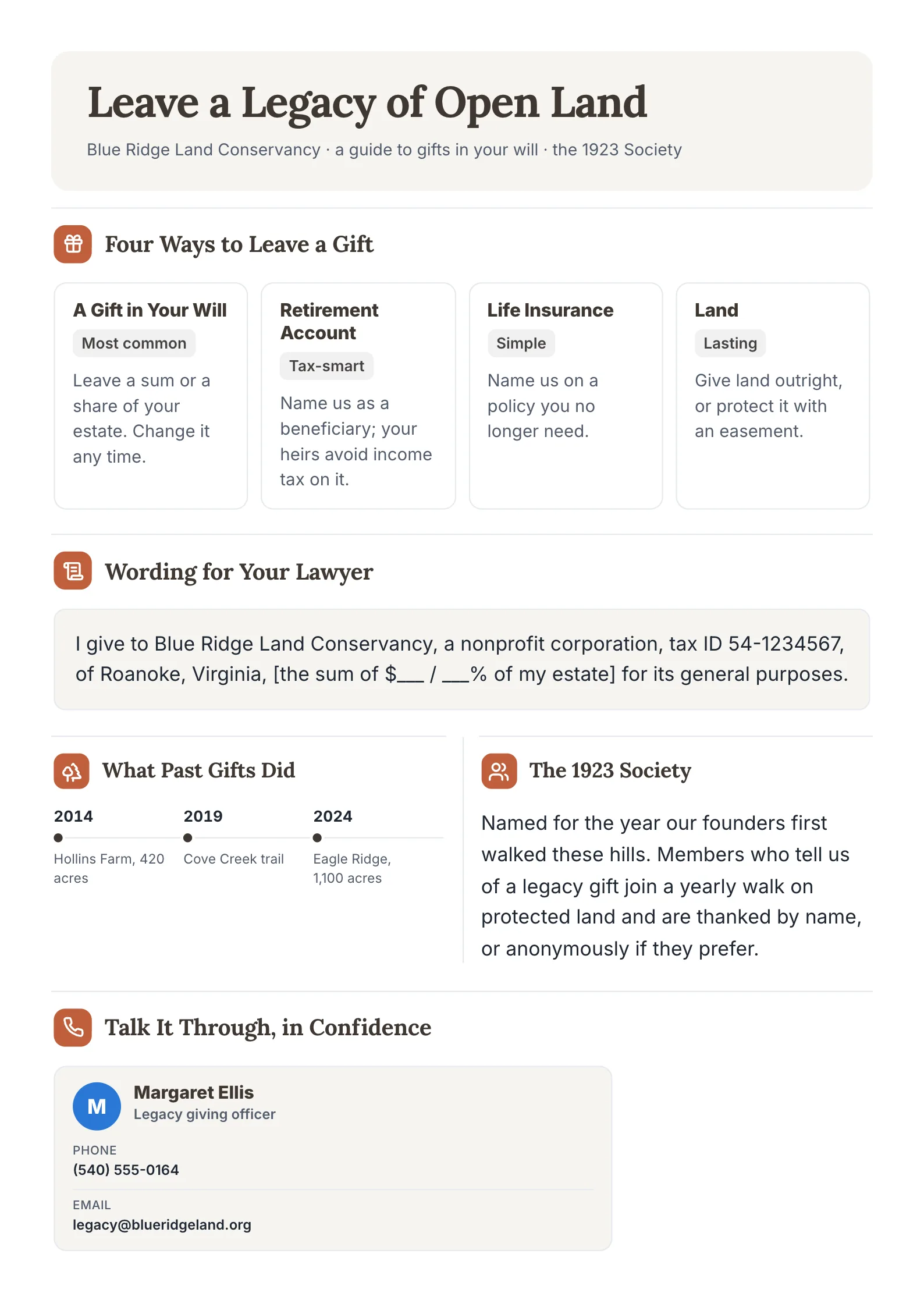 Donor Legacy Giving GuideEdit for free(opens in a new tab)
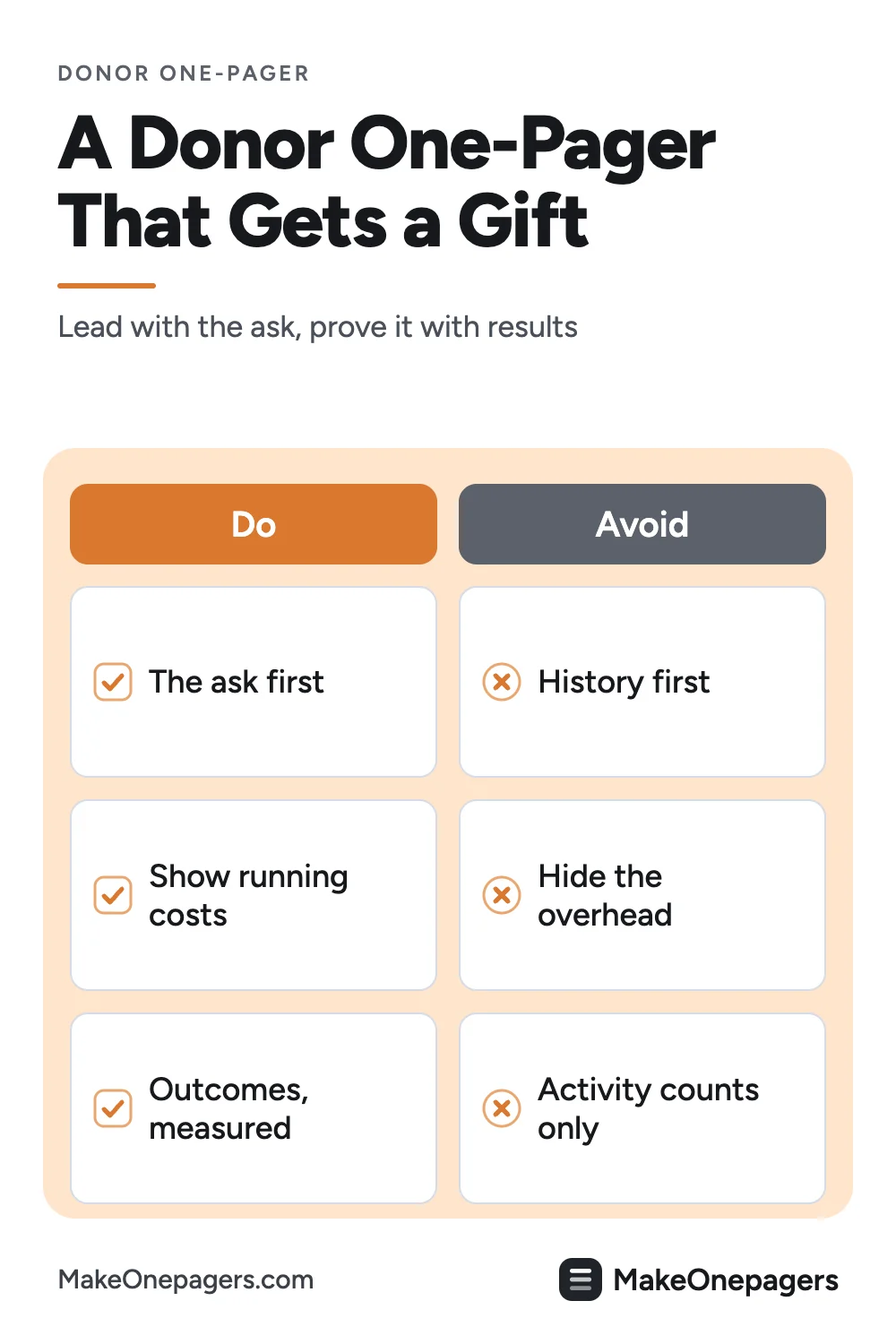
Every example was made with MakeOnepagers, and each one opens as a template you can edit for free.
What is a donor one pager?
A donor one pager is a fundraising document for one campaign or one ask, sized to be read in two minutes. It is used in three common situations:
- A meeting with a major donor: you walk through it together and leave it on the table.
- An appeal: it goes out by email or post during a campaign, such as a winter or year-end appeal.
- A board or volunteer handout: board members use it when they ask their own networks for gifts, so everyone tells the same story with the same numbers.
There is a second, internal kind: a pre-meeting donor brief that a development officer reads before a visit, with the donor's giving history and talking points. That one is never shown to the donor. This post is about the outward version, though the last section covers the brief too.
The 7 parts of a donor one pager
- The ask, first. One sentence: the amount, what it achieves and by when. "$90,000 keeps 120 families in their homes this winter."
- What one gift does. A single line that makes the ask personal. "Each gift of $750 covers one family's back rent and heating until spring."
- The need, in two numbers. How big the problem is, and who it falls on.
- Last year, measured. Three or four results from money already given: people helped, how many stayed helped, cost per person.
- Where the money goes, as shares of the total, including running costs. Donors notice when overhead is missing.
- Gift levels. Three to five amounts, each tied to something concrete.
- Who to contact and the deadline, with a name, not "the team."
A free donor one pager template
| Part | What to write, with an example |
|---|---|
| Title | Campaign name and season. Northside Housing Fund, Winter appeal 2026 |
| The ask | Amount, result, deadline. $90,000 keeps 120 families housed by 31 December |
| One gift | $750 covers one family's back rent and heat until spring |
| The need | Two numbers. 2,300 households behind on rent, 41% with children under 10 |
| Last year | 3 or 4 results. 104 families kept housed, 96% still housed 12 months later |
| Where it goes | Shares. Back rent 64%, heating 25%, caseworkers 8%, running costs 3% |
| Gift levels | 3 to 5. $100 a month of heating, $5,000 seven families through spring |
| Contact | Name, role, phone, email, give-by date |
Donor one pager example: a winter housing appeal
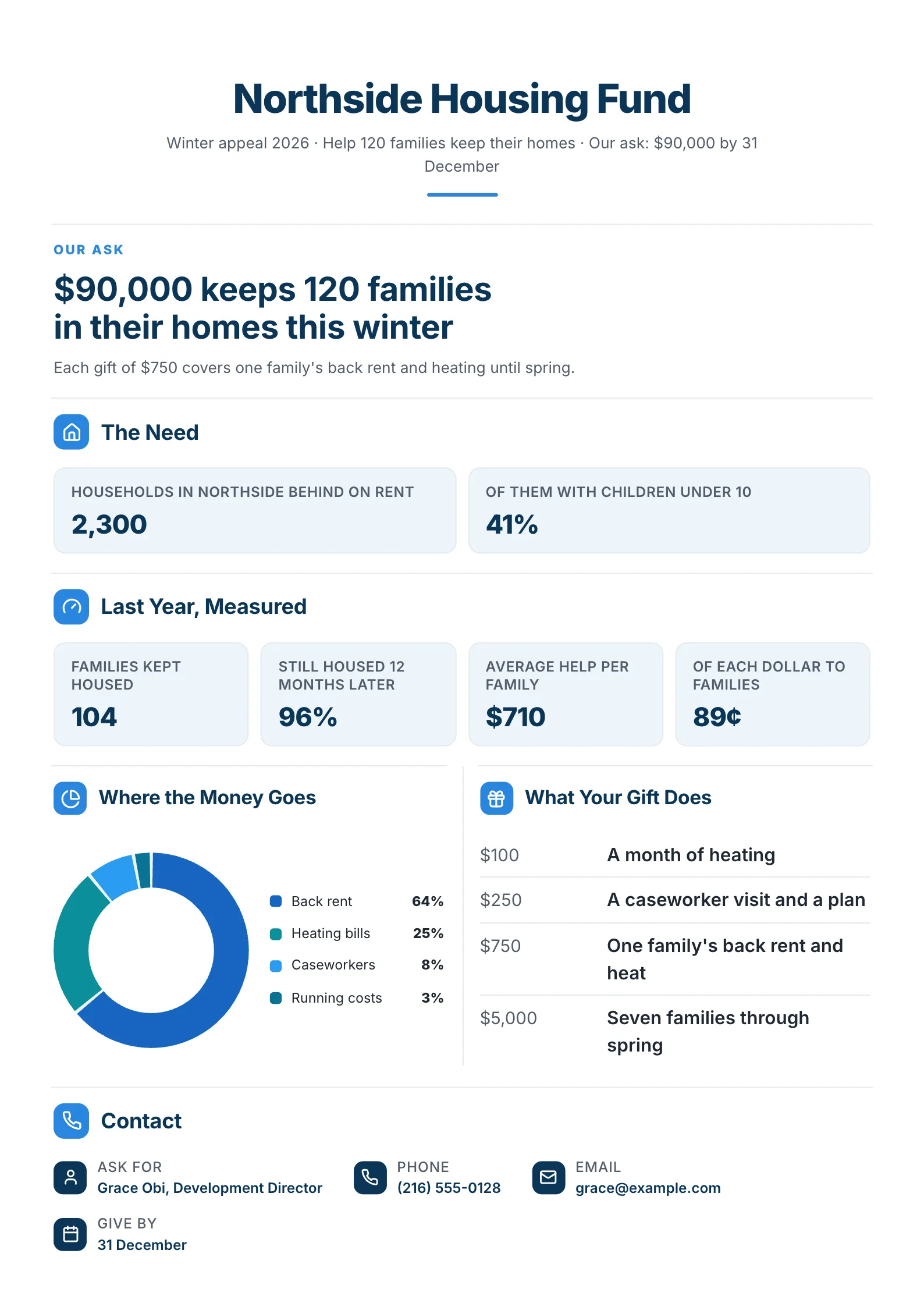 Edit this template
An example donor one pager for a winter appeal. The charity and every figure are made up.
What to copy:
- The ask is the headline. "$90,000 keeps 120 families in their homes this winter" sits above everything else. A donor who reads only that line still knows what you want.
- The math is visible. 120 families at $750 each is exactly $90,000, so the one-gift line and the total agree.
- "Last Year, Measured" has four numbers, and one of them is about lasting change: 96% still housed 12 months later. That is the number that separates a good program from a busy one.
- Gift levels a donor can picture: $100 is a month of heating, $250 is a caseworker visit and a plan, $5,000 is seven families through spring.
- A named contact and a date: Grace Obi, Development Director, give by 31 December.
Worked example: building gift levels from your budget
Gift levels work best when they come from real costs rather than round numbers. Here is how the example charity might build its four levels. The figures are illustrative.
| Cost from the budget | Unit cost | Gift level | What the donor reads |
|---|---|---|---|
| One month of a family's heating bill | about $100 | $100 | A month of heating |
| One caseworker visit with a written plan | about $250 | $250 | A caseworker visit and a plan |
| One family's back rent and heat to spring | $750 | $750 | One family's back rent and heat |
| Seven families at $750 | $5,250 | $5,000 | Seven families through spring |
Two checks before you print: the middle level should equal your "one gift" line, and the top level should be a meaningful share of the ask (here $5,000 is about 6% of $90,000) so a major donor sees a real role for themselves.
How to use a donor one pager in a meeting
- Send nothing in advance unless the donor asks. The sheet works best as something you talk through together.
- Start with the ask line, then stop. Let the donor react before you explain the need.
- Point to "Last Year, Measured" when they ask whether it works. Have the full report ready if they want more.
- Use the gift levels as a menu, not a bill. Ask which result matters most to them.
- Leave the sheet behind with your name and the deadline circled, then follow up within a week.
Donor one pager mistakes
- History first. "Founded in 1987 by a group of neighbors" is lovely and belongs at the bottom, if anywhere.
- No overhead line. Hiding running costs makes donors wonder. Showing 3% builds trust.
- Outputs without outcomes. "We made 1,400 calls" is activity. "96% still housed a year later" is a result.
- Too many asks. One sheet, one campaign, one amount. A second ask belongs on a second sheet.
- Stock photos of strangers. A real number does more than a borrowed face. If you use a photo, use your own program, with permission.
The internal version: a pre-meeting donor brief
Development officers often keep a private one-page brief on each major donor before a visit. It uses different parts:
- Giving history: dates, amounts and what each gift funded.
- Relationship notes: who they know on the board, what they asked about last time.
- Interests: which programs they have funded or visited.
- The proposed ask: amount and project, chosen to fit their history.
- Talking points: two or three things to thank them for and one update to share.
Keep it separate from the outward donor one pager, and never print the two on the same sheet.
Make your donor one pager
Open the free nonprofit donor appeal template and put in your campaign's numbers, or drop your annual report or campaign plan into the free AI One-Pager generator and get a finished donor one pager back to edit.
Frequently asked questions
What should a donor one pager include?
The ask with the amount and deadline, what one gift does, the need in two numbers, last year's measured results, where the money goes including running costs, three to five gift levels and a named contact.
How is a donor one pager different from a case for support?
A case for support is a longer document that explains why your whole organization deserves funding. A donor one pager is about one campaign or one ask and fits on a single sheet.
Should a donor one pager mention overhead?
Yes. Show running costs as a share of the total. Donors who look for it and find it hidden trust the rest less.
Can I use the same one pager for every donor?
Use one master sheet for the campaign, then change the gift levels and the contact for each major donor so the amounts fit what they have given before.




