Brag Sheet Questions: The 22 the Common App Asks, Plus What Schools Add
The brag sheet questions the Common App gives counselors and teachers, 22 in all, plus what two high schools add, and 5 one-page answers you can copy.

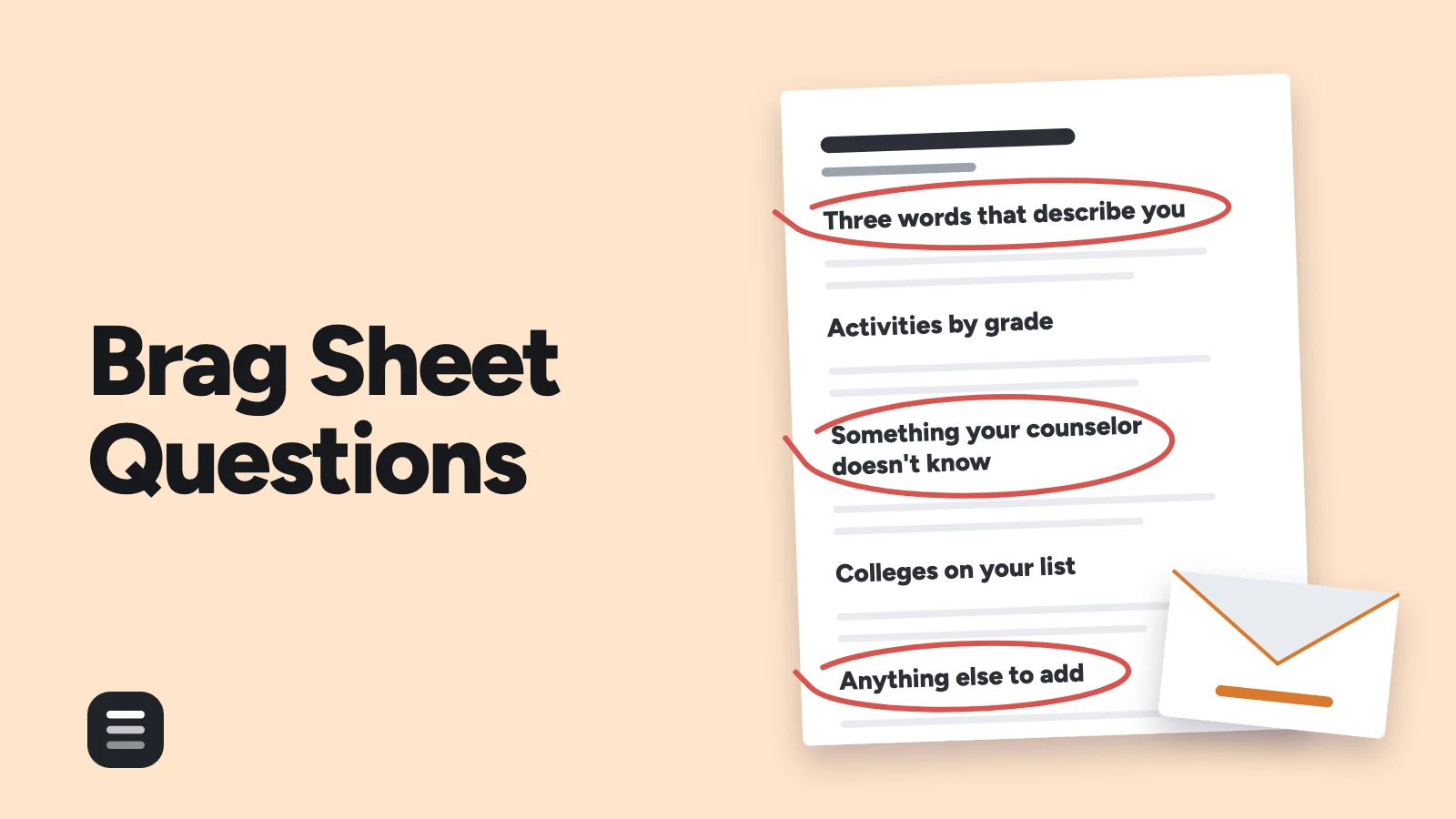
Brag sheet questions ask you for the things your counselor or teacher can't see from your transcript. Expect three words that describe you, your activities and the grades you did them in, the colleges on your list, something your recommender probably doesn't know about you, and anything that held your grades back. Almost every form ends by asking what else you want them to say. Start from a free one pager template.
One‑Pager examples
Real One-Pagers made with MakeOnepagers. Open any one to edit it as your own.
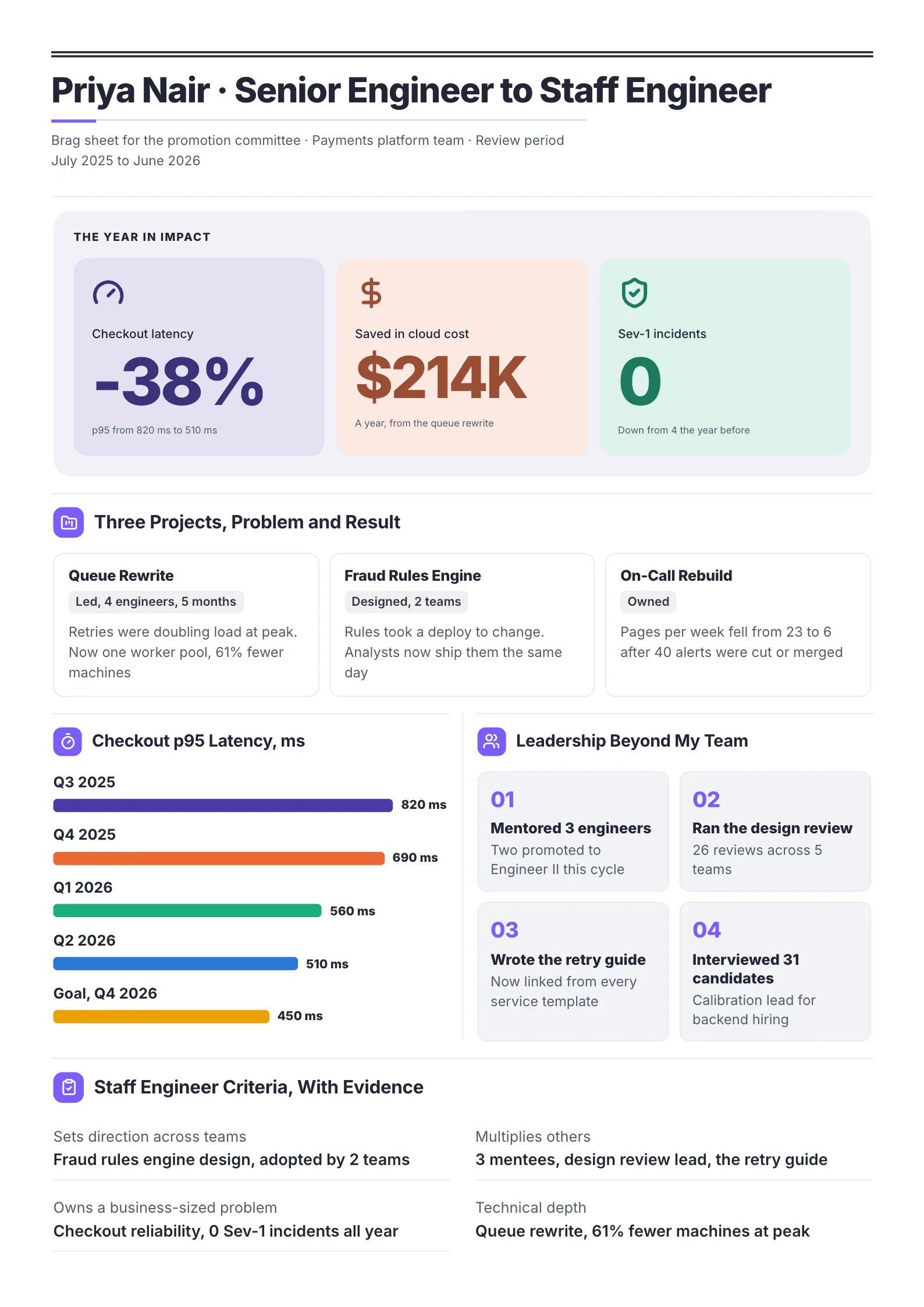 Brag Sheet: Senior EngineerEdit for free(opens in a new tab)
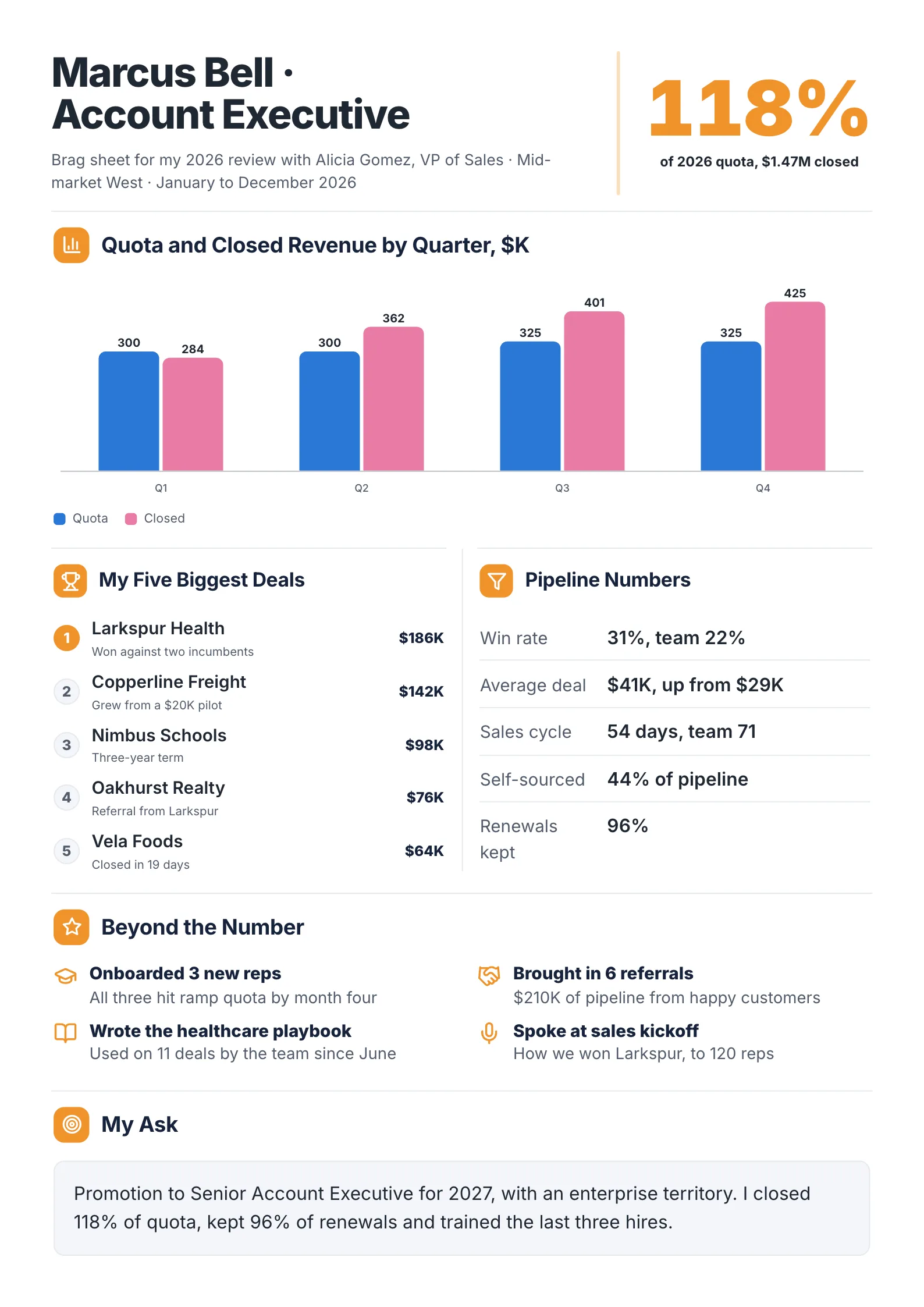 Brag Sheet: Sales Annual ReviewEdit for free(opens in a new tab)
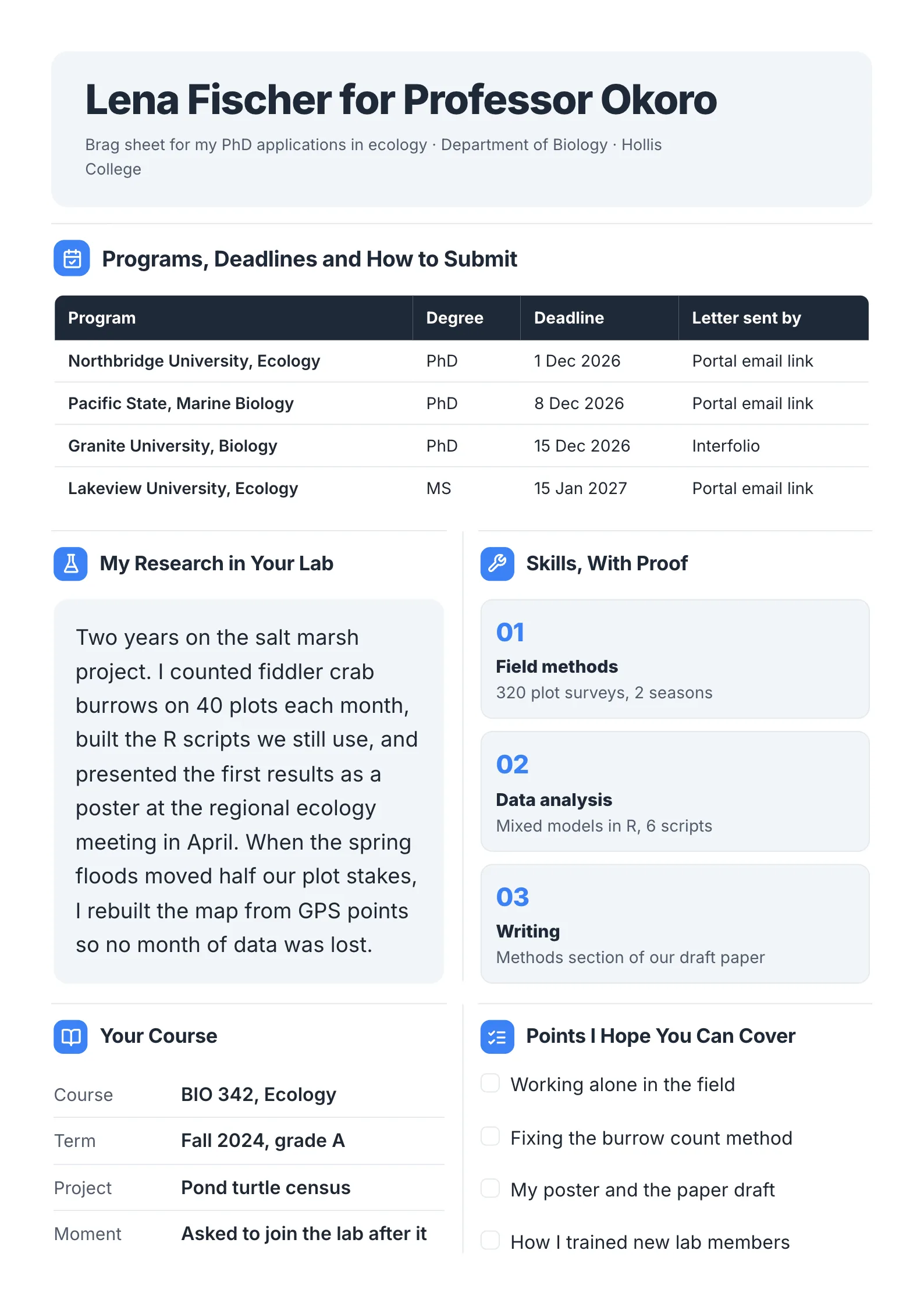 Brag Sheet: Graduate School RecommenderEdit for free(opens in a new tab)
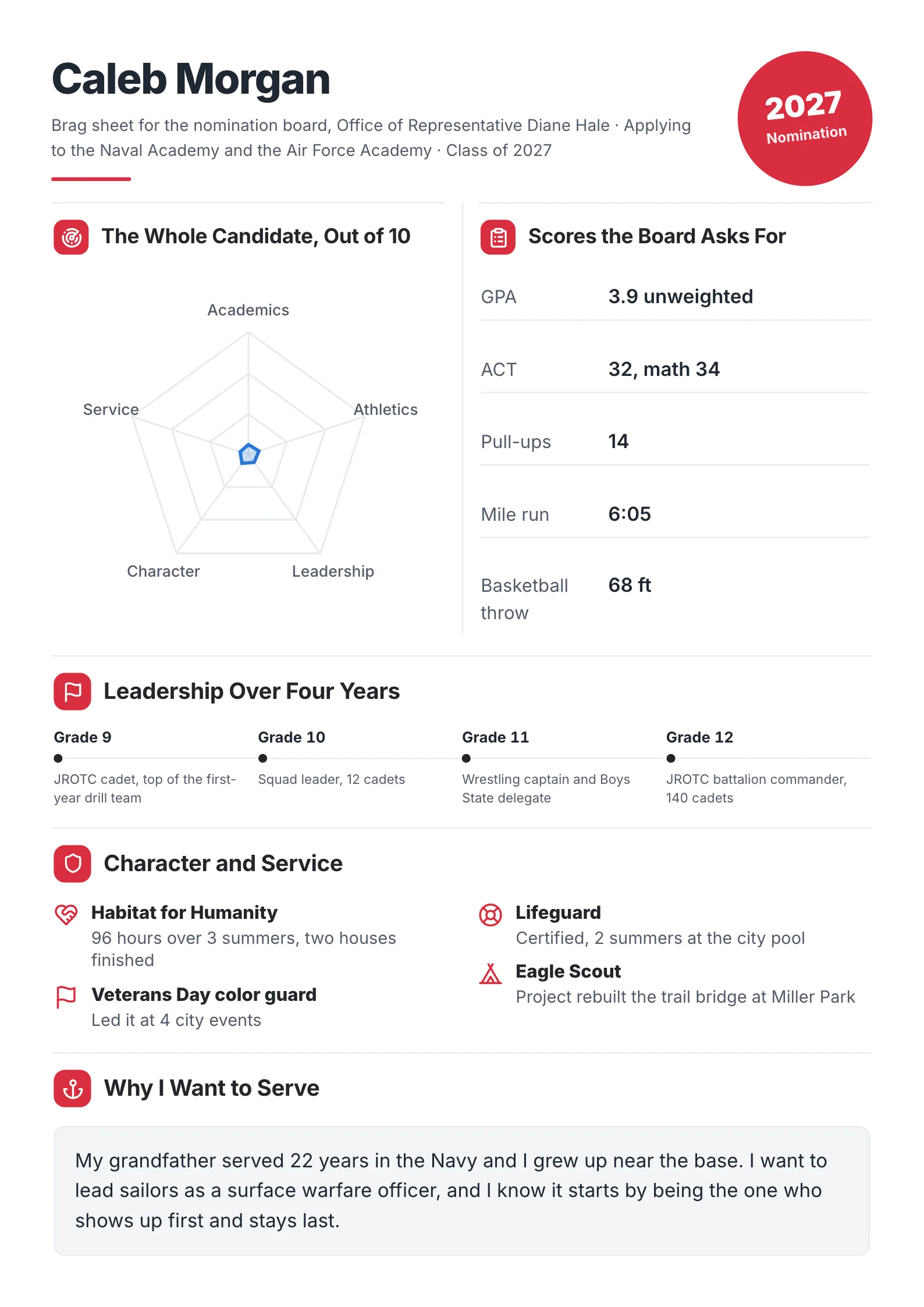 Brag Sheet: Service Academy NominationEdit for free(opens in a new tab)
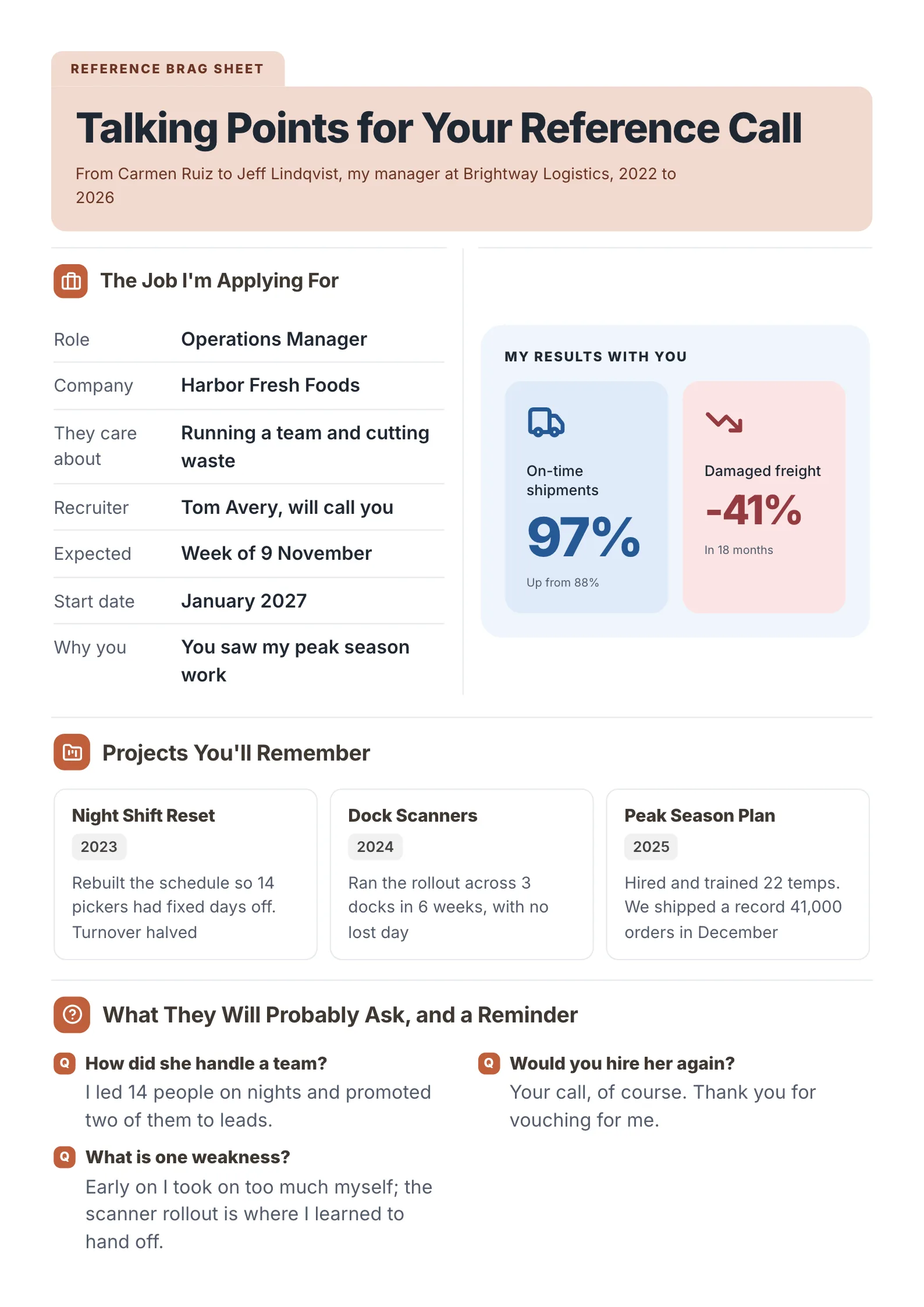 Brag Sheet: Job ReferenceEdit for free(opens in a new tab)
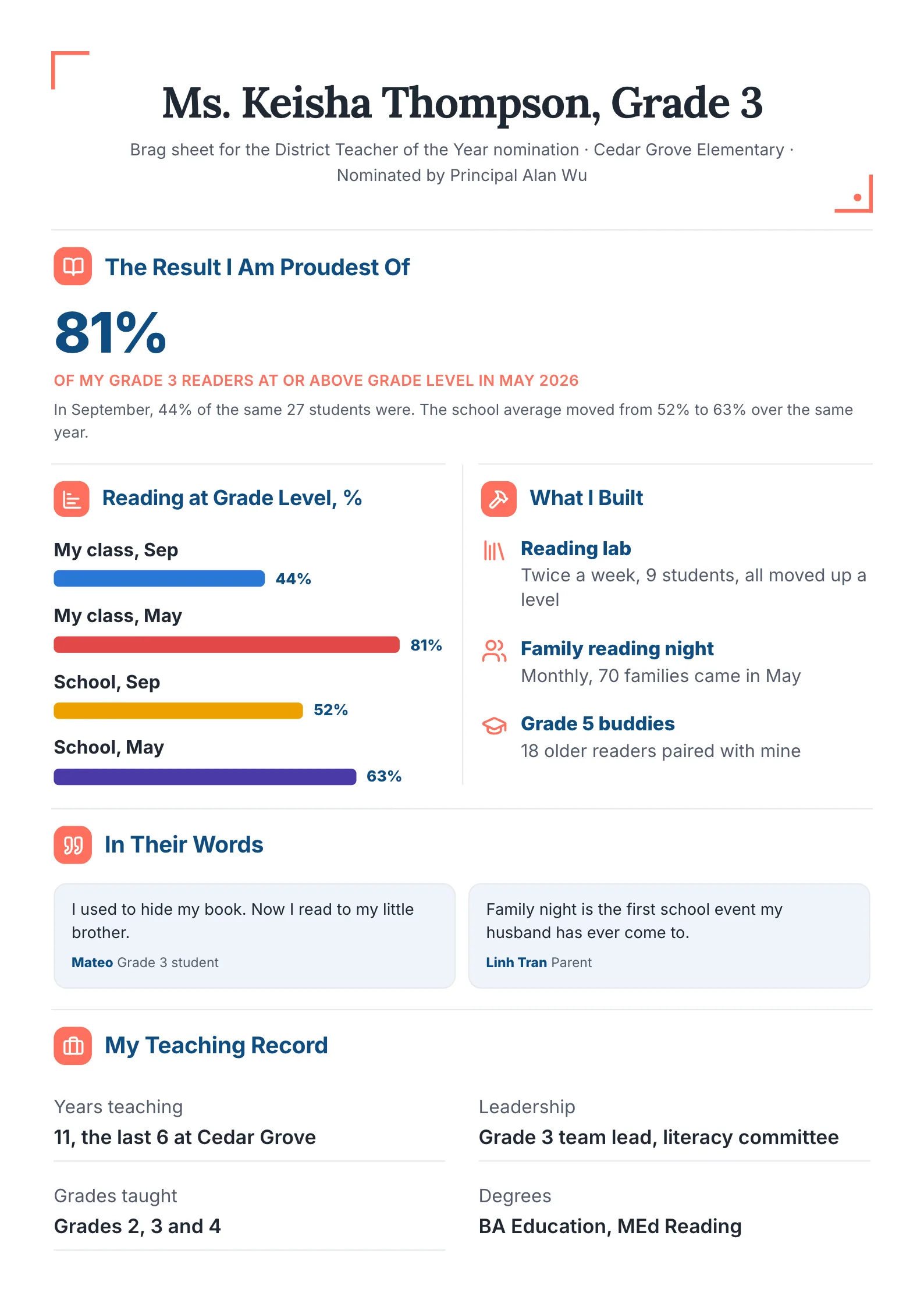 Brag Sheet: Teacher of the Year NominationEdit for free(opens in a new tab)
The Common App, the shared college application, publishes two of these questionnaires for students. One is for your counselor and one is for your teacher, and together they hold 22 questions. We read both, then two high school brag sheets that show what a counseling office adds, and wrote five one-page answers you can copy.
The Common App's two forms, and two schools'
| Form | Who writes the letter | Pages | Questions |
|---|---|---|---|
| Common App, student questionnaire for a counselor letter | Your school counselor | 4 | 14, plus 5 contact lines |
| Common App, student questionnaire for a teacher letter | A teacher you pick | 3 | 8, plus 4 contact lines |
| Hastings High School, New York | Your counselor | 1 | 10 |
| Greenwich High School, Connecticut | Your counselor | 4 | 20 in its About Me section, plus college lists and an activity sheet |
All four were read on October 30, 2026.
The two school forms overlap heavily. Nine of Hastings' ten questions appear in Greenwich's list almost word for word. The one Hastings adds on its own asks what you hope to accomplish by the time you're 25.
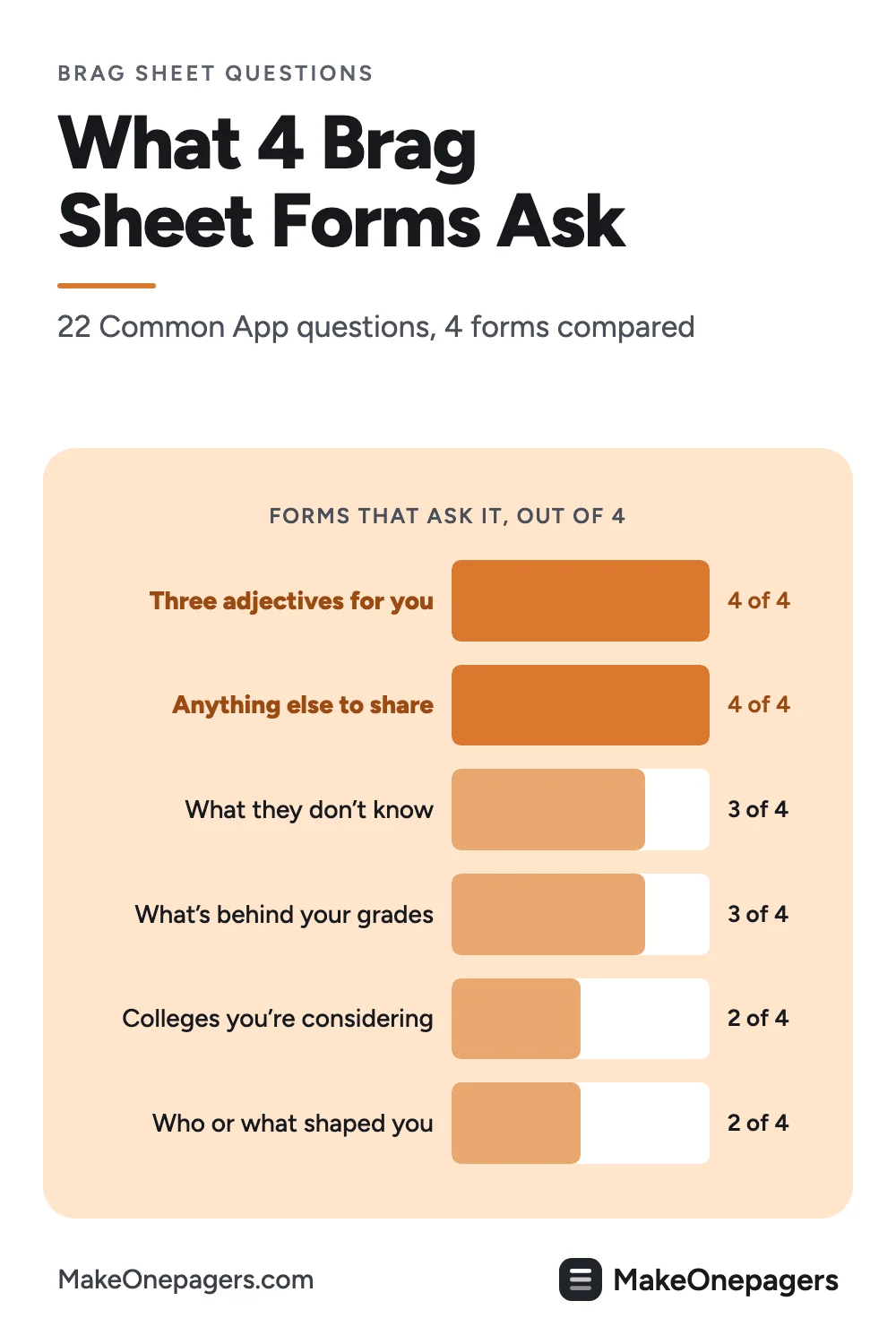
What the forms have in common
| Question | Forms that ask it |
|---|---|
| Three adjectives that describe you | 4 of 4 |
| Anything else you want shared | 4 of 4 |
| Something your recommender doesn't know, or a story that would surprise them | 3 of 4 |
| Circumstances behind your grades, or if your record shows your ability | 3 of 4 |
| The colleges you're considering | 2 of 4 |
| The people or events that shaped you | 2 of 4 |
| Your biggest contribution to your school or community | 2 of 4 |
| How you've grown since grade 9 | 2 of 4 |
Notice one difference in the adjective question. The Common App asks for three words you'd use about yourself. Hastings and Greenwich ask which three your friends would use, and why. If your school uses the second version, your answer needs a reason after each word.
The Common App's 14 counselor questions
The counselor form opens with the name and pronouns you want used in your letter. That sounds small. It means a letter that says "Sam" when every teacher calls you Sam, instead of the full legal name on your transcript.
After that, its questions fall into four groups:
- Who you are. Three adjectives, what you do for fun, and the events or people who most shaped you.
- What you do. Your major activities in school and outside it, each with the grades you took part, plus any leadership, honors or awards. Outside school includes work and family responsibilities.
- How you learn. Your academic strengths, if your record is an accurate reflection of your ability, and the majors or careers you're weighing.
- Where you're going. School size, setting and type you prefer, colleges you've visited and what you thought, the ones you'll apply to, and what excites you about college.
It closes with two open lines: something your counselor probably doesn't know about you, and anything else to share before they write.
The Common App's 8 teacher questions
The teacher form is shorter and more specific. You list the courses you took with that teacher and the grade you were in, then your three adjectives. Then you explain why you picked this teacher, describe a lesson or unit you enjoyed, and a project from the class you're proud of.
The question to spend the most time on is the seventh. It gives you 16 attributes colleges weigh, from intellectual promise and quality of writing to reaction to setbacks and concern for others. You're told to select 1 or 2 and share a time you showed them in that class. Pick two, and give one moment for each that your teacher saw.
The form also prints a short thank-you note at the top for you to sign and hand over with it. Use it.
What the high schools add
Greenwich asks for at least 5 sentences on each About Me answer, which tells you how long your counselor expects yours to be. It also wants your colleges split into reach, target and likely, asks if a college coach is recruiting you, and asks if you've registered with the NCAA Eligibility Center.
Its activity sheet asks for hours per week and weeks per year for each activity, by grade. Fill that in once and you'll reuse it on the Common App's activities section.
A senior's sheet that answers the shaping-events question
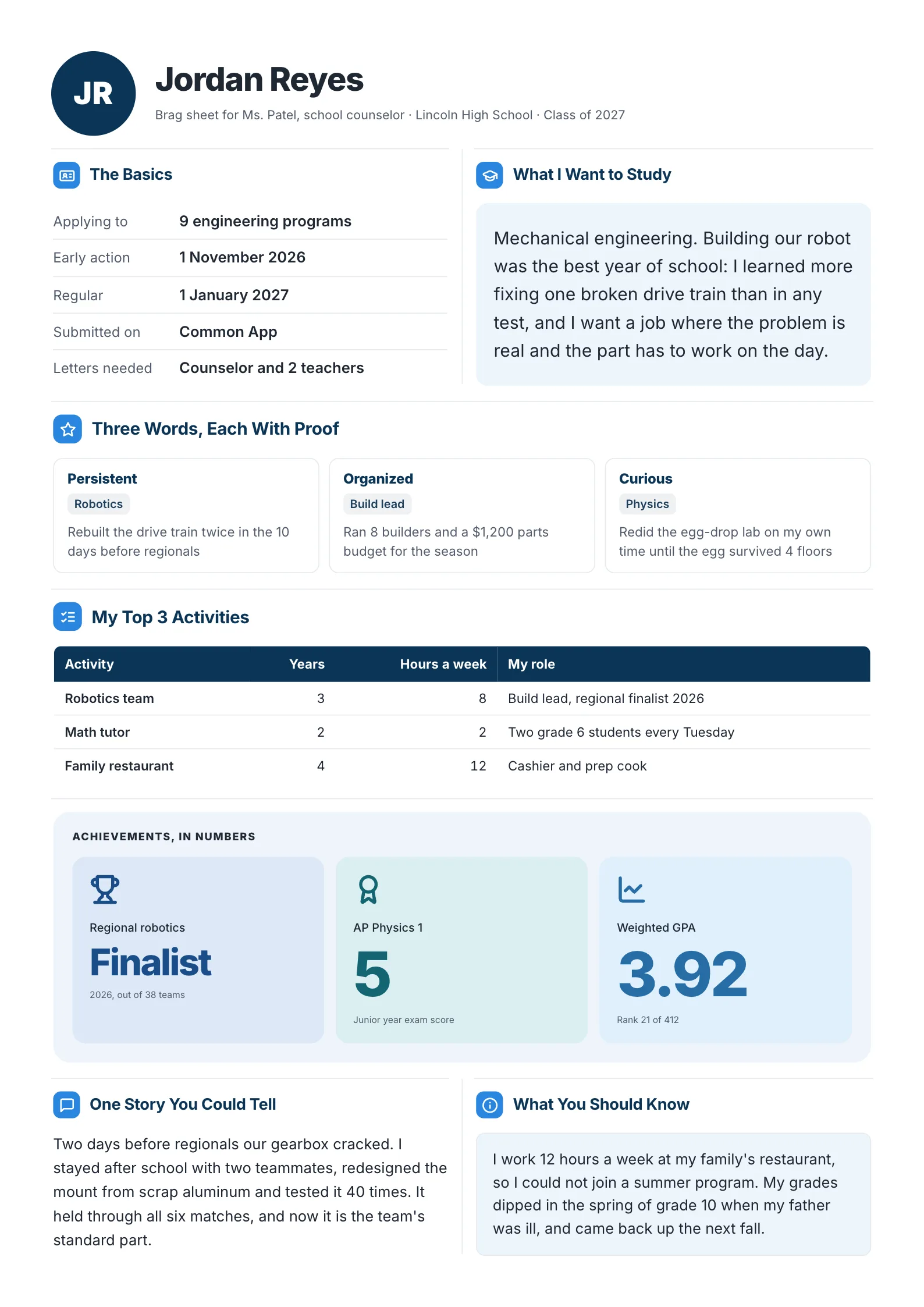
Jordan Reyes is applying to 9 engineering programs, some of them early action, and needs letters from his counselor and 2 teachers. His sheet goes to Ms. Patel at Lincoln High School.
 Edit this template
Sample names and figures. The story box gives the counselor a scene to retell, and each adjective sits beside one fact.
Look at "One Story You Could Tell." It answers the counselor form's question about the events that shaped you. Two days before regionals the robot's gearbox cracked, so he redesigned the mount from scrap aluminum with two teammates and tested it 40 times, and it held through all six matches. A counselor can retell that in three sentences, which is what the question is for. His three words do the same job in short form, like Organized beside 8 builders and a $1,200 parts budget.
His "What You Should Know" box covers the circumstances question in two sentences. He works 12 hours a week at his family's restaurant, and his grades dipped in the spring of grade 10 while his father was ill, then came back up. Your counselor can explain a dip like that to a college only if you tell them.
A teacher sheet built on the Common App's questions
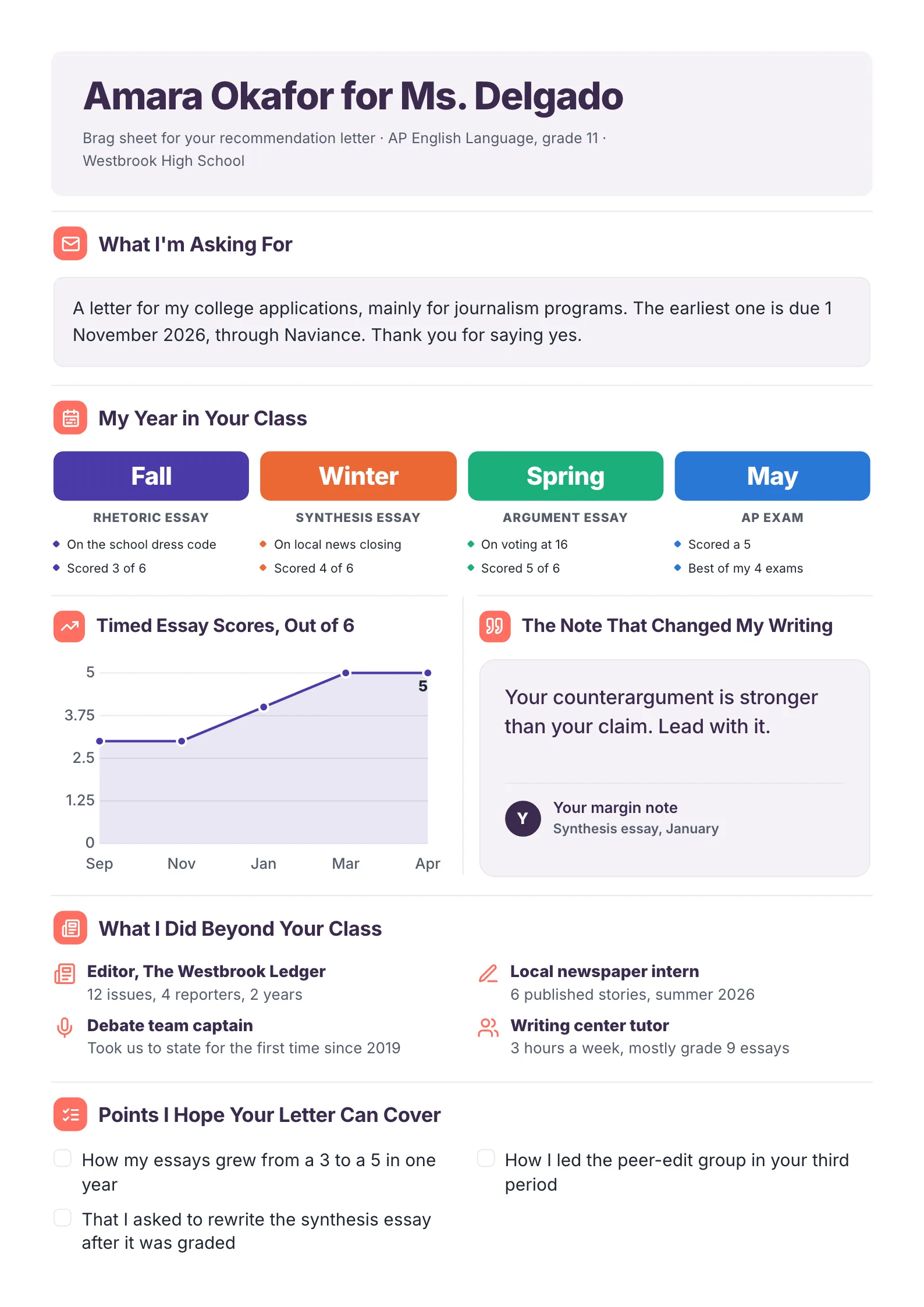
Amara Okafor wants a letter from Ms. Delgado, her grade 11 AP English Language teacher, mostly for journalism programs. Her earliest deadline sits right on the sheet.
 Edit this template
Sample names and figures. Each box answers one question from the Common App's teacher form.
Her year in the class runs from a rhetoric essay in the fall to the AP exam in May, which answers the lesson-or-unit question. "The Note That Changed My Writing" quotes the one comment that turned her essays around: lead with the counterargument.
"Points I Hope Your Letter Can Cover" takes the attribute question one step further. Her essays grew from a 3 to a 5 in one year, which is quality of writing. She asked to rewrite the synthesis essay after it was graded, which is reaction to setbacks. She led the peer-edit group in third period, which is leadership. Ms. Delgado saw all three, so she can write about each one. On the form itself, keep to the two it asks for.
A parent's answers to what the school might not know
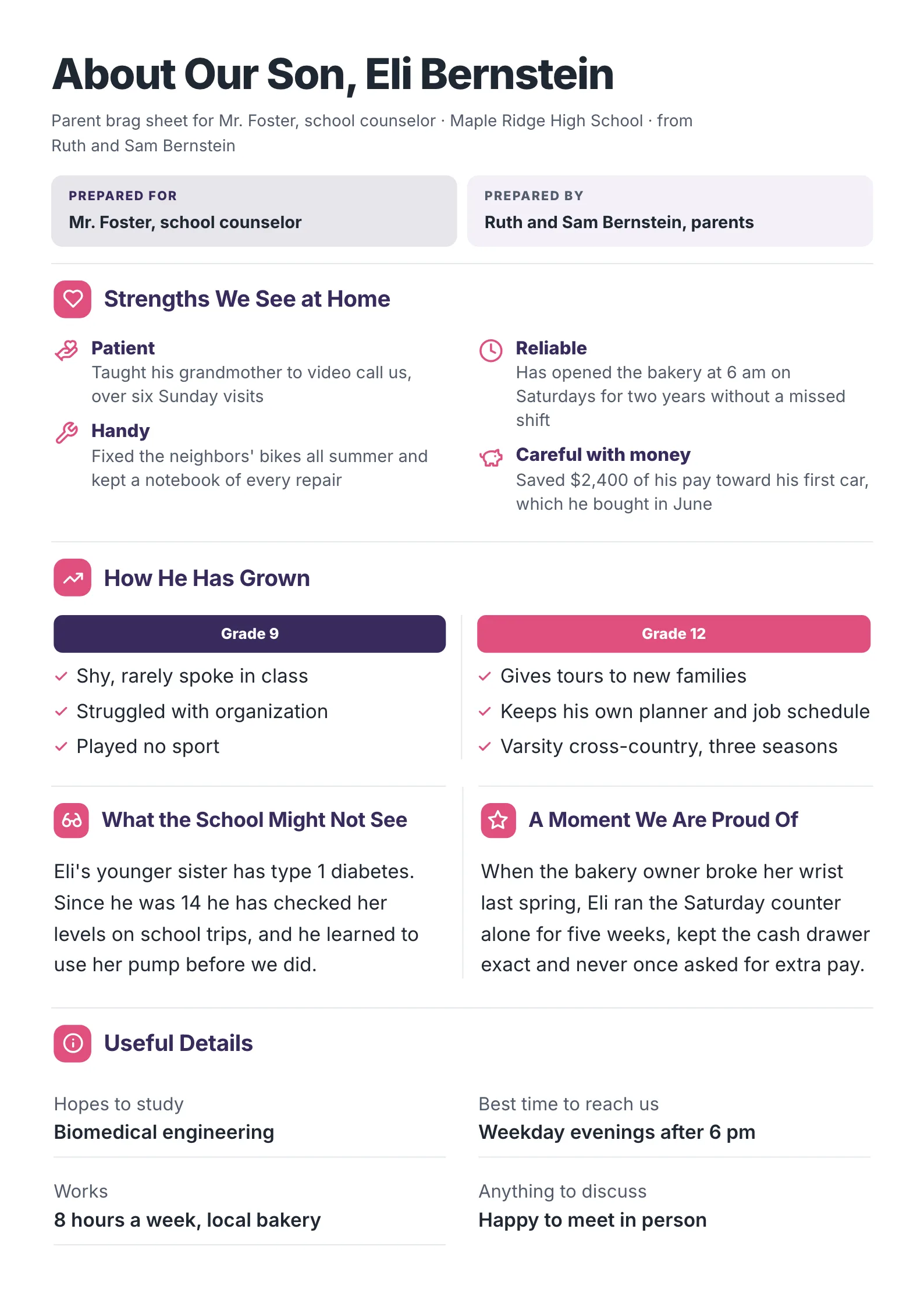
None of the four forms we read is written for parents, but many counselors send one home. Ruth and Sam Bernstein wrote theirs about Eli for Mr. Foster at Maple Ridge High School.
 Edit this template
Sample names and figures. A parent can answer the surprise question better than the student can.
Their strengths come with proof too. Reliable, because he has opened a bakery at 6 am on Saturdays for two years without missing a shift. Careful with money, because he saved $2,400 toward his first car and bought it in June.
"What the School Might Not See" is the counselor form's doesn't-know question from a parent's side. Eli's younger sister has type 1 diabetes, and since he was 14 he has checked her levels on school trips. A counselor won't learn that from a transcript, and it says more about him than a list of clubs could.
A scholarship sheet that answers the circumstances question
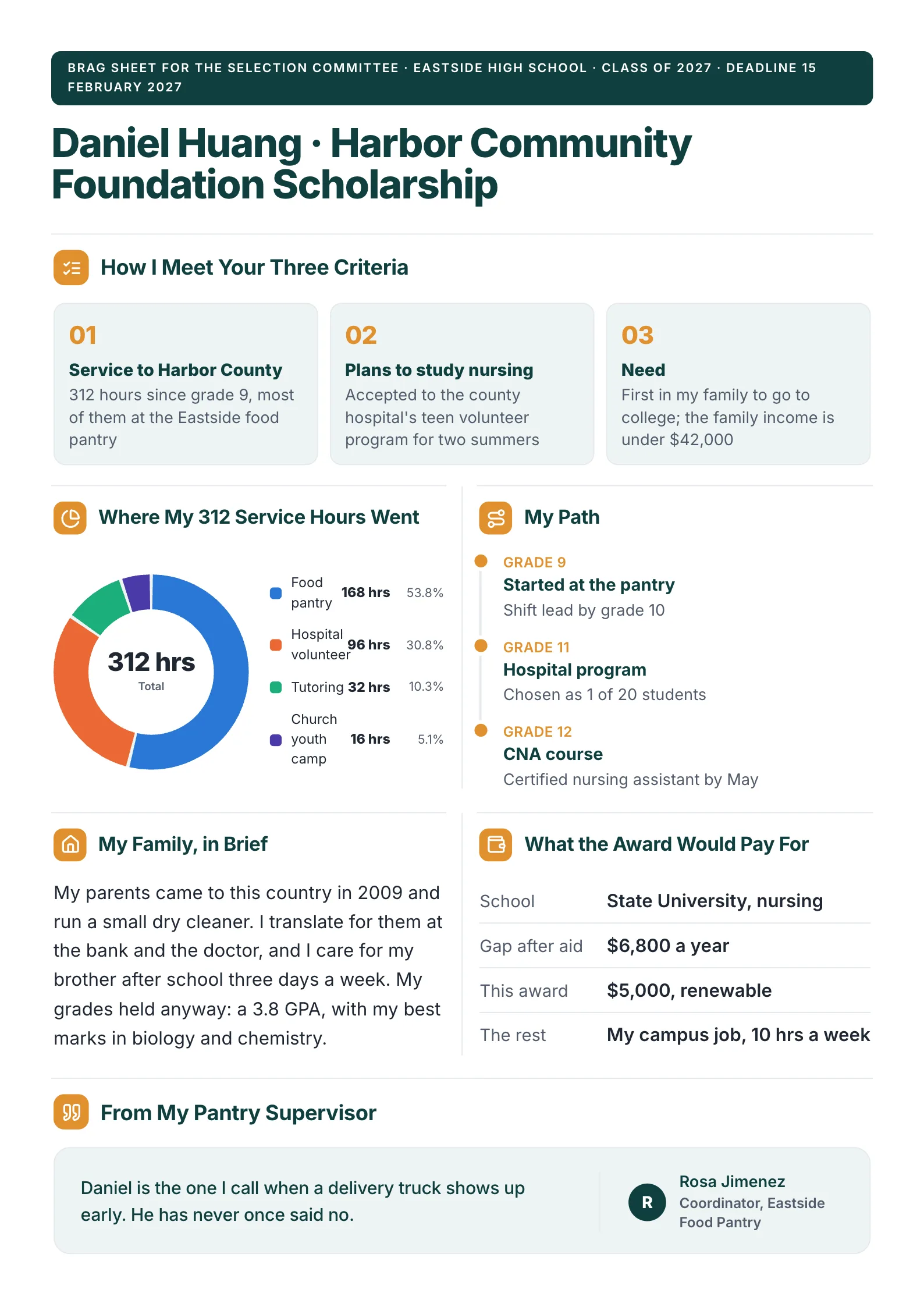
Daniel Huang is applying for the Harbor Community Foundation Scholarship, due February 15, 2027. His sheet speaks to the committee's three criteria directly, under a heading that names them.
 Edit this template
Sample names and figures. The money box shows the committee exactly what its award would cover.
"My Family, in Brief" is the circumstances question answered in three sentences. His parents came to the U.S. in 2009 and run a small dry cleaner. He translates for them at the bank and the doctor, and cares for his brother after school three days a week. His grades held anyway, at a 3.8 GPA.
The budget box does the math for the reader. Nursing at State University leaves a gap of $6,800 a year after aid. The $5,000 renewable award covers most of it, and a 10-hour-a-week campus job covers the rest.
An athlete's sheet for the recruiting questions
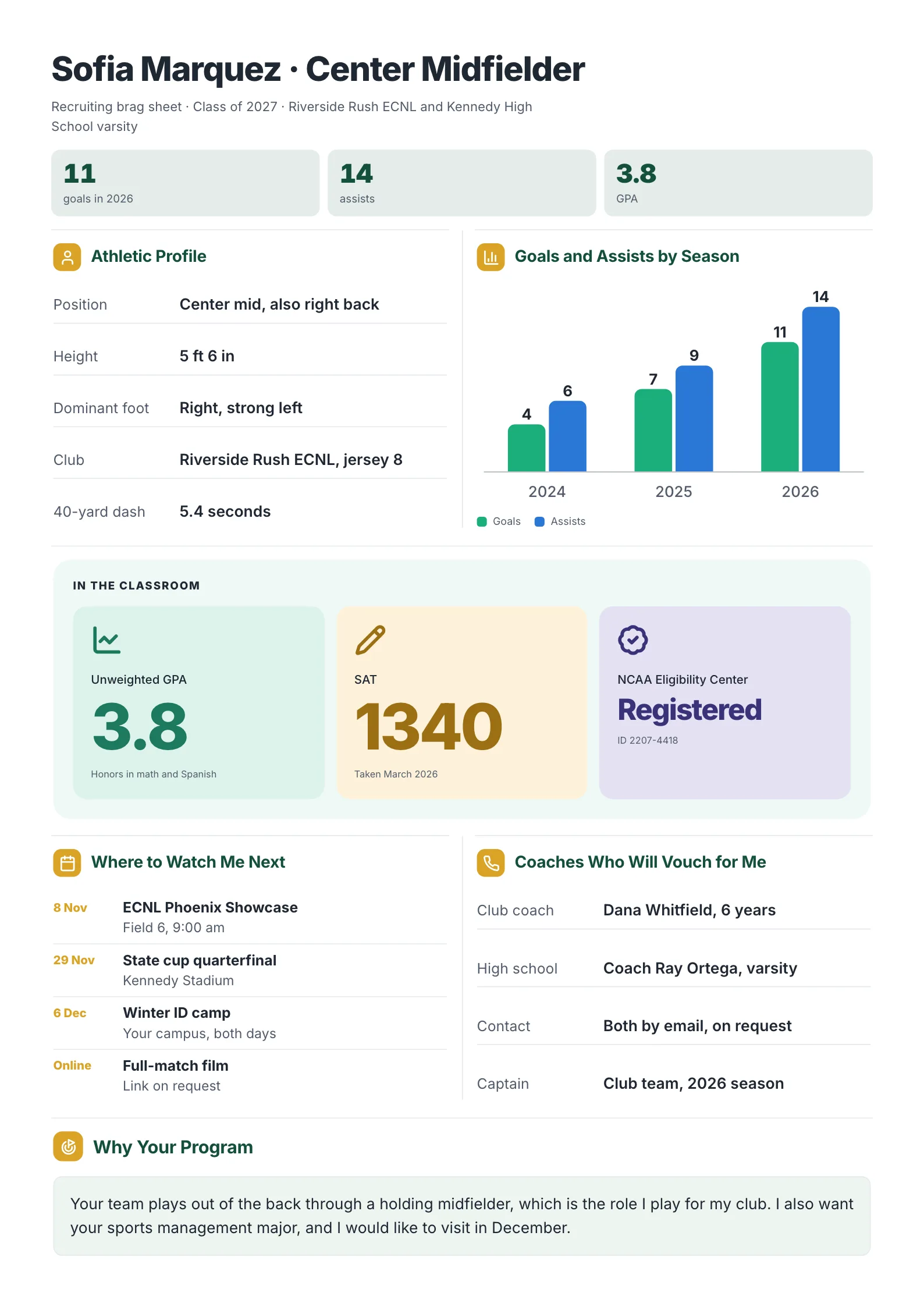
Greenwich's form has two questions for athletes: are you being recruited, and have you registered with the NCAA Eligibility Center? Sofia Marquez, a center midfielder in the class of 2027, answers both on one page for college coaches.
 Edit this template
Sample names and figures. Her NCAA Eligibility Center ID sits in the classroom box, next to her grades.
Her 2026 season reads 11 goals and 14 assists. The classroom box gives a 3.8 unweighted GPA, a 1340 SAT from March 2026 and her registered NCAA ID. "Where to Watch Me Next" names a showcase field and kickoff time, which is the detail a coach needs to come and see her play.
"Why Your Program" ties her role to theirs. Their style runs through a holding midfielder, the same job she does for her club, and she asks to visit in December.
Write the sentence you want in your letter
Every form we read ends by asking what else you want said, so decide that before you start. Write the one sentence you most want in your letter, then make every other answer support it. When you're ready to hand it over, a page from MakeOnepagers puts your three words and their proof where your counselor will read them first.
Frequently asked questions
What questions are on a brag sheet?
Three adjectives about you, your activities with grades and roles, your academic strengths, your college list, something your recommender doesn't know and anything else to share. The Common App's counselor version has 14 questions and its teacher version has 8.
How long should brag sheet answers be?
Long enough to give a real example. Greenwich asks for at least 5 sentences per answer in its About Me section. A one-page version of your answers, like the five above, helps your recommender find each fact fast. For the full process, see how to write a brag sheet.
Is a teacher brag sheet different from a counselor's?
Yes. The teacher version asks about one class: the course, a lesson you enjoyed, a project you're proud of and a time you showed one or two attributes there. The counselor version covers your whole high school life and your college plans. For more layouts, see our brag sheet template page.




