BlogGuide
Medical One‑Pager: Free Templates for Clinics and Hospital Teams
Free medical one-pager templates for clinics and hospital teams: a patient services sheet and a formulary review for a committee, with what to put on each and what to leave off.

By MakeOnepagers Team
Updated · 5 min read
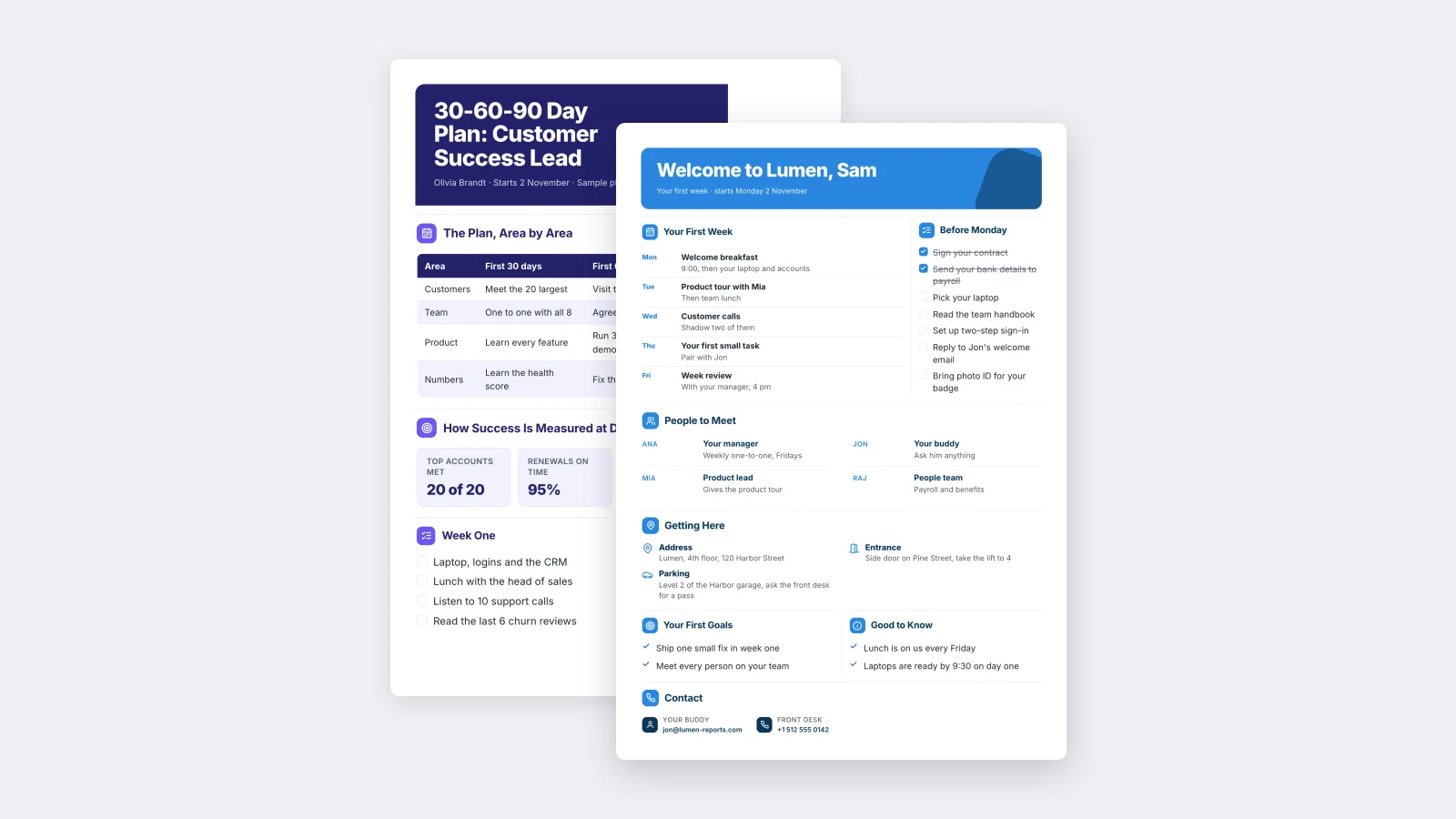
A medical one-pager puts one healthcare message on a single page. In a clinic it is the sheet patients take home: the services, the opening hours and how to book. Inside a hospital or health system it is the page a committee reads before a decision: what something costs, the options and the recommendation. Below are free templates for both, with what to copy from each.
One‑Pager examples
Real One-Pagers made with MakeOnepagers. Open any one to edit it as your own.
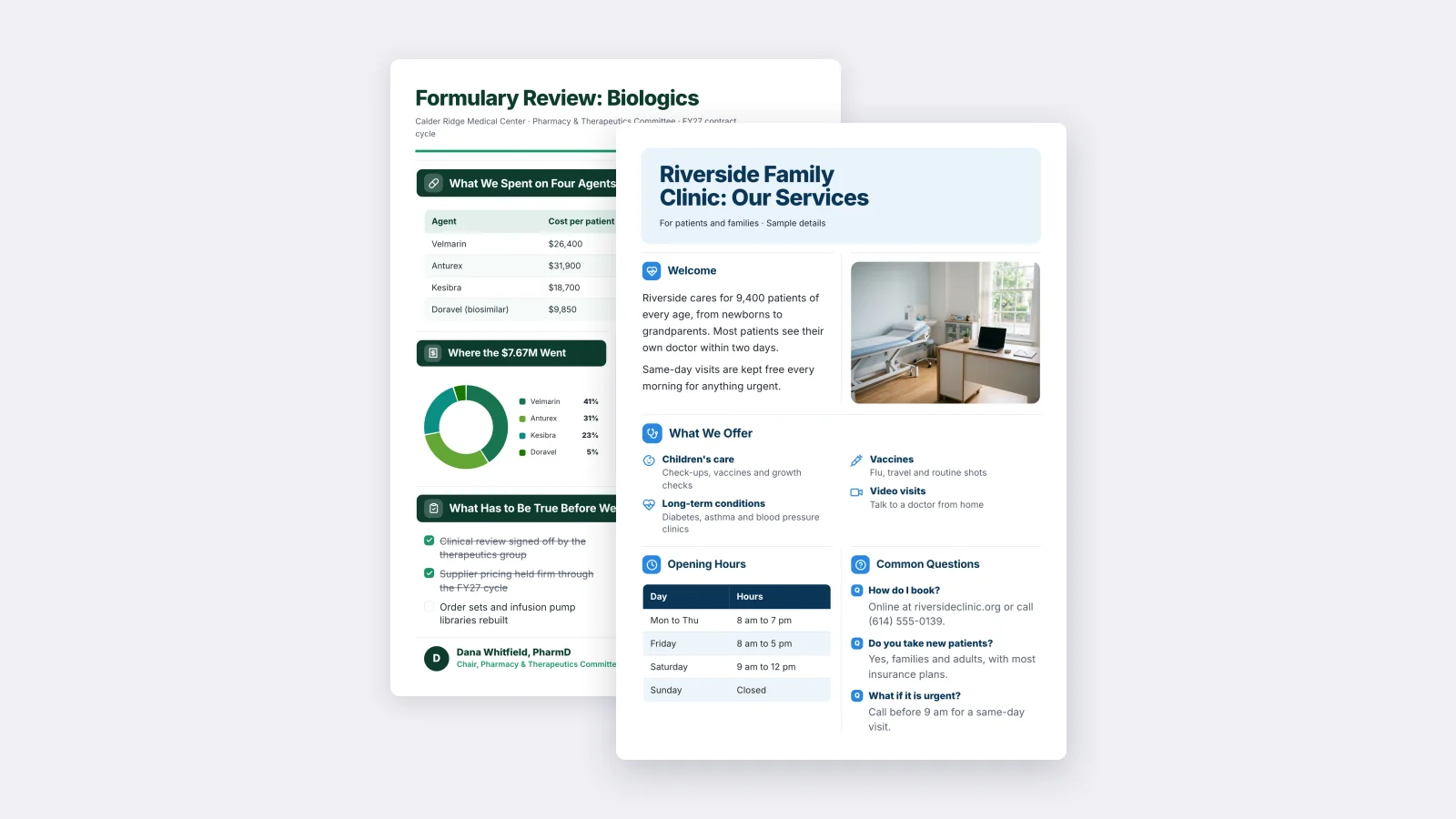
Every example was made with MakeOnepagers. The names and figures are samples, and each one opens as a template you can edit for free. Check any clinical or legal wording with the people responsible for it before you publish.
Two kinds of medical one-pager
| For patients | For a committee or leadership | |
|---|---|---|
| Used for | A services sheet, a welcome sheet, a new-patient handout | A formulary review, a service change, a business case |
| The reader wants | What you offer, when you are open, how to book | The cost, the options and what you recommend |
| Lead with | A short welcome and the services | The money, in a table |
| End with | A phone number and a web address | What must be true before you go ahead, and who signs |
| Tone | Warm, plain words, no jargon | Exact figures, named owners |
Pick one reader per page. A sheet that tries to talk to patients and the finance committee at once works for neither.
Medical one-pager for patients: clinic services sheet
 Edit this template
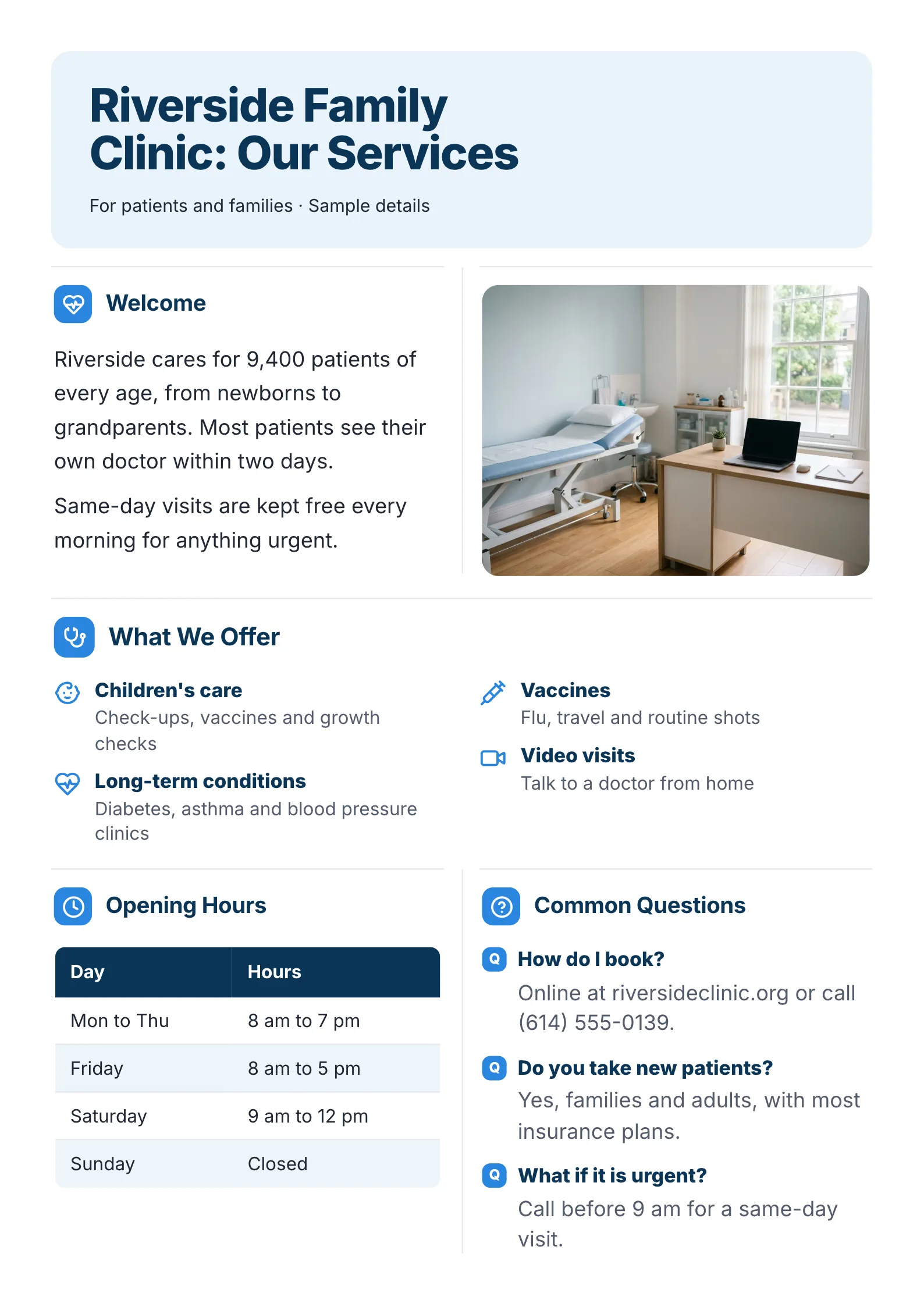
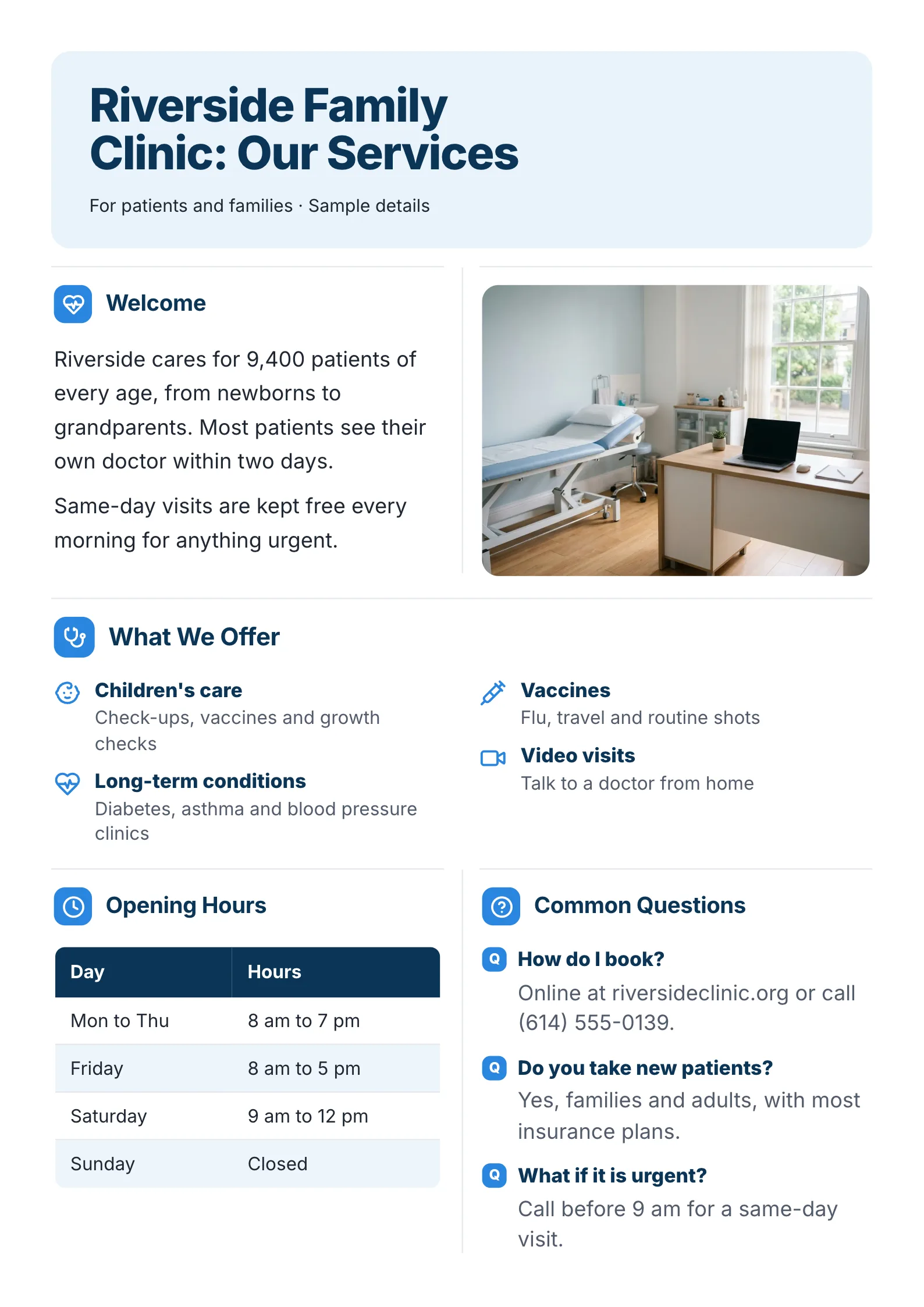
A family clinic's services sheet: a warm welcome, four services, the hours and the three questions every new patient asks.
What to copy:
- A welcome with two facts patients care about: "Most patients see their own doctor within two days" and "Same-day visits are kept free every morning for anything urgent."
- Opening hours as a table, because people scan for their day. Saturday mornings and the closed Sunday are easy to find.
- Common questions answered in one line each: how to book, whether you take new patients, what to do if it is urgent. These are the calls the front desk gets most.
- A real photo of a room, not stock doctors smiling. It tells patients what to expect.
Open it: clinic services sheet template.
Medical one-pager for a committee: formulary review
 Edit this template
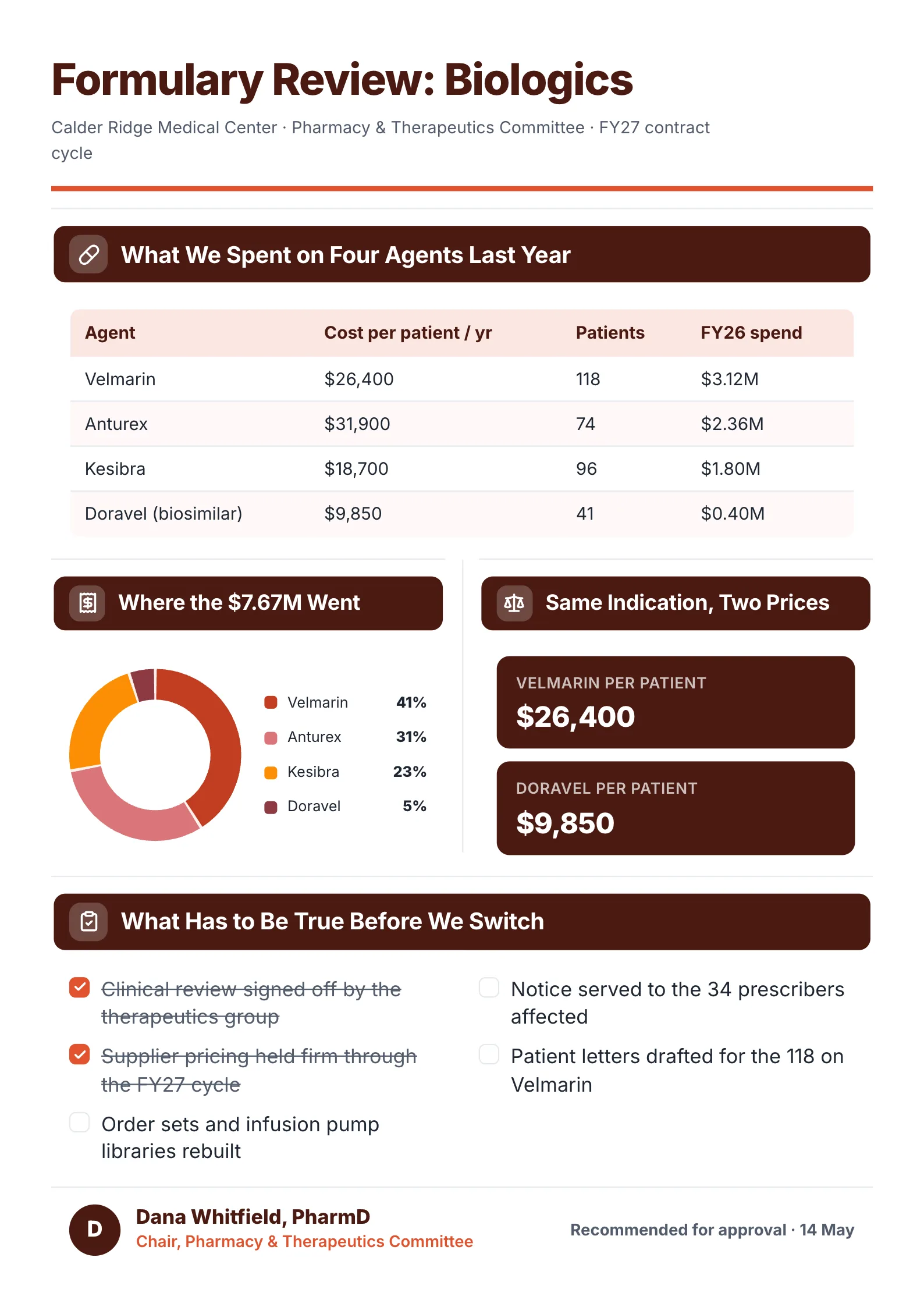
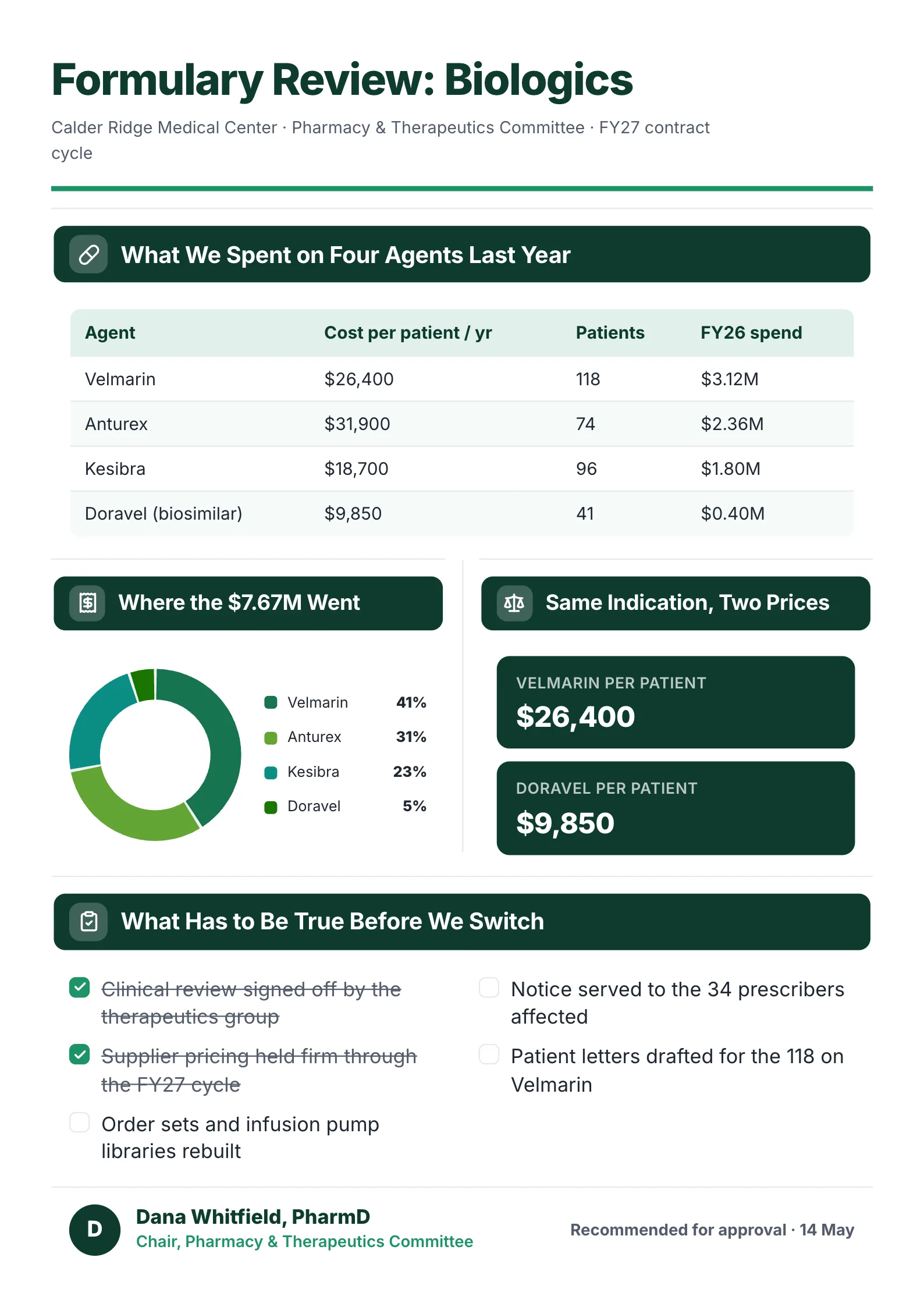
A pharmacy committee's review of four biologics: the spend, the price gap and the checklist before a switch.
What to copy:
- The money first, in a table: four agents, cost per patient a year, number of patients and last year's spend. The committee sees $7.67M before anything else.
- Two prices side by side: $26,400 against $9,850 per patient for the same indication. The case makes itself.
- What has to be true before we switch: clinical review and supplier pricing ticked; prescriber notice, patient letters and order sets still open. It shows the committee what saying yes will take.
- A name and a date at the bottom: the chair, and "Recommended for approval · 14 May".
Open it: formulary review template.
A free medical one-pager template
Copy the outline that matches your reader.
For patients:
- Name and who it is for: [Clinic]: our services, for patients and families.
- Welcome: how many patients you care for and how quickly they are seen.
- What we offer: four services, each with one line.
- Opening hours: a table, day by day.
- Common questions: booking, new patients, urgent care.
- Contact: web address and phone number.
For a committee:
- Headline: [Review]: [the decision], with the committee and the period.
- The cost today: a table of options, cost per patient and total spend.
- Where the money goes: one chart.
- The comparison that matters: two numbers side by side.
- What has to be true first: a checklist, ticked and unticked.
- Recommendation: who is recommending, and the date.
How to make a medical one-pager in 5 steps
- Name the reader: patients and families, or a committee.
- Pick the one action you want: book a visit, or approve a change.
- Put the facts that drive that action first: hours and services for patients, cost and options for a committee.
- Cut the jargon on patient sheets, and add the exact figures on committee sheets.
- Have it checked by the clinical lead, compliance or the committee chair before it goes out.
Have a long policy, a committee paper or a patient leaflet? Drop it into the free AI One-Pager generator and get a first medical one-pager back to edit.
Medical one-pager mistakes
- Writing for two readers. Patients and finance committees need different pages.
- Clinical terms on a patient sheet. "Chronic disease management" means less to a patient than "diabetes, asthma and blood pressure clinics".
- No hours or phone number. It is the first thing a patient looks for.
- A committee paper with no recommendation. Say what you advise and who is signing.
- Hiding what is not done yet. An honest checklist of open items builds more trust than a page that looks finished.
Make your medical one-pager
Open the free clinic services sheet template or the formulary review template, or drop your paper into the free AI One-Pager generator and get a finished page back. Browse every One-Pager template for more layouts.
Frequently asked questions
What is a medical one-pager?
A single page that explains one healthcare topic to one audience: a clinic's services for patients, or a cost and a decision for a hospital committee.
What should a healthcare one-pager include?
For patients: services, hours, how to book and answers to common questions. For a committee: the cost today, the options, a key comparison, what must happen before a change, and the recommendation.
Can I use a medical one-pager as a patient handout?
Yes. A services sheet works as a handout at the front desk, as a PDF on your website and in new-patient emails. Keep it to one page so it gets read.
Who should approve a medical one-pager?
Anything with clinical advice should be checked by the clinical lead, and anything about costs or contracts by the committee or department that owns them. The template gives you the layout; your team owns the content.